
Black rhino photography asks for restraint before technique. The animal may arrive silently, remain partly in shadow or leave after a small disturbance. A respectful image begins with low voices, dim screens and no flash.
Treat every sighting as uncertain and sensitive. Do not share live locations, ranger routines or security details. Current camp rules and staff instructions override any photographic plan.
Prepare before the rhino arrives
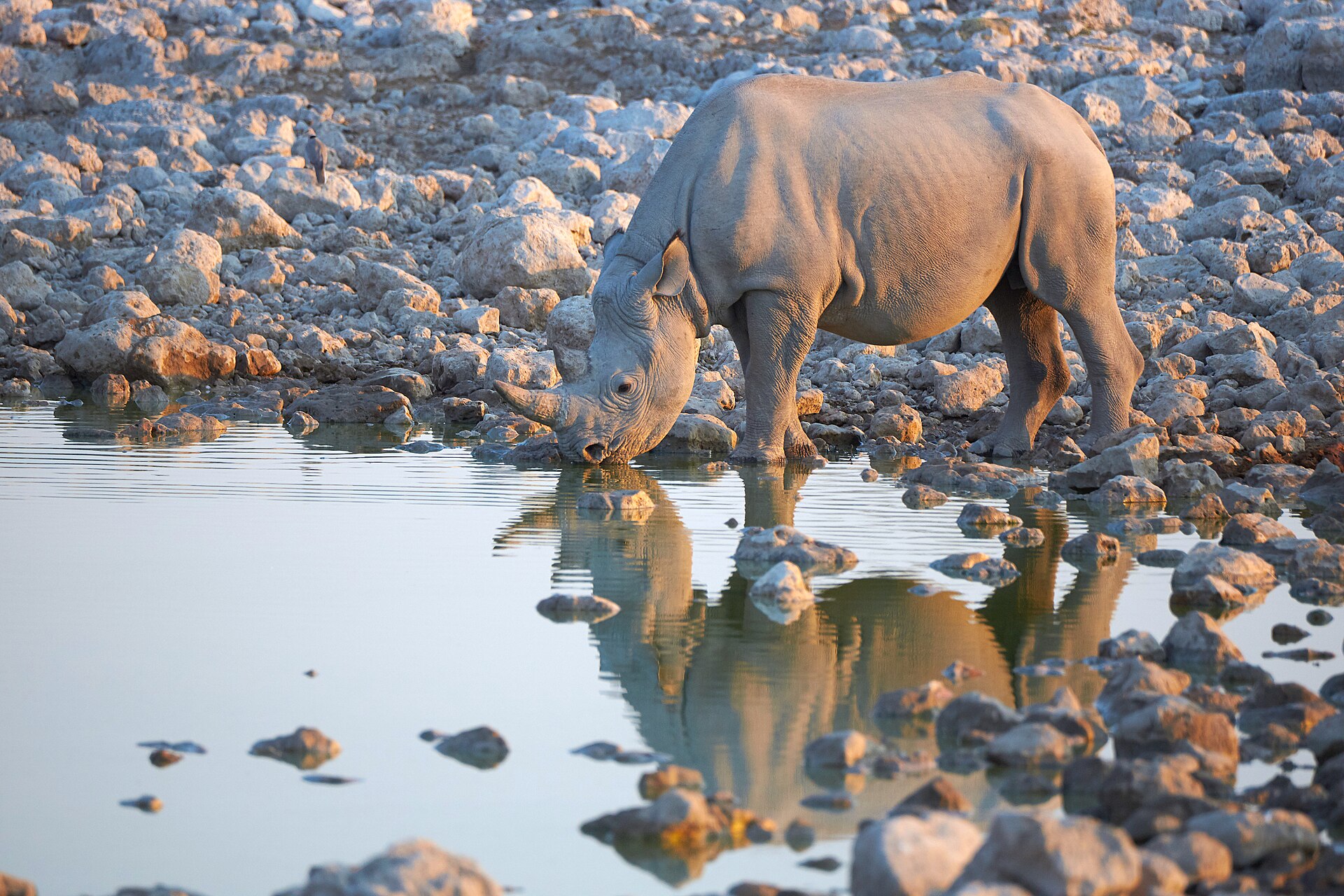
Set exposure, focus mode and silent controls before the viewing area becomes active. Turn off focus-assist lamps, flash, beeps and bright review screens. A small beanbag or stable support is often more useful than a large tripod in a shared space.
- Choose one lens and avoid noisy changes.
- Set a maximum ISO you can accept.
- Use a modest continuous burst, not an endless sequence.
- Check that image stabilisation suits the support.
Expose for the floodlit scene
Artificial light can create bright highlights and deep shadow in the same frame. Protect detail on the rhino’s back and face, then lift shadows carefully later. A histogram is more reliable than a glowing rear screen in darkness.
| Control | Practical starting point | Reason |
|---|---|---|
| Shutter speed | Fast enough for head movement | A drinking rhino rarely stays perfectly still |
| Aperture | As open as acceptable | Collect light without losing needed depth |
| ISO | Raise as necessary | Motion blur cannot be repaired reliably |
| White balance | RAW or a stable preset | Floodlights may shift colour |
Read behaviour before making pictures
Watch approach direction, ear position, pauses and interactions with other animals. A black rhino may circle, drink, scent or remain at the edge. Do not interpret every head lift as aggression; describe the exact posture and sequence.
Save the Rhino International recommends responsible tourism practices that protect rhinos and sensitive information. The photograph is never more important than the animal’s security.
Share a floodlit waterhole respectfully
- Keep conversation and movement low.
- Do not block another visitor’s seated view with equipment.
- Never use flash, calls or extra lights.
- Crop signage and security infrastructure from public images.
- Post later and use only a broad location.
If a crowd becomes restless, step back rather than competing for the front. A wider environmental image can show the atmosphere without turning the viewing area into a contest.
Photograph a complete sequence
- Begin with the approach and waterhole context.
- Make a tight frame only when the animal settles.
- Watch for reflections and other species.
- Lower the camera and observe directly.
- Finish with the departure rather than chasing position.
A technically imperfect frame with space and behaviour often tells more than a close portrait produced by noise, flash or crowding.
Edit and share with the same restraint
Keep noise reduction and sharpening believable; heavy processing can erase skin texture and turn floodlights into halos. Do not attach a live location. Review why rhino geotags create risk and prepare a stable setup with the Etosha car-window photography guide.
black rhino photography: a quiet low-light workflow
Successful black rhino photography begins before an animal appears. Seat yourself where you can work without standing, silence every camera sound and cover bright status lamps. Make a test frame of the empty waterhole, check the histogram, then leave the controls alone until the light changes.
Use this seven-point field sequence
- Stabilise first: brace the camera on a beanbag or solid rail without blocking another guest.
- Expose for highlights: protect the brightest part of the rhino and accept natural shadow.
- Set a safe shutter speed: for black rhino photography, sharp behaviour matters more than perfectly clean high-ISO files.
- Focus on the near eye: use a small, movable focus area and avoid any assist beam.
- Make short bursts: two or three frames are enough when the head lifts or turns.
- Lower the camera: watch the animal directly between sequences.
- Share later: remove precise location data before posting.
Keep a simple note of lens, shutter speed and the direction of the floodlight. That record makes later black rhino photography edits more consistent and helps you recognise whether blur came from the subject or from camera movement. When light is extremely low, a deliberate silhouette can be more honest than forcing a bright portrait.
Know when not to photograph
Pause black rhino photography if the animal repeatedly looks toward people, if visitors are moving noisily or if staff ask the group to settle. Never add light, call, whistle or move closer. A calm waterhole is the priority.
Before exporting, check that captions describe observable behaviour rather than guessing at mood. Crop out security equipment and avoid live location tags. This responsible black rhino photography routine protects the sighting while producing a stronger, more truthful sequence. The best black rhino photography result is one made quietly, legally and without changing the animal’s behaviour.
black rhino photography: practical questions
Should flash be used?
No. Keep flash and focus-assist lights off and follow all local rules.
What lens is best?
A moderate telephoto that can be supported quietly is often more practical than the longest lens.
Can the waterhole name be posted?
For rhino images, use a broad location and follow conservation guidance; never post live.
black rhino photography is a privilege, not a performance. Prepare quietly, expose carefully and leave both the animal and its location safer than you found them.
black rhino photography summary: black rhino photography becomes easier to plan when current rules, realistic distances and responsible wildlife behaviour guide each decision.