










Etosha National Park, a sprawling 22,000-square-kilometer gem in northern Namibia, is a haven for nature lovers. With its vast Etosha Salt Pan and life-giving waterholes, the park teems with wildlife in Etosha, making it one of Africa’s premier safari destinations. From majestic elephants lumbering through the dust to stealthy lions stalking their prey, the animals here offer a front-row seat to nature’s drama. Whether you’re an avid photographer or a first-time adventurer, spotting the wildlife in Etosha is an experience you won’t forget.
At Etosha-Namibia.com, we’re here to help you plan the ultimate wildlife safari. This guide highlights the top 10 wildlife species to look out for, complete with tips on the best times and locations to catch them in their element. Ready to explore? Let’s dive into Etosha’s iconic animals.
1. African Elephant: Etosha’s Gentle Giants
The African elephant, with its towering presence and sweeping tusks, is one of Etosha’s most iconic species. These herd animals, often led by a wise matriarch, are a sight to behold as they roam the park’s arid expanses.
- Best Time: Dry season (May to October) when they gather at waterholes.
- Top Location: Okaukuejo waterhole—watch them bathe at dusk.
- Tip: Late afternoons are prime for elephant sightings.
Read our full Etosha National Park Safari Guide for help planning your visit to see these giants up close.
2. Lion: Etosha’s Apex Predator
Lions reign supreme among Etosha’s predators, their golden manes and powerful roars commanding attention. Spotting a pride lounging in the shade or hunting near a waterhole is a safari highlight.
- Best Time: Dry season (July to September) when prey concentrates.
- Top Location: Nebrownii waterhole near Okaukuejo—a lion favorite.
- Tip: Dawn or dusk drives boost your chances.
See our self-drive safari guide for tips on a self-drive lion quest.
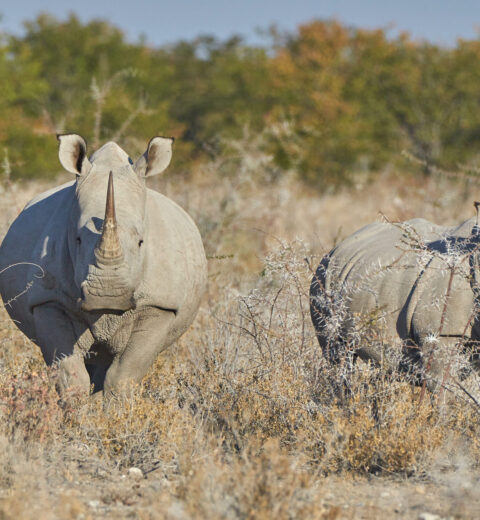
3. Black Rhino: A Rare and Precious Sighting
The elusive black rhino, a critically endangered species, adds a touch of mystery to any Etosha safari. Smaller and shyer than white rhinos, they’re a prized sighting.
- Best Time: Dry season nights—they’re nocturnal waterhole visitors.
- Top Location: Okaukuejo waterhole, floodlit for night viewing.
- Tip: Stay late at the viewing benches.
Browse nearby accommodation to catch this rare beauty.
4. Giraffe: Graceful Giants of the Plains
Giraffes, with their long necks and graceful gaits, stand tall among Etosha’s many herbivores. These gentle herbivores browse acacia trees, creating postcard-perfect scenes.
- Best Time: Wet season (November to April) with abundant foliage.
- Top Location: Halali area—open plains suit their stride.
- Tip: Mid-morning offers soft light for photos.
Check our Etosha month-by-month guide for ideal timing.
5. Leopard
The leopard, a master of camouflage, slinks through Etosha’s scrub. Spotting one lounging in a tree or stalking prey is a thrilling addition to your safari checklist.
- Best Time: Dry season—sparse vegetation aids visibility.
- Top Location: Chudop waterhole—a leopard hunting ground.
- Tip: Scan treetops at dawn with binoculars.
Book flights to Namibia via Etosha-Namibia.com and start your leopard chase.
6. Cheetah
The cheetah, Etosha’s speed demon, dazzles with its sleek build and rapid sprints. These cats thrive in open spaces, making them a dynamic part of the park’s wildlife.
- Best Time: Wet season—greener plains draw antelope herds.
- Top Location: Namutoni region—grasslands are cheetah territory.
- Tip: Early mornings catch them in action.
Explore more tips in our blog posts.
Add expert interpretation to a wildlife day
Tracks, alarm calls and habitat often reveal more than a species checklist. A relevant guided Etosha game drive can help travellers read wildlife in Etosha while sharing viewing space responsibly.
7. Spotted Hyena
Spotted hyenas, with their eerie calls and cunning nature, are unsung stars of Etosha’s ecosystem. Their clans scavenge and hunt, adding intrigue to your safari.
- Best Time: Dry season nights—waterholes are their haunt.
- Top Location: Salvadora waterhole—hyena activity peaks here.
- Tip: Listen for their whoops near camps.
Stay close with camps and lodges near Etosha’s waterholes.
8. Springbok
The springbok, Etosha’s most common antelope, leaps across the plains with elegance. Their pronking displays are a joyful sight in large herds.
- Best Time: Wet season—new grass spreads them out.
- Top Location: Fischer’s Pan near Namutoni—herds abound.
- Tip: Midday is prime for spotting their antics.
Rent a vehicle from Etosha-Namibia.com to track these bouncy grazers.
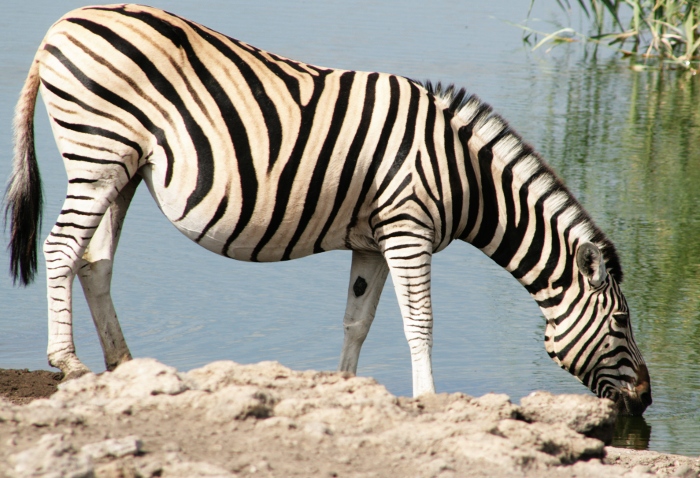
9. Plains Zebra
Plains zebras, with their bold stripes, bring a striking contrast to Etosha’s landscape. They often mingle with other herbivores near water sources.
- Best Time: Dry season—waterholes draw them in droves.
- Top Location: Okondeka waterhole—a zebra hub.
- Tip: Late afternoons are best as they quench their thirst.
Our safari guide can help you see them in action.
10. Ostrich
The ostrich, the world’s largest bird, struts confidently across Etosha’s plains. Their quirky charm and long legs make them a fun find.
- Best Time: Wet season—open areas improve visibility.
- Top Location: Andoni Plains near Namutoni—ostrich territory.
- Tip: Midday sightings are common; they’re bold and curious.
Dive into more wildlife insights on our blog posts.
Best Times for Wildlife in Etosha
Timing your visit shapes your wildlife experience. The dry season (May to October) is ideal for elephants, lions, rhinos, and zebras, as they flock to waterholes when water is scarce. Vegetation thins, making animals easier to spot, and cooler months (June to August) keep drives pleasant. The wet season (November to April) paints Etosha green, perfect for giraffes, cheetahs, springboks, and ostriches as herds disperse across lush plains. Shoulder seasons (April or October) blend both worlds with fewer crowds.
Need seasonal advice? Our blog posts break it down.
Top Locations for Wildlife in Etosha
Etosha’s waterholes are wildlife magnets. Okaukuejo in the west shines for elephants, lions, and rhinos, with its floodlit waterhole offering night views. Halali, centrally located, suits giraffes and leopards with quieter vibes. Namutoni in the east excels for cheetahs, springboks, and ostriches, thanks to its open grasslands. Hidden gems like Chudop, Salvadora, and Okondeka cater to specific species—map your route to match your wishlist. For a closer look at each site, see our guide to the best waterholes in Etosha.
Self-driving? Grab a 4×4 from Etosha-Namibia.com. Prefer a guide? Book with Etosha-Namibia.com.
Your Etosha Wildlife Adventure Awaits
Etosha National Park is a treasure trove of wildlife, and these top 10 species—elephants, lions, rhinos, giraffes, and more—promise a safari to remember. Whether you’re chasing dry-season waterhole action or wet-season plains drama, the right timing and spots will bring these animals into view.
Start planning at Etosha-Namibia.com for tours and stays designed for wildlife lovers. Need flights or a car? Visit Etosha-Namibia.com. For extra tips, check our blog posts. Etosha’s wildlife beckons—go spot them!
Read habitat before chasing a species list
Wildlife in Etosha uses a mosaic of open plains, mopane woodland, pan edges and water sources. Sightings of wildlife in Etosha change with season, temperature, wind and chance. Instead of racing between reports, slow down where habitat, tracks or the behaviour of prey species suggest activity.
For wildlife in Etosha, waterholes can be productive, but they are not stages with a fixed timetable. Approach quietly, leave room for animals to drink and avoid blocking another vehicle. If the area becomes crowded, move on and return later.
| Observation | What it may suggest | Responsible response |
|---|---|---|
| Antelope staring in one direction | A disturbance or possible predator | Stop quietly and scan without crowding |
| Fresh tracks on the road | Recent movement, not a guaranteed nearby animal | Drive slowly and keep expectations realistic |
| Birds gathering near water | Water and feeding activity | Watch from a distance and avoid playback |
| Elephants approaching | Animals may need the road or water | Give them space and a clear route |
| Dust or alarm calls | Movement outside immediate view | Listen, wait and do not leave the vehicle |
Safe and ethical viewing
- Remain in the vehicle except where getting out is expressly permitted.
- Never feed, call, surround or deliberately provoke an animal.
- Keep noise low and avoid sudden acceleration near wildlife.
- Do not disclose sensitive rhino locations in real time.
- Give breeding herds, young animals and animals at water extra space.
- Follow current park instructions even when another visitor ignores them.
Responsible viewing of wildlife in Etosha is measured by natural behaviour, not proximity. If an animal changes direction, stops feeding or shows agitation because of the vehicle, increase the distance.
A practical wildlife-viewing rhythm
- Begin a search for wildlife in Etosha with a short loop in the cooler hours.
- Stop for several minutes at promising habitat rather than scanning only while moving.
- Use binoculars to watch wildlife in Etosha before repositioning the vehicle.
- Take a proper midday break so fatigue does not affect judgement.
- Choose an afternoon route that still allows a comfortable gate-time margin.
Wildlife in Etosha includes far more than the largest mammals. Termite mounds, raptors, reptiles, smaller carnivores and social behaviour can turn a quiet hour into the most memorable part of a drive.
Use current, authoritative information
The Namibia environment ministry’s Etosha overview records 114 mammal species and more than 400 bird species. These figures describe the diversity of wildlife in Etosha, not what any one visitor will see. Road access, rules and operational conditions should be confirmed close to travel.
Let behaviour shape the safari
Plan to view wildlife in Etosha with patience, space and curiosity. Use our Etosha safari guide to plan a realistic route, then allow the animals—not a checklist—to decide where you pause.
For first-time travellers, wildlife in Etosha becomes easier to understand when each stop includes time to watch behaviour. A respectful plan for wildlife in Etosha therefore values quiet observation as highly as the number of species recorded.

[…] That concentration of water creates an unusually clear stage on which to observe elephants in Etosha. In the dry season, a waterhole may draw family groups, bulls and other species into the same open area. Visitors can watch an entire sequence rather than seeing only a brief roadside crossing: approach, greeting, drinking, bathing, social contact, calf protection and departure. For a broader species overview, see the site’s guide to wildlife in Etosha. […]