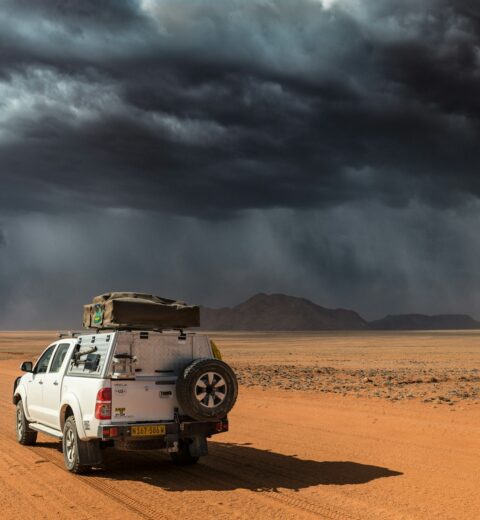
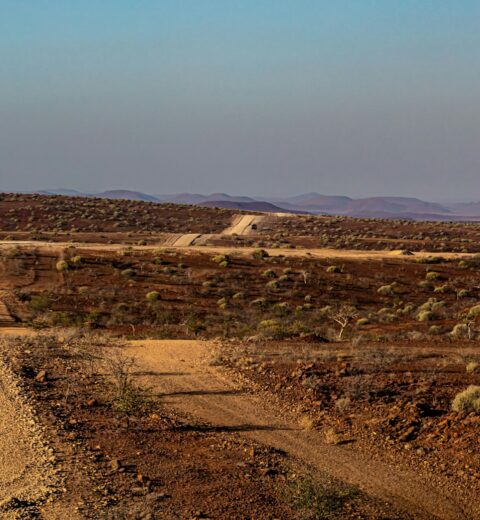
A five-day Etosha and Damaraland itinerary can combine concentrated wildlife viewing with open gravel roads, rocky horizons and cultural or geological stops. It cannot cover both regions comprehensively.
The strongest route uses two or three Etosha nights, one transfer day and at least one meaningful Damaraland base. Trying to include every gate, waterhole, rock-art site and desert-elephant excursion creates long days and very little time on the ground.
This westbound outline assumes responsible self-driving, confirmed accommodation and current road advice. Reverse it when flights, bookings or the wider Namibia circuit make eastbound travel more logical.
In this guide
- Five-day route at a glance
- Days 1–2 in Etosha
- Day 3 transfer west
- Day 4 Damaraland experience
- Day 5 onward options
- Booking and road checks
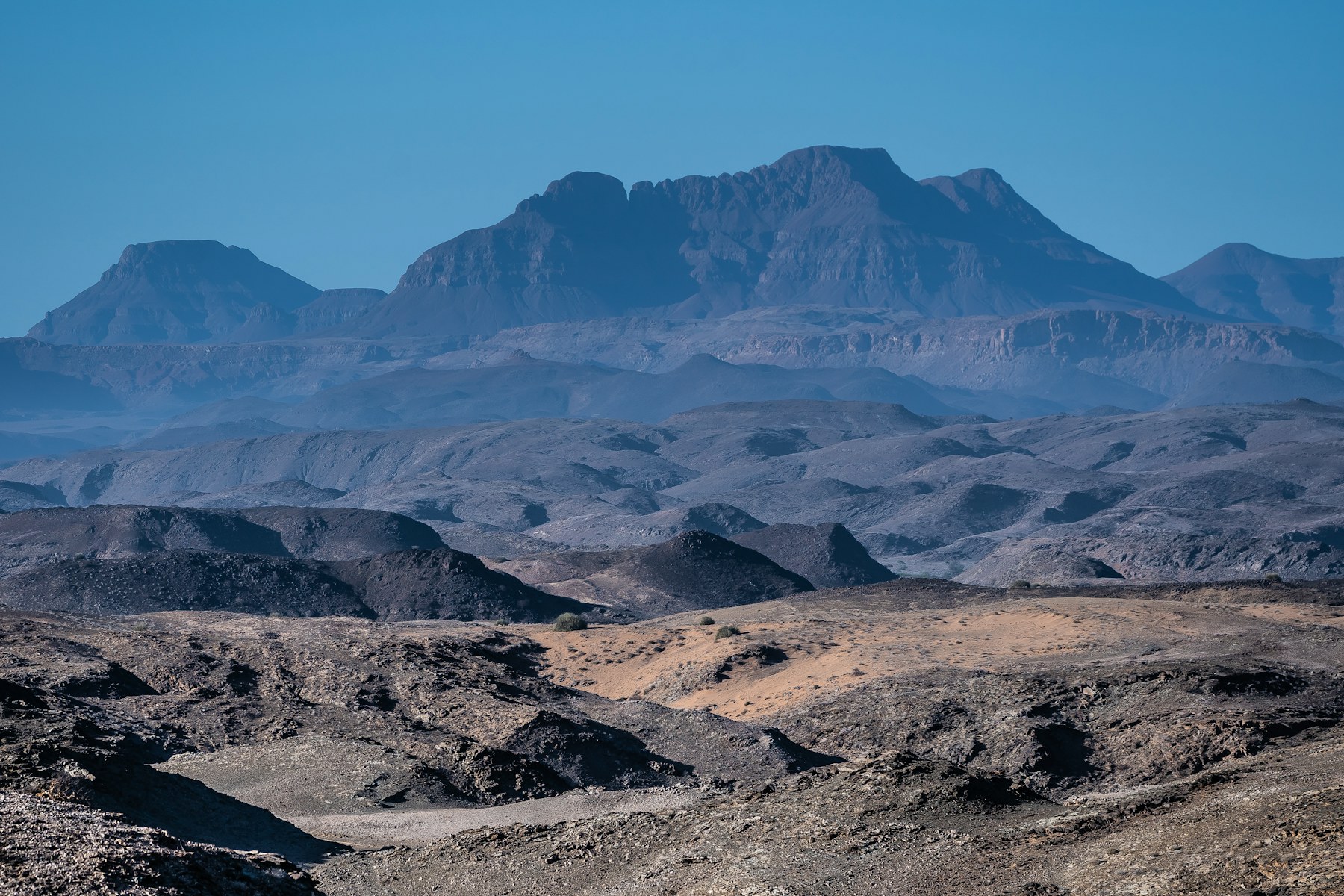
Etosha and Damaraland itinerary at a glance
Use a western Etosha base if the next region lies towards Outjo, Khorixas or Twyfelfontein. A west-to-east Etosha crossing followed by a westbound transfer wastes distance unless another booking justifies it.
The daily outline is a framework. Gravel conditions, rain, roadworks and activity start times can change how much fits safely.
| Day | Primary plan | Overnight logic |
|---|---|---|
| 1 | Arrive Etosha; short orientation drive | Near the entry sector |
| 2 | Full wildlife day | Same base or staged west |
| 3 | Final dawn drive; transfer to Damaraland | Khorixas/Twyfelfontein area or chosen lodge |
| 4 | Guided cultural, geological or nature activity | Same Damaraland base |
| 5 | Short morning; continue to next region | Depends on wider Namibia route |
Day 1: enter Etosha without rushing
Complete fuel and supplies before the gate, finish formalities and drive directly to the booked stay or a short nearby circuit. Do not plan a cross-park safari after a long transfer.
Use sunset and the evening to prepare a waterhole list, breakfast and departure kit. If staying inside, an authorised camp waterhole can provide low-effort viewing after the road drive.
Day 2: one full Etosha wildlife day
Start early, use a morning circuit around productive habitat and return for a midday rest. The afternoon should explore a second loop without pushing to a distant sector simply to collect map points.
Read animal behaviour and current conditions. After rain, spread the search across fresh grazing; in dry periods, combine waterholes with shade and movement routes. The site’s waterhole guide helps build a circuit.
Link Etosha and Damaraland with the right stays
Etosha Namibia can help match park access, a westbound exit and Damaraland accommodation so the five days contain experiences rather than constant check-ins.
Day 3: dawn drive and westbound transfer
Use a short dawn drive near the overnight base, then eat and check out without delaying the road day. Refuel in a reliable town and allow for gravel speed, viewpoints and one proper driver break.
Do not add a late-afternoon activity in Damaraland unless the operator confirms a comfortable arrival buffer. Dust, livestock, wildlife and changing surfaces slow travel; avoid driving remote gravel after dark.
Distance is not driving time
A map estimate does not account for photo stops, corrugations, roadwork, animals or a puncture. Build the day around daylight and a conservative average speed.
Day 4: choose one Damaraland focus
Select one authorised guided experience or a small cluster of nearby sites: rock art and geological features, a community-based cultural visit, or a nature activity suited to the area. Verify access, guide requirements and opening arrangements.
Do not chase desert-adapted elephants independently across sensitive tracks. Use experienced local operators, keep distance and follow conservancy guidance. Visit Namibia’s official interactive map for broader destination orientation, then confirm details locally.
Day 5: a short morning and onward route
Enjoy the lodge surroundings or one nearby confirmed stop before continuing. The next destination—Swakopmund, the Skeleton Coast, Windhoek or another Damaraland base—determines how much morning time is realistic.
Refuel when available and carry water. Keep printed or offline directions because mobile service can be limited. If the onward distance is long, skip the optional stop.
Booking choices that protect the five days
Reserve two consecutive nights in the Damaraland area so the transfer is followed by a genuine experience day. In Etosha, use the same base for simplicity or stage west only when it clearly improves the exit.
Confirm activity meeting points before choosing accommodation. “Near Twyfelfontein” can still involve meaningful driving, and a lodge road may require more time than the main-road distance suggests.
Five brilliant days without overload
The route works because each day has one primary purpose.
- Arrival and orientation
- Full Etosha wildlife day
- Wildlife-to-landscape transfer
- One deep Damaraland experience
- Calm onward departure
A detailed Etosha and Damaraland itinerary planning workshop
Use this workshop to turn the broad Etosha and Damaraland itinerary advice into a written route that another adult can follow. Work through it before the booking deadline, repeat the live-information checks near departure and keep the shorter alternative beside the primary plan.
1. Etosha and Damaraland itinerary at a glance
Put Etosha and Damaraland itinerary on the map beside “Etosha and Damaraland itinerary at a glance” and the confirmed overnight location. Calculate the legal route in daylight, then add time for fuel, formalities, stops and slower wildlife traffic. A plan is not ready until the passenger can explain the same route without relying on live mobile data.
2. Day 1: enter Etosha without rushing
Treat “Day 1: enter Etosha without rushing” as a decision point, not a promise. Write the condition that keeps the plan in place and the condition that triggers a shorter alternative. This makes Etosha and Damaraland itinerary resilient when rain, road work, stock, a queue or a productive sighting changes the available time.
3. Day 2: one full Etosha wildlife day
Check the current source behind “Day 2: one full Etosha wildlife day”. Accommodation staff can confirm their own check-in; park staff control access; a rental company controls permitted roads; a national authority manages public-road information. Keep those roles separate so one helpful opinion does not become assumed official permission.
4. Day 3: dawn drive and westbound transfer
Allocate one person to manage “Day 3: dawn drive and westbound transfer” while the driver concentrates on the road. That passenger keeps documents, offline navigation, water and the next contact accessible. On a Etosha and Damaraland itinerary day, a calm division of responsibility prevents a small question from turning into a dangerous roadside search.
5. Day 4: choose one Damaraland focus
Build a margin around “Day 4: choose one Damaraland focus” that can absorb at least one ordinary delay. Do not spend the entire buffer on an optional detour before reaching the important checkpoint. If the day runs perfectly, the unused margin becomes rest or a short legal wildlife stop rather than wasted time.
6. Day 5: a short morning and onward route
Review passenger comfort when planning “Day 5: a short morning and onward route”. A route that works for two rested adults may fail with a child, limited mobility, motion sickness or a late flight. Etosha and Damaraland itinerary should protect toilet access, meals, shade and a realistic end to the day as deliberately as it protects kilometres.
7. Booking choices that protect the five days
Use “Booking choices that protect the five days” to check the vehicle rather than only the map. Fuel range, tyre condition, luggage security and emergency contacts should fit the exact road. Bigger is not automatically better; the driver must be able to place, park and reverse the vehicle confidently without blocking wildlife or traffic.
8. Five brilliant days without overload
Decide what will be removed first if “Five brilliant days without overload” takes longer than expected. The correct answer is usually an optional loop, shopping stop or photograph—not the gate margin, legal speed or driver break. A written removal order stops the group negotiating safety under time pressure.
9. five-day Namibia route
At the end of “five-day Namibia route”, record what changed: actual driving time, fuel used, road surface, passenger energy and any instruction received. Those notes improve the next Etosha and Damaraland itinerary stage. Avoid turning a single day’s conditions into permanent online advice for future travellers.
10. Etosha Damaraland road trip
Finish the “Etosha Damaraland road trip” check with a fallback that uses lawful roads and confirmed accommodation. Share the plan with every adult, including the point at which staff will be called. Etosha and Damaraland itinerary becomes enjoyable when the group already knows how to respond if the first option stops working.
11. Twyfelfontein region
Link “Twyfelfontein region” to a meal and rest plan. A route can be technically possible while leaving no safe time to eat, refill water or reset driver attention. Etosha and Damaraland itinerary should identify authorised facilities and the latest comfortable stop, with supplies carried in case an expected service is unavailable.
12. wildlife landscape itinerary
Check how “wildlife landscape itinerary” affects the following morning. A late arrival, complicated tent setup or long unpack can destroy the early start that justified the route. Good Etosha and Damaraland itinerary protects sleep by preparing lights, clothing, breakfast and the first navigation step before the group becomes tired.
13. Five-day route at a glance
Make the cost of “Five-day route at a glance” complete. Include extra fuel, park or activity charges, food, vehicle category and the value of time lost to another checkout. Etosha and Damaraland itinerary decisions improve when travellers compare the entire day rather than choosing the cheapest room or shortest map line in isolation.
14. Days 1–2 in Etosha
Use “Days 1–2 in Etosha” to confirm what requires advance reservation and what should remain flexible. Secure scarce accommodation or authorised activities, but do not pre-book every hour. Etosha and Damaraland itinerary needs open time for weather, wildlife and rest, especially after a transfer or on the only full park day.
15. Day 3 transfer west
Share the environmental responsibility attached to “Day 3 transfer west”. Stay on authorised roads, keep rubbish contained, avoid unnecessary idling and support legitimate local services. A thoughtful Etosha and Damaraland itinerary route reduces repeated backtracking and respects the communities and habitats through which the vehicle passes.
16. Day 4 Damaraland experience
Run a final verbal rehearsal of “Day 4 Damaraland experience” before departure. The driver states the first destination and stop rule; the passenger states the documents, contact and fallback. If those answers are unclear, Etosha and Damaraland itinerary needs another five minutes of planning before the engine starts.
Write the final Etosha and Damaraland itinerary plan on one page with current contacts, the primary route, the fallback and the conditions that trigger it. Review it at breakfast. A clear plan frees the driver to respond to the real road instead of defending an optimistic schedule. Keep the page after the trip and add actual timings, fuel stops and the reason for any change. Those notes make a later route more accurate without pretending that today’s road or operating conditions are permanent.
Keep the Etosha and Damaraland itinerary selective
A five-day Etosha and Damaraland itinerary needs one purpose per day. The Etosha and Damaraland itinerary works when the transfer has daylight and the Damaraland base receives two nights. Remove optional stops before stretching the Etosha and Damaraland itinerary into unsafe driving.
Etosha and Damaraland itinerary questions
Five days require selectivity and a clear onward route.
Are five days enough for both regions?
They are enough for a focused introduction: two or three Etosha nights and a Damaraland transfer plus experience. More time gives greater flexibility.
Which direction is best?
Use the direction that fits flights and the wider Namibia route. A westbound plan works naturally when leaving Etosha towards Khorixas or Twyfelfontein.
Is a 4×4 required?
That depends on the confirmed roads, season, activity and rental contract. Ask providers for current access guidance.
Can desert elephants be visited independently?
Use authorised, experienced local guides and conservancy advice. Never pursue elephants off-route or crowd them for photographs.
Should Etosha accommodation be moved each night?
Not necessarily. Two nights in one good sector can provide more wildlife time and less packing than a rushed crossing.
What is the biggest planning mistake?
Adding a full activity to the long transfer day. Keep daylight and check-in margin ahead of optional stops.
Give each region a different kind of attention
Let Etosha deliver patient wildlife viewing and Damaraland deliver landscape, culture and geology. Five focused days are better than ten hurried map pins.