
The best Etosha self-drive vehicle is not automatically the largest 4×4 on the rental lot. For many park itineraries, a small SUV offers easy handling and enclosed luggage; a double-cab pickup adds clearance, space and robustness but can cost more and feel bulky.
The decision must cover the whole Namibia trip. Etosha’s public tourist roads are only one part of the route, and weather, rental restrictions, accommodation access, passenger height and luggage may matter more than a single vehicle label.
Compare actual specifications and rental conditions rather than assuming every SUV has all-wheel drive or every pickup includes safe, dust-resistant luggage storage.
In this guide
- Start with the full route
- Comfort and wildlife visibility
- Luggage and dust protection
- Tyres, clearance and recovery gear
- Fuel use and town driving
- Seven comparisons before booking
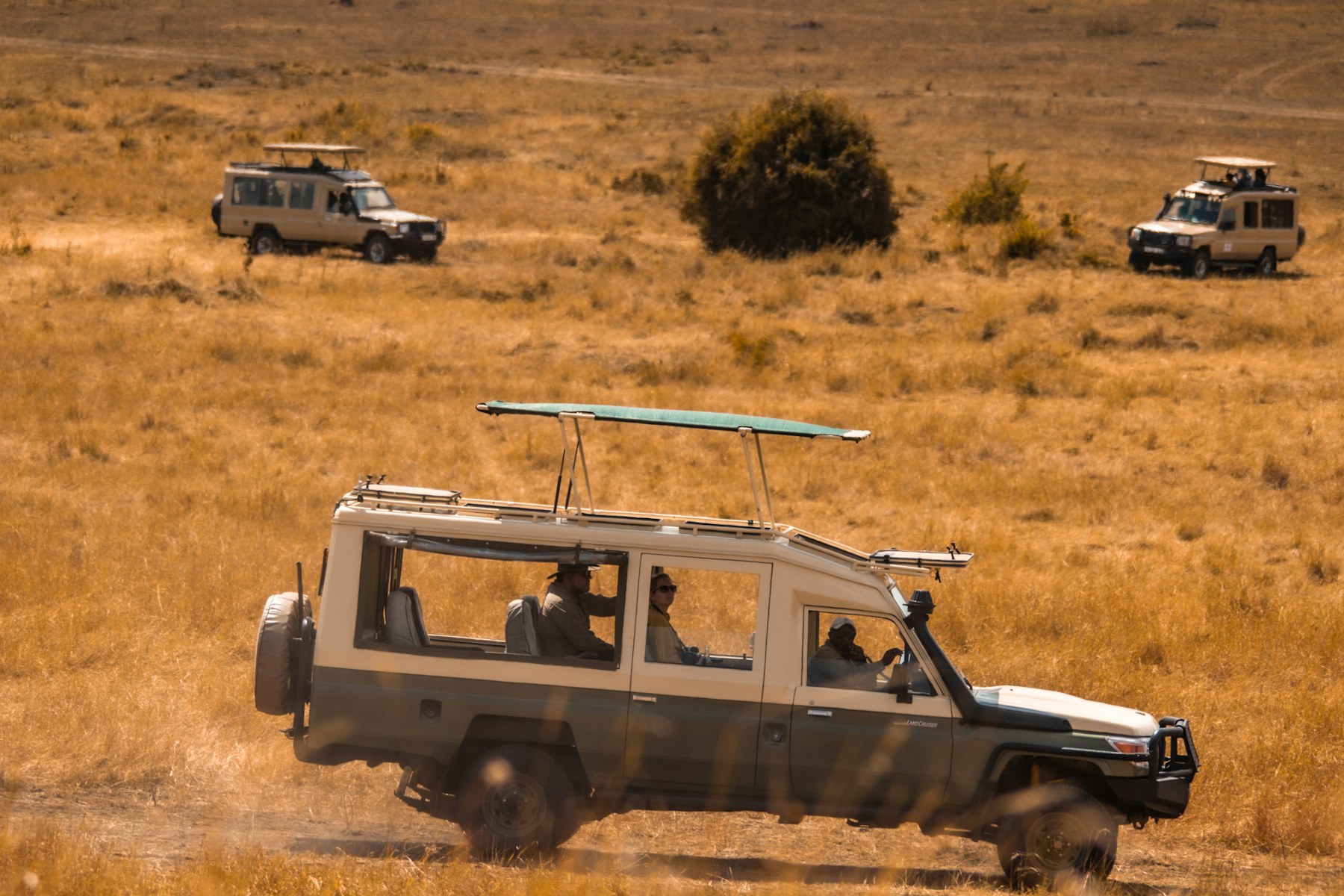
Match the Etosha self-drive vehicle to the whole trip
List every planned road and accommodation access track, then ask the rental company which categories are permitted. A route combining Etosha with remote gravel, deep sand or a wet-season track has different needs from a paved transfer and established lodge entrance.
Vehicle marketing names are inconsistent. Check driven wheels, ground clearance, tyre size, spare wheels, fuel capacity and payload on the specific confirmed category. “SUV” can mean a low two-wheel-drive crossover, while a double cab may arrive with road-biased tyres.
Passenger comfort and safari visibility
A small SUV usually has a lower step, a quieter enclosed cabin and easier access to bags. It may suit two adults or a small family travelling light. A pickup often provides a higher eye line and more cabin width, but rear-seat legroom differs greatly and the ride can be firmer when unladen.
Everyone should be able to sit for several hours without luggage on laps. Test whether the rear windows open far enough for binoculars and whether headrests block a child’s view. Never place a passenger in the load bed.
| Factor | Small SUV | Double-cab pickup |
|---|---|---|
| Town and parking | Usually easier | Longer and wider |
| Ride comfort | Often car-like | Varies with suspension and load |
| Eye height | Moderate | Often higher |
| Rear luggage | Enclosed but limited | Large, but canopy quality matters |
| Fuel use | Often lower | Often higher |
Luggage security, rain and dust
An SUV keeps bags inside the cabin, which improves weather protection but can create clutter and theft visibility. A double cab needs a lockable canopy or secure load cover; an open load bed is unsuitable for normal safari luggage.
Ask whether the canopy seals well. Fine gravel dust enters surprisingly small gaps. Use soft bags, separate camera equipment from cooking supplies and keep water inside the passenger area where it stays accessible.
Match the vehicle to the overnight route
Accommodation location determines daily driving time, fuel planning and whether a larger vehicle adds real value. Map the stays before paying for unnecessary capability.
Tyres matter more than the badge
Tyre condition, pressure guidance and spare-wheel equipment are fundamental. Confirm how many spares are supplied, where the jack points are and whom to call after a puncture. Do not reduce pressures or attempt repairs beyond rental-company instructions.
A higher-clearance pickup offers a useful margin on rougher legal roads, but clearance is not permission to enter closed routes or leave the road. Check current road conditions through official sources such as Namibia’s Roads Authority and ask locally before remote sectors.
Two-wheel drive and four-wheel drive are not body styles
Read the booking specification. Some small SUVs are two-wheel drive; some pickups are supplied in different drivetrains. The rental contract, route and conditions decide what is suitable.
Fuel range and daily handling
A smaller petrol vehicle may use less fuel but carry a smaller tank. A diesel pickup may travel farther between fills yet cost more per day. Calculate range conservatively and refuel at sensible towns rather than waiting for the warning light.
The easier vehicle is also the one the driver can place accurately at waterholes, park without blocking traffic and reverse confidently. Bigger is not safer when the driver is tense or unfamiliar with the dimensions.
Seven smart comparisons before booking
Ask for written answers where a feature affects the route or price.
- Permitted roads and border restrictions
- Driven wheels and ground clearance
- Tyre type and number of spares
- Rear-seat comfort for the actual passengers
- Lockable, dust-resistant luggage space
- Fuel tank size and realistic consumption
- Insurance exclusions and recovery procedure
A simple decision rule
Choose the small SUV when the legal route is moderate, luggage is compact and easy handling matters most. Choose the double cab when the wider itinerary, load, clearance or fuel-range needs justify it—and when every passenger fits comfortably.
For more preparation detail, compare the site’s Etosha rental-vehicle checklist. Reserve early enough to review the contract rather than accepting a last-minute category blindly.
A detailed Etosha self-drive vehicle planning workshop
Use this workshop to turn the broad Etosha self-drive vehicle advice into a written route that another adult can follow. Work through it before the booking deadline, repeat the live-information checks near departure and keep the shorter alternative beside the primary plan.
1. Match the Etosha self-drive vehicle to the whole trip
Put Etosha self-drive vehicle on the map beside “Match the Etosha self-drive vehicle to the whole trip” and the confirmed overnight location. Calculate the legal route in daylight, then add time for fuel, formalities, stops and slower wildlife traffic. A plan is not ready until the passenger can explain the same route without relying on live mobile data.
2. Passenger comfort and safari visibility
Treat “Passenger comfort and safari visibility” as a decision point, not a promise. Write the condition that keeps the plan in place and the condition that triggers a shorter alternative. This makes Etosha self-drive vehicle resilient when rain, road work, stock, a queue or a productive sighting changes the available time.
3. Luggage security, rain and dust
Check the current source behind “Luggage security, rain and dust”. Accommodation staff can confirm their own check-in; park staff control access; a rental company controls permitted roads; a national authority manages public-road information. Keep those roles separate so one helpful opinion does not become assumed official permission.
4. Tyres matter more than the badge
Allocate one person to manage “Tyres matter more than the badge” while the driver concentrates on the road. That passenger keeps documents, offline navigation, water and the next contact accessible. On a Etosha self-drive vehicle day, a calm division of responsibility prevents a small question from turning into a dangerous roadside search.
5. Fuel range and daily handling
Build a margin around “Fuel range and daily handling” that can absorb at least one ordinary delay. Do not spend the entire buffer on an optional detour before reaching the important checkpoint. If the day runs perfectly, the unused margin becomes rest or a short legal wildlife stop rather than wasted time.
6. Seven smart comparisons before booking
Review passenger comfort when planning “Seven smart comparisons before booking”. A route that works for two rested adults may fail with a child, limited mobility, motion sickness or a late flight. Etosha self-drive vehicle should protect toilet access, meals, shade and a realistic end to the day as deliberately as it protects kilometres.
7. A simple decision rule
Use “A simple decision rule” to check the vehicle rather than only the map. Fuel range, tyre condition, luggage security and emergency contacts should fit the exact road. Bigger is not automatically better; the driver must be able to place, park and reverse the vehicle confidently without blocking wildlife or traffic.
8. small SUV safari
Decide what will be removed first if “small SUV safari” takes longer than expected. The correct answer is usually an optional loop, shopping stop or photograph—not the gate margin, legal speed or driver break. A written removal order stops the group negotiating safety under time pressure.
9. double-cab pickup
At the end of “double-cab pickup”, record what changed: actual driving time, fuel used, road surface, passenger energy and any instruction received. Those notes improve the next Etosha self-drive vehicle stage. Avoid turning a single day’s conditions into permanent online advice for future travellers.
10. Namibia rental car
Finish the “Namibia rental car” check with a fallback that uses lawful roads and confirmed accommodation. Share the plan with every adult, including the point at which staff will be called. Etosha self-drive vehicle becomes enjoyable when the group already knows how to respond if the first option stops working.
11. self-drive comfort
Link “self-drive comfort” to a meal and rest plan. A route can be technically possible while leaving no safe time to eat, refill water or reset driver attention. Etosha self-drive vehicle should identify authorised facilities and the latest comfortable stop, with supplies carried in case an expected service is unavailable.
12. Start with the full route
Check how “Start with the full route” affects the following morning. A late arrival, complicated tent setup or long unpack can destroy the early start that justified the route. Good Etosha self-drive vehicle protects sleep by preparing lights, clothing, breakfast and the first navigation step before the group becomes tired.
13. Comfort and wildlife visibility
Make the cost of “Comfort and wildlife visibility” complete. Include extra fuel, park or activity charges, food, vehicle category and the value of time lost to another checkout. Etosha self-drive vehicle decisions improve when travellers compare the entire day rather than choosing the cheapest room or shortest map line in isolation.
14. Luggage and dust protection
Use “Luggage and dust protection” to confirm what requires advance reservation and what should remain flexible. Secure scarce accommodation or authorised activities, but do not pre-book every hour. Etosha self-drive vehicle needs open time for weather, wildlife and rest, especially after a transfer or on the only full park day.
15. Tyres, clearance and recovery gear
Share the environmental responsibility attached to “Tyres, clearance and recovery gear”. Stay on authorised roads, keep rubbish contained, avoid unnecessary idling and support legitimate local services. A thoughtful Etosha self-drive vehicle route reduces repeated backtracking and respects the communities and habitats through which the vehicle passes.
16. Fuel use and town driving
Run a final verbal rehearsal of “Fuel use and town driving” before departure. The driver states the first destination and stop rule; the passenger states the documents, contact and fallback. If those answers are unclear, Etosha self-drive vehicle needs another five minutes of planning before the engine starts.
Write the final Etosha self-drive vehicle plan on one page with current contacts, the primary route, the fallback and the conditions that trigger it. Review it at breakfast. A clear plan frees the driver to respond to the real road instead of defending an optimistic schedule. Keep the page after the trip and add actual timings, fuel stops and the reason for any change. Those notes make a later route more accurate without pretending that today’s road or operating conditions are permanent.
Confirm the Etosha self-drive vehicle in writing
Ask the rental company to confirm the Etosha self-drive vehicle category, driven wheels, tyres and permitted roads. An Etosha self-drive vehicle should fit passengers and luggage before it looks impressive. The right Etosha self-drive vehicle supports the entire Namibia route.
Etosha self-drive vehicle questions
These answers are a starting point; the rental company must approve the actual route and conditions.
Is a 4×4 compulsory for Etosha?
Vehicle needs depend on current conditions and the complete itinerary. Many established routes may not require low-range four-wheel drive, but confirm official and rental-company guidance for the travel date.
Is a double cab always more comfortable?
No. Some have firm suspension or limited rear legroom. Compare the actual model category and passenger needs rather than assuming size equals comfort.
Will luggage stay clean in a pickup?
Only a well-sealed, lockable canopy gives reasonable protection. Pack soft bags and dust covers, and keep delicate electronics in the cabin.
Which vehicle gives better wildlife views?
A pickup may sit higher, but window design, seat height and passenger position matter. Safe positioning and patience usually influence viewing more than a few centimetres of height.
How many spare wheels are needed?
Follow the rental company’s route-specific advice. At minimum, know where the spare and tools are, inspect them at handover and carry the correct emergency contacts.
Should the cheapest category be booked?
Compare the total cost, including insurance, fuel, tyres, luggage security and route restrictions. The lowest daily rate can become expensive if it does not suit the journey.
Choose specifications, not stereotypes
Write down the route, passengers and luggage, then compare the real vehicle details. The right choice is the smallest practical vehicle that safely and legally meets the entire trip.