
Cloudy weather photography in Etosha can produce softer shadows, more balanced animal detail and longer periods without severe heat shimmer. The trade-off is less light, flatter contrast and skies that need deliberate composition.
Do not wait for a “golden” break while ignoring behaviour. Overcast conditions can keep animals active and make dark-and-light subjects easier to expose in one frame.
Clouds soften contrast
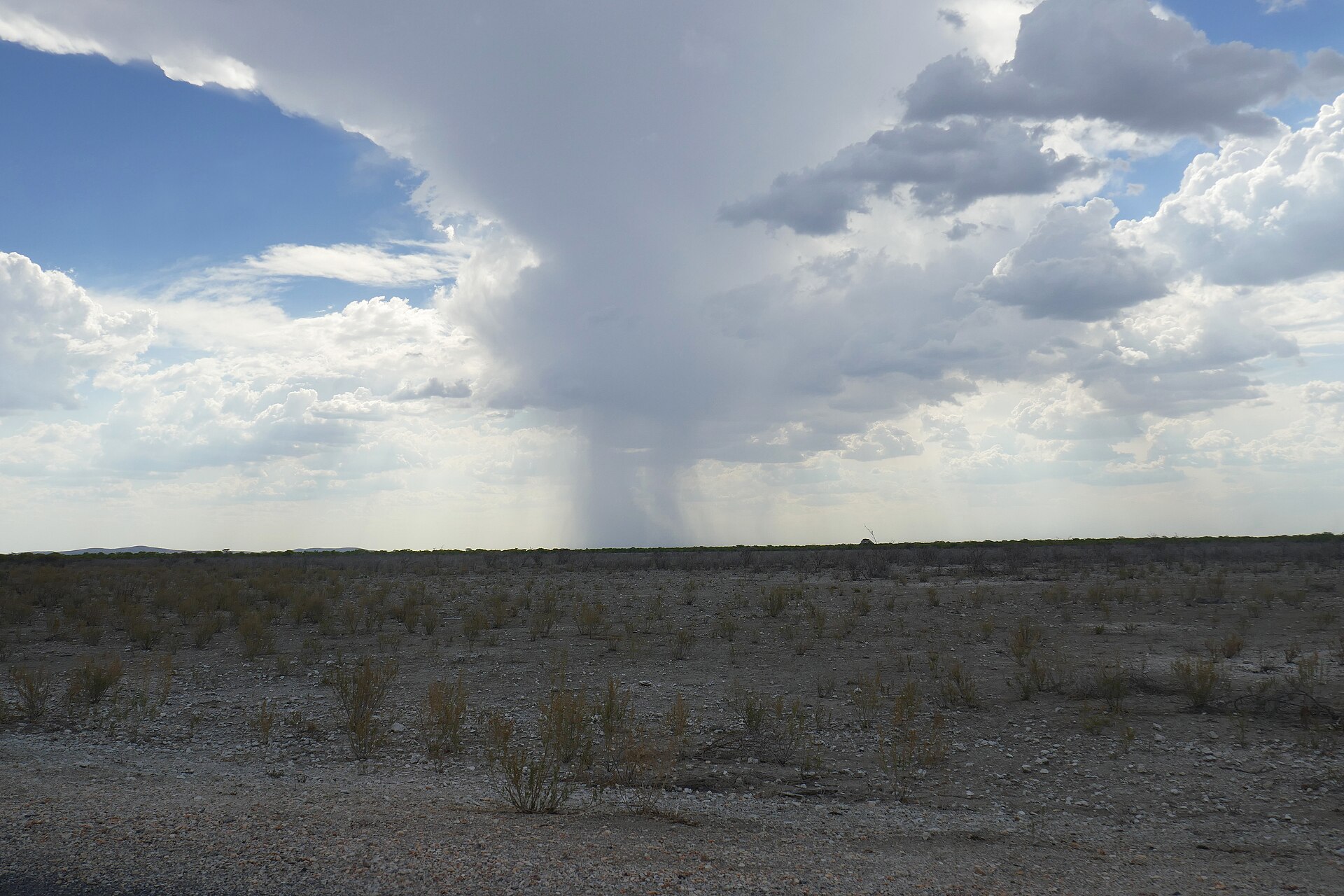
A cloud layer acts like a large diffuser. Black rhino skin, pale dust, zebra stripes and white birds can fit within the camera’s range more easily than under hard midday sun. Watch the histogram, because a grey preview can still contain clipped highlights.
The UK Met Office cloud guide is useful for understanding cloud types and changing conditions. In Etosha, combine that broad knowledge with local forecasts and visible storm development.
Protect shutter speed before low ISO
| Situation | Priority | Adjustment |
|---|---|---|
| Walking animal | Freeze movement | Raise ISO before shutter speed falls |
| Still portrait | Eye sharpness | Use support and a controlled short burst |
| Bird in flight | Fast shutter and tracking | Open aperture and accept higher ISO |
| Wide landscape | Depth and sky detail | Expose highlights and stabilise the camera |
Modern noise reduction is more forgiving than motion blur. Set an Auto ISO ceiling appropriate to the camera and check results after the light changes, not after every frame.
Keep colour believable
Automatic white balance can move between cool and warm readings as clouds pass. RAW files allow later correction, but use a stable preset when consistent colour across a sequence matters. Avoid pushing saturation until the grey landscape becomes unnatural.
- Use a neutral subject or known dust colour as a reference.
- Check that zebra whites retain detail.
- Apply contrast locally rather than crushing all shadows.
- Keep storm clouds textured, not black.
Make the sky earn its space
A featureless grey sky usually needs less of the frame. Lower the horizon when cloud layers, rain shafts or light breaks add structure. Use roads, pan edges and animal direction to connect foreground and weather.
Clouds can simplify colour and make shape more important. Look for silhouettes against a pale background, repeating zebra patterns and small warm details such as grass or dust.
Treat storms as a safety issue
Lightning, strong wind and flooded roads are not photographic accessories. Stay inside the vehicle, follow park instructions and avoid exposed stops when conditions deteriorate. Protect equipment without blocking the driver or controls.
If a road closes or the group becomes uncomfortable, return. No image justifies ignoring weather, gate margins or the driver’s concentration.
Use rain protection without losing readiness
Keep one dry cloth accessible, protect the camera from drips when the window opens and avoid sealing damp equipment in a hot bag. Condensation may form when moving between cooled rooms and humid air. The car-window photography guide and post-thunderstorm viewing guide add practical detail.
Cloudy weather photography in Etosha: an exposure workflow
Cloudy weather photography in Etosha often gives softer contrast and longer periods of usable light, but the camera must still protect shutter speed. Begin in aperture priority or manual exposure with auto ISO, set a minimum shutter speed for the animal’s movement and watch how the pale sky influences metering.
Follow this field sequence
- Make a test frame of a neutral-toned subject rather than the brightest cloud.
- Check the histogram for clipped highlights and blocked shadows.
- Raise shutter speed for walking animals, birds in flight or active predators.
- Use exposure compensation when the sky makes the subject too dark.
- Refocus after a sudden drop in contrast or when rain softens the background.
- Review one frame at a time instead of constantly looking at the rear screen.
For cloudy weather photography in Etosha, a wide scene can show layered clouds, open grassland and animal spacing more effectively than a tight portrait. Look for dust, rain curtains, reflections and small pools of light. These elements explain the weather rather than hiding it.
Keep colour and contrast believable
Photograph in RAW when possible and choose a stable white-balance reference. During editing, resist the urge to add heavy clarity to every image. Good cloudy weather photography in Etosha keeps skin, feathers and distant vegetation natural while using modest local contrast on the subject.
Carry a cloth for the lens, shield equipment from blowing rain and never leave the vehicle where rules require occupants to remain inside. A cloud bank can move quickly, so recheck exposure whenever the subject turns toward a brighter part of the sky. With this routine, cloudy weather photography in Etosha becomes a useful opportunity rather than a compromise. The aim of cloudy weather photography in Etosha is consistent detail, honest atmosphere and behaviour recorded without disturbing wildlife.
cloudy weather photography in Etosha: practical questions
Is overcast light good for wildlife?
Yes, especially for controlling contrast, but shutter speed may need higher ISO.
Should the sky be included?
Only when cloud structure, rain or light adds to the story.
Is rain safe for game drives?
Follow current road and park instructions and treat lightning or flooding seriously.
Cloudy weather photography in Etosha rewards adaptation. Protect motion, keep colour honest and use the softer light to photograph behaviour that harsh midday contrast can hide.
cloudy weather photography in Etosha summary: cloudy weather photography in Etosha becomes easier to plan when current rules, realistic distances and responsible wildlife behaviour guide each decision.