
Solo self-drive Etosha can be quiet, flexible and deeply absorbing. It also places navigation, fatigue management, vehicle checks and every decision with one person. Confidence comes from reducing avoidable uncertainty, not from attempting the longest route alone.
Use conservative daily distances, leave a clear check-in plan with someone outside the park and choose accommodation that does not require a stressful final drive before closing time.
Build a conservative solo route
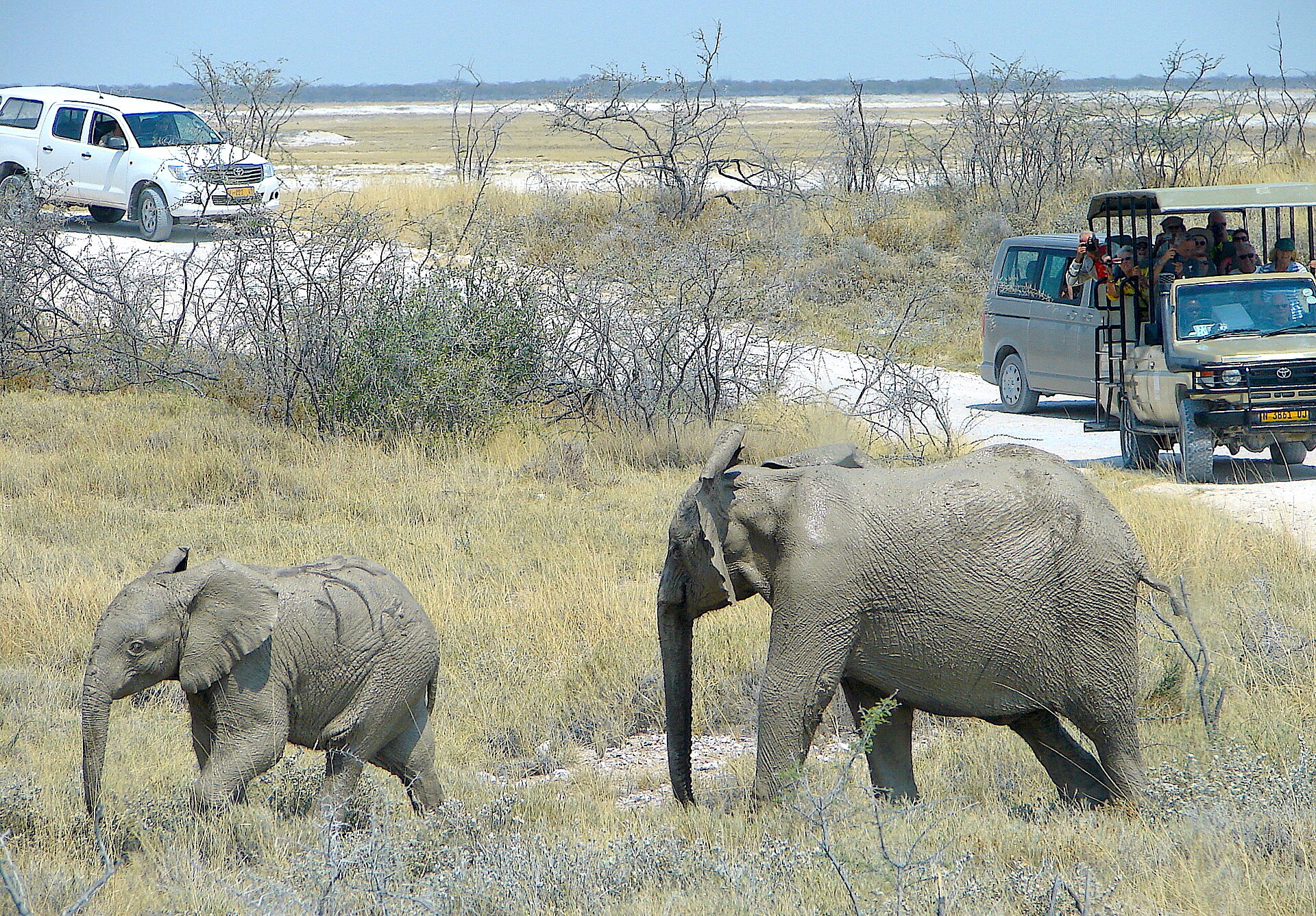
A solo driver cannot share scanning and navigation tasks. Choose one sector per session and fewer named stops. The route should still work if the driver spends thirty minutes at a sighting or turns back early because concentration drops.
| Plan item | Solo standard |
|---|---|
| Transfer day | Shorter than the maximum possible distance |
| Afternoon loop | One compact route with a turnaround time |
| Fuel | Refill before it becomes urgent |
| Arrival | Reach the booked area with a generous gate margin |
| Rest | Stop before fatigue appears |
Create a check-in and offline plan
Share the vehicle, accommodation and broad daily route with a trusted contact. Agree when a missed message should trigger concern, allowing for limited signal. Save gate, camp, rental and insurance contacts offline.
- Download maps before travel.
- Carry a charged power bank and vehicle charger.
- Write key numbers on paper.
- Record the last signed junction if assistance is needed.
Check the vehicle without an observer
Walk around the car each morning. Look at tyre shape, visible damage, fluid under the vehicle, lights and unsecured luggage. Clean windows and mirrors; a solo driver cannot ask a passenger to monitor a suspicious sound.
Namibia travel-safety guidance highlights road and distance risks. Combine broad official advice with the rental company’s exact breakdown and tyre procedure.
Manage sightings without a spotter
Stop fully before using binoculars or a camera. Never roll forward while watching an animal through a lens. Keep the driver’s window setup simple and place equipment where it cannot fall under pedals.
At a busy sighting, plan the exit before settling. Leave enough room to move without asking another vehicle to reverse. Quietly leaving an obstructed scene is often the best solo decision.
Use guided time strategically
One guided drive can teach road-reading, scanning and local context while giving the solo traveller a break from the wheel. It is not an admission that self-drive failed; it can make the following days more confident.
- Choose the first-day loop conservatively.
- Review what felt tiring or uncertain.
- Add a guided drive where interpretation or rest would help.
- Keep the remaining self-drive plan flexible.
Create a calm solo evening routine
Refuel, charge devices, prepare clothing and choose the morning loop before sleeping. Decision fatigue grows when every small task is postponed to dawn. Read Etosha for solo travellers and keep the accommodation finder focused on simple access, safe parking and a route that does not demand a late arrival.
Solo self-drive Etosha: build a daily check-in sheet
A solo self-drive Etosha trip feels more manageable when someone outside the park knows the day’s broad plan. Create a simple check-in sheet before arrival and share it with one reliable contact. It should state the overnight camp, intended sector, vehicle details and the time at which a missed message becomes a concern.
Write down these seven items
- Your accommodation and booking reference for the night.
- The gate or camp from which you plan to start.
- A broad loop or group of waterholes, without promising an exact route.
- Your vehicle registration, colour and rental-company number.
- A normal evening check-in window.
- The park, lodge or rental contact to use if you are genuinely overdue.
- A clear rule that the plan may change for road, weather or wildlife conditions.
For a solo self-drive Etosha day, keep the sheet offline as well as on your phone. Mobile coverage can be unreliable, so a delayed message does not automatically indicate an emergency. Agree on a sensible grace period and never encourage an outside contact to organise an unverified search.
Reduce decisions while driving
Set navigation before moving, store water within reach and stop only at permitted places to change plans. A solo self-drive Etosha visitor should turn back early if concentration drops, weather worsens or the fuel margin becomes uncomfortable. Confidence comes from conservative choices, not from covering every road.
End each day by closing the check-in loop and noting any change for tomorrow. The routine makes a solo self-drive Etosha itinerary flexible without becoming vague. If an unfamiliar section feels demanding, book a guided drive and use it to learn road signs, animal behaviour and realistic timing. A well-planned solo self-drive Etosha journey remains independent while still having a practical safety net.
solo self-drive Etosha: practical questions
Is solo self-drive Etosha suitable for a first safari?
It can be, with conservative routes, a reliable vehicle and clear communication.
Is mobile coverage reliable?
Do not assume it is. Store maps and contacts offline and agree flexible check-ins.
Should a solo traveller drive after dark?
Plan to avoid it and follow all park, gate and road rules.
Solo self-drive Etosha works best when the plan is deliberately modest. Protect concentration, communicate clearly and let a shorter confident loop beat a long day completed under pressure.
solo self-drive Etosha summary: solo self-drive Etosha becomes easier to plan when current rules, realistic distances and responsible wildlife behaviour guide each decision.