
Lodge vs guest farm near Etosha is not a choice between “luxury” and “basic.” A lodge can be small and personal; a guest farm can have polished rooms, a pool and guided activities. Choose by the actual gate distance, room, hosting style, meals and daily safari plan—not the label alone.
In a lodge vs guest farm near Etosha comparison, a lodge often suits travellers who want a broad facility set, scheduled activities and a more anonymous rhythm. A guest farm often suits travellers who value owner-hosted conversation, rural context and a smaller property. These are tendencies, not guarantees, and every booking should be checked individually.
The most important lodge vs guest farm near Etosha question remains geographical: which gate and sector will you use? A perfect property on the wrong approach can consume the best wildlife hours. Fix the gate first, then compare the experience.
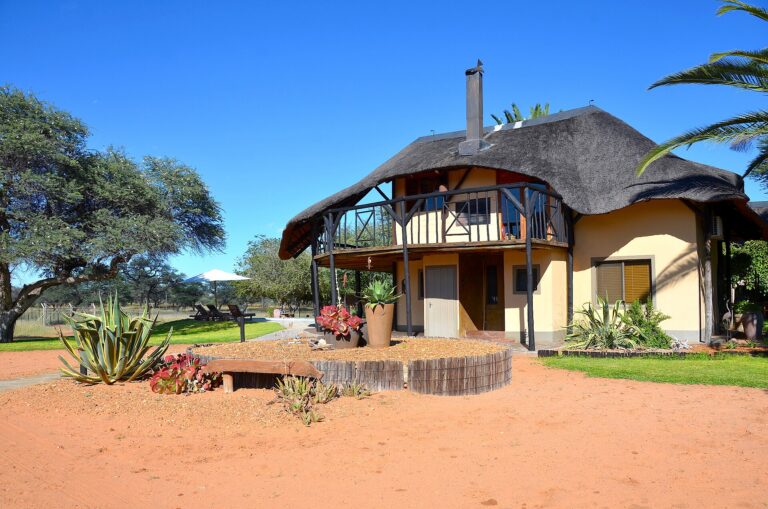
Lodge vs guest farm near Etosha at a glance
| Decision factor | Lodge often offers | Guest farm often offers |
|---|---|---|
| Scale | More rooms, departments and common facilities | Fewer rooms and direct host contact |
| Dining | Set buffet, restaurant or broader menu structure | Shared or set meals with a home-style rhythm |
| Activities | Regular scheduled drives or lodge programme | Smaller, host-led or locally arranged activities |
| Privacy | More anonymity and separate guest spaces | More conversation with hosts and other guests |
| Farm context | May be on a reserve or tourism property | May include working-farm history or operations |
| Consistency | Formal systems and longer service hours | Flexible personal help within a smaller team |
| Guarantee | None of these features comes from the name alone | None of these features comes from the name alone |
Property names are clues, not specifications
Read the current room and service list before deciding lodge vs guest farm near Etosha. “Safari lodge” does not confirm air-conditioning, a private bathroom, a game drive or gate transport. “Guest farm” does not confirm that guests meet the owner, see farm activities or eat communally. The lodge vs guest farm near Etosha decision should be evidence-led.
Verify registration and operator details
Use the property’s official contact and booking terms, and check the business information appropriate to your trip. The Hospitality Association of Namibia represents accommodation categories including lodges and guest farms and provides an industry reference point; membership still does not replace reading the specific booking.
Compare the final rate
For a fair lodge vs guest farm near Etosha price, place the same inclusions side by side: room, taxes, breakfast, dinner, lunch pack, transfers, park fees, activities and cancellation terms. A lower room-only price may cost more after meals and a long gate transfer. A full-board rate may include services the self-driver will not use.
Gate distance decides more than the accommodation type
Ask for time to the actual gate
A listing can be “near Etosha” while remaining a substantial drive from the entrance. Request the route, road surface and realistic normal travel time to Anderson, Von Lindequist, King Nehale or Galton Gate. Confirm whether the estimate includes the park entry process.
Match the sector to the itinerary
A southern base supports Okaukuejo-area waterholes; an eastern base supports Namutoni and Fisher’s Pan; a northern or western choice needs a route designed around its gate. Choosing lodge vs guest farm near Etosha before choosing the sector reverses the decision.
Gate timing affects outside stays
When accommodation is outside the park, every wildlife day begins with entry and ends with exit. Check current gate and tourist-road information for the travel dates. A property with excellent dinner may still be a poor base when guests must leave a productive sector too early to reach it safely.
The guide to staying outside Etosha explains how to calculate the daily access rhythm. Use it with the Etosha safari sector guide before shortlisting properties.
Choose the hosting style you will enjoy
A lodge can offer structure and anonymity
Larger lodges usually separate reception, dining, housekeeping and activity teams. Travellers can move through the stay independently, use common facilities and join scheduled departures. This works well for guests who want predictable systems or prefer not to share every meal with hosts.
A guest farm can add local context
At a small guest farm, the same host may welcome guests, explain the family history, discuss road conditions and serve dinner. That contact can be one of the lodge vs guest farm near Etosha decision’s strengths. It can also feel too social for a traveller seeking privacy after a long game drive. Ask how meals and hosting normally work.
Small teams have different operating rhythms
A personal property may handle late arrivals, dietary needs or laundry flexibly, but reception may not operate around the clock. A lodge may have longer service hours yet less individual adjustment. The lodge vs guest farm near Etosha comparison should include what happens after a delay, not only the welcome description.
Meals can decide lodge vs guest farm near Etosha
Ask about the dinner format
A lodge may offer buffet or à la carte dining; a guest farm may serve a set menu at a shared table. Either can be excellent. Confirm the time, dress expectations, children’s options, beverages and how dietary requests are handled. Set menus need early, specific communication.
Early breakfast matters
Travellers entering at opening need breakfast before departure, a takeaway option or a later brunch plan. Ask what is genuinely available at the travel date. A promised breakfast that starts after the intended gate arrival has little value to a self-driver.
Lunch packs vary
Request the contents, price, order deadline and storage guidance. Some lunch packs suit a full safari day; others are a small snack. Tell the property about allergies and whether a cooler is available. Do not assume the meal is safe all afternoon without proper temperature control.
Self-catering needs more than a kitchenette icon
If cooking matters, confirm the actual hob, refrigerator, utensils, washing space, food-storage security and nearest reliable shop. Some properties prohibit cooking in rooms or restrict fires. The lodge vs guest farm near Etosha choice may become a self-catering vs meal-plan choice instead.
Compare guided activities and free time
Inside-park and private-reserve drives differ
Activities often settle a lodge vs guest farm near Etosha decision. Ask where the advertised game drive occurs. A drive inside Etosha follows national-park routes and rules; a drive on private land offers a different habitat, access system and wildlife mix. Both can be worthwhile, but they are not interchangeable.
Scheduled activities need the right pickup
Confirm the vehicle type, maximum guests, duration, minimum age, pickup point and whether park fees are included. A lodge may run regular departures; a guest farm may arrange a private guide or have limited days. Book the activity that protects the safari plan, not the longest brochure list.
Farm experiences require specific questions
A guest farm may offer a walk, farm tour, stargazing, birding or conversation about rural life. It may also be purely an accommodation business on farmland. Ask what guests can actually do, whether the operation involves livestock or hunting, and whether the experience aligns with personal values.
More facilities are useful only when used
A pool, spa, hide, gym or bar can improve a rest day. On a two-night dawn-to-dusk safari, the group may never use them. Price the lodge vs guest farm near Etosha on the facilities that matter to this itinerary.
Who should choose which experience?
Families
Families comparing lodge vs guest farm near Etosha should prioritise room layout, child policy, pool safety, meal times and gate distance. A guest farm can offer space and personal attention; a lodge can offer family units and a broader activity programme. Neither label guarantees interleading rooms, cots or child-friendly drives.
Couples
A lodge may suit a celebration with private dining and facilities, while a guest farm may suit travellers who value conversation and a quiet rural evening. Ask about room privacy, table arrangements and the atmosphere rather than assuming “intimate” means the same thing everywhere.
Solo travellers
Shared meals at a guest farm can make a solo stay social; a lodge may provide easier scheduled activities and more anonymity. Confirm single supplements and whether guided departures require a minimum number of guests.
Photographers
Focus on dawn access, secure equipment storage, charging, vehicle seating and a quiet workspace. A guest farm host may offer local location knowledge; a lodge may run photography-oriented drives. Ask whether editing late, early departure and bulky gear affect other guests.
Travellers with mobility needs
Request measurements or current photographs of steps, paths, shower access, vehicle boarding and distance from room to dining. A small property is not automatically accessible, and a large lodge may use long uneven walkways. The actual room allocation matters.
Travellers seeking quiet
Ask about room count, group departures, generators, music, farm operations, children’s policy and road noise. A remote-looking photo can hide a busy activity hub; a family farm can be peaceful or operationally noisy. Quiet is a feature to verify.
Questions for a lodge vs guest farm near Etosha
- Which Etosha gate is normally used, and what is the realistic drive time?
- Is the quoted rate room-only, bed-and-breakfast, dinner-bed-and-breakfast or full board?
- What room type is actually allocated, and are beds and bathrooms configured as needed?
- How do breakfast, dinner and lunch packs fit early drives?
- Which facilities are operating on the travel dates?
- Where do guided drives take place and what do they include?
- How many guests join meals and activities?
- What are the child, accessibility and dietary arrangements?
- What happens after a delayed arrival?
- What payment, cancellation and conservation-fee terms apply?
Ask for recent reality
Current room photos, a written inclusion list and direct answers are more useful than an old review. Renovations, ownership, roads and service models change. Save the booking confirmation and clarify any ambiguous promise before paying.
Check sustainability claims specifically
Ask how water, energy, waste, staff development and local purchasing are managed. A vague “eco” label is not enough. The answer should explain practices, limits and guest responsibilities without implying that all impact disappears.
Review the whole trip, not one night
A guest farm may be ideal between Windhoek and Etosha, while a gate lodge is better for the wildlife nights. Mixing property types can provide both rural context and efficient park access. The Namibia Travel Guide destinations overview helps place that choice within the wider route.
Nine decision prompts before booking
- Which gate and sector serve the wildlife plan?
- How much host interaction feels enjoyable?
- Will the group use scheduled activities?
- Does the meal format fit early departures?
- Which room and bathroom details are essential?
- Are pool, spa or common facilities worth the price?
- Does anyone need child, dietary or mobility support?
- Which current reviews discuss the exact room type?
- What does the final rate include?
Common lodge vs guest farm near Etosha questions
Is a guest farm always cheaper?
No. Price depends on room standard, meals, location, season and inclusions. Compare the final stay, including fuel and gate-transfer time, rather than the label.
Is a lodge always more luxurious?
No. Some guest farms are highly polished and some lodges are simple. Verify the exact room, facilities and service model.
Which is better for a first Etosha visit?
The property closest to the correct gate with a suitable room and meal schedule is often better. Experience style comes after geography for a short wildlife-focused stay.
Can I combine both?
Yes. A guest farm can add rural context before the park, followed by a lodge or inside camp for efficient wildlife days. Avoid changing accommodation unless the geography or experience gain justifies the lost time.