
Etosha family packing works best when every item has a job, a place and a reason to be in the vehicle. The goal is not to take the smallest possible bag. It is to keep passengers comfortable, luggage secure below the window line, and water, layers and essential documents reachable without unloading the car at every stop.
Families often overpack because they prepare for heat, cold, dust, rain, boredom, wildlife viewing and a road trip all at once. Those needs are real, but duplication causes most of the volume. A simple capsule wardrobe, shared equipment and one organised day bag can replace several “just in case” bags.
Use this Etosha family packing guide as a decision system rather than a rigid checklist. Adjust it for the season, children’s ages, accommodation, dietary needs and the wider Namibia route, then confirm airline, rental-car and medical requirements directly with the relevant providers.
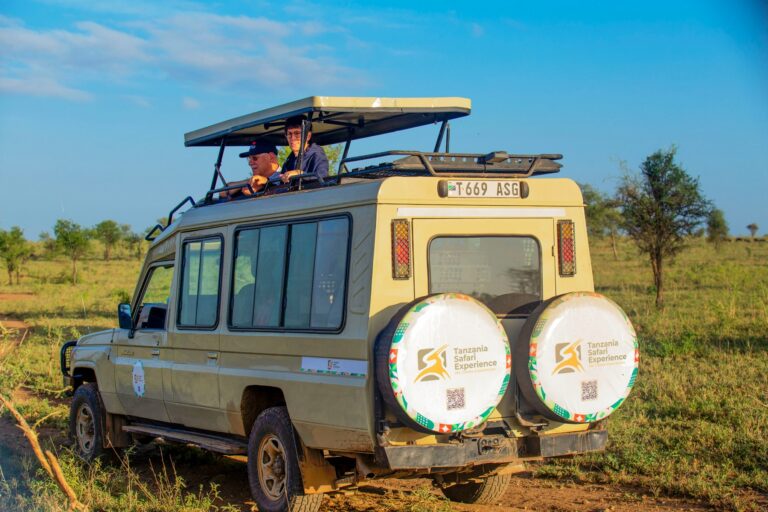
Etosha family packing starts with a space rule
Before writing a list, decide how much luggage the booked vehicle can carry securely. Ask the rental company for an honest luggage layout for the offered category, not only a boot-volume figure. A fridge, spare wheels, child seats, camera bag and drinking water may use space that a marketing photograph leaves empty.
Set the rule that normal luggage stays below the window line and does not block mirrors or rear visibility. Loose bottles, toys and camera equipment should not sit where hard braking can send them through the cabin. If the planned load breaks that rule, remove items or change the vehicle category before the trip.
| Space | What belongs there | What to avoid |
|---|---|---|
| Boot or rear load area | Closed travel bags, spare footwear, sealed supplies | Loose hard objects above seat height |
| One family day bag | Layers, sunscreen, documents, wipes, first-aid essentials | Every person opening a separate suitcase |
| Seat pockets or small organiser | Notebook, tissues, quiet activity, charging cable | Sharp objects and heavy electronics |
| Accessible water position | Secured daily drinking water | Bottles rolling under pedals or seats |
Choose soft bags over rigid cases when appropriate
Soft-sided duffels usually fit irregular spaces more easily than large hard shells. They are not automatically better for every flight or fragile item, so consider the entire journey. Use packing cubes or labelled pouches to give a soft bag structure without turning each category into another full-sized case.
A workable Etosha family packing limit is often one medium travel bag per person plus shared equipment, but the actual vehicle decides. Younger children may share a clothing bag while bulky child seats and nappies occupy more space. Measure rather than relying on a generic family formula.
Use a three-layer Etosha family packing system
Layer 1: items that stay with each person
Each traveller keeps a small set of irreplaceable essentials: travel documents, prescribed medicine, glasses, a warm layer and any age-appropriate comfort item. Adults control passports, cash and vehicle papers. These items should move into the room every night rather than remain visible in a parked car.
Layer 2: one shared safari day bag
The day bag is the centre of Etosha family packing. It carries the next layers, sun protection, wipes, a compact first-aid kit, binoculars, charging power, tissues, rubbish bags and one quiet activity. Keep it small enough for an adult to lift with one hand and organised enough that nobody empties it onto the seat to find a hat.
Layer 3: travel bags opened at accommodation
Main clothing and overnight items stay packed during the game drive. Put the next day’s clean clothes together when the family checks in. This routine reduces roadside rummaging and prevents dust entering every bag. A separate laundry pouch per person contains worn clothes without requiring a second suitcase.
For a longer national itinerary, the Namibia Travel Guide self-drive overview helps families think beyond Etosha. Coastal temperatures, remote roads and the next laundry opportunity may change the list, but the same layered bag system still works.
Etosha family packing: choose clothing by function
Neutral colours are practical in Etosha family packing because they mix easily and show less dust, but visitors do not need a completely new safari wardrobe. Comfortable everyday clothing is usually enough. Choose pieces that layer, wash and dry easily, then add sun, cold and rain protection according to the season and forecast.
- Two or three lightweight tops per person, rotated with laundry.
- Two comfortable lower-body options rather than a different outfit every day.
- One warm mid-layer for cold mornings and open vehicles.
- One wind-resistant outer layer; add rain protection for the expected season.
- A brimmed hat, sunglasses and sun-protective clothing.
- Closed shoes for travel and camp, plus one compact alternative if genuinely useful.
- Sleepwear and enough underwear without packing the entire trip as separate daily sets.
Winter dawns can feel surprisingly cold even when afternoons are mild, while warmer months may be very hot. Recheck the current forecast close to departure. Etosha family packing should respond to conditions, not to a single annual temperature chart.
Create one change-of-clothes reserve
Put one simple change for each family member in an accessible packing cube. It covers a spill, lost airline bag or wet clothing without making the whole wardrobe a cabin item. Once the main luggage is available, the reserve returns to normal rotation.
Etosha family packing for food and water
Carry more drinking water than the planned drive requires, but secure it so containers cannot roll or leak. Split the supply between a daily accessible quantity and a reserve rather than surrounding every seat with small bottles. Refill only from a source you consider safe and follow current local advice.
Food should be simple, sealed and low-mess. Choose familiar snacks that tolerate the expected temperature, plus a few planned meal components if accommodation is self-catering. Do not turn the vehicle into a mobile pantry for every possible preference; check where groceries, meals and refrigerators are actually available along the route.
Build a one-day snack pouch
- One measured snack allocation per person rather than the whole food box.
- A washable container or small bag for rubbish.
- Wipes or a damp cloth kept separate from food.
- A backup snack for an unexpected delay.
- Any allergy-safe items clearly labelled and controlled by an adult.
Do not feed wildlife, leave scraps, or allow children to hold food out of a window. Keep strong-smelling supplies closed and follow accommodation rules for food storage. At campsites, secure food in the method required by the site rather than relying on a shopping bag inside a tent.
Make the driver’s space non-negotiable
The driver needs water that can be reached without looking away from the road, but no bottle may interfere with pedals or controls. Navigation, charging cables and snacks should be set before departure. The Tour and Safari Association’s Namibia travel-safety booklet emphasises vehicle condition, water, route sharing, fuel planning and avoiding distracted driving. That is a strong reason to keep the front cabin orderly.
Choose children’s gear that earns Etosha family packing space
Every child needs a correctly arranged restraint suitable for age, size, vehicle and local requirements. Confirm the exact seat with the rental provider in writing and check it at handover. A child seat is essential safety equipment, not an item to remove because the Etosha family packing plan became too ambitious.
Pack for participation rather than constant entertainment
A notebook, pencil, simple animal checklist and child-sized binoculars can turn waiting into observation. Add one familiar quiet activity for long transfers and a downloaded audio story for times when wildlife is not visible. Avoid a large bag of noisy toys that must be reorganised at every stop.
Keep screen use compatible with motion comfort and shared viewing. Download content before leaving reliable internet and set headphones and volume while parked. Bright screens at a floodlit camp waterhole can disturb other visitors, so prepare a low-light alternative.
Build a small comfort kit
- A familiar soft item small enough to remain secure.
- Child-specific sunscreen and insect precautions advised by a health professional.
- Wipes, tissues and a sealable bag for soiled clothing.
- A warm layer that can be reached before an early drive.
- Prescribed medicine in original packaging with the required documentation.
- A simple snack and water routine that avoids constant requests while moving.
For younger travellers, read the detailed guide to Etosha with young children. It covers short driving blocks, supervision, wildlife expectations and accommodation choices that often matter more than one additional gadget.
Eleven Etosha family packing choices that remove volume
- List shared items once instead of once per traveller.
- Choose a small colour-compatible wardrobe and schedule laundry.
- Decant toiletries only when packaging and safety allow.
- Download books, maps and confirmations for offline use.
- Borrow or rent bulky child equipment only after confirming quality and fit.
- Buy ordinary consumables near the start when availability is reliable.
- Remove duplicate shoes and “maybe” evening outfits.
- Use one charging pouch and label every cable.
- Pack food for the known plan, not an imaginary emergency month.
- Place camera equipment in one protected bag instead of several loose cases.
- Run a complete Etosha family packing test inside the actual vehicle category.
Items not to compress or compromise
Etosha family packing stops being a space-saving exercise where safety and health begin. Keep child restraints, necessary medicine, drinking-water reserve, vehicle emergency equipment, appropriate sun protection and essential cold-weather layers. Ask a medical professional about destination-specific needs; a packing article cannot assess an individual child.
The final Etosha family packing load test
Do the test before the first long drive, ideally at the rental depot or accommodation. Seat everyone in the correct restraint, load every bag, add realistic water and supplies, and check mirrors, windows, seat access and the spare-wheel area. If the door only closes when someone pushes against a bag, the system has failed.
| Check | Pass condition | If it fails |
|---|---|---|
| Driver visibility | Mirrors and windows are clear | Repack or remove luggage |
| Passenger restraint | Every belt or child seat works correctly | Stop and correct before driving |
| Daily access | Water and day bag are reachable while parked | Move one shared bag forward |
| Load security | Nothing heavy can move into the cabin | Tie down or relocate it |
| Emergency access | Required tools and reserve supplies are reachable | Change the loading order |
| Accommodation move | Adults can unload essentials without emptying the car | Consolidate overnight items |
Photograph the successful Etosha family packing layout. The image makes it easier to reproduce after every lodge or campsite and shows which space must remain free when groceries are added. Update the photograph if the vehicle changes.
Common Etosha family packing questions
Do children need a new outfit every day?
Usually not. Plan a small washable rotation, a clean sleep set and one accessible reserve, then confirm laundry opportunities. Pack more only when age, health, itinerary or accommodation makes washing unrealistic.
Should everyone carry a daypack?
One shared day bag often creates less clutter during drives. Older children may carry a small personal pouch at camp, but documents, medicine and critical sun protection should remain under adult control.
How much camera gear fits a family safari?
Take the smallest system that covers the photographs you realistically make. One camera bag, a beanbag or folded support and shared binoculars may be more usable than several bodies and cases. Keep every item secure and never use equipment as a reason to crowd wildlife.
What is the biggest Etosha family packing mistake?
Packing for every imagined problem without checking the vehicle, accommodation and resupply plan. Verify what is already provided, keep a sensible emergency margin, and protect space for passengers. Comfort is created by organisation as much as by volume.