
Quiet Etosha waterhole viewing is not about creating perfect silence. It is about removing avoidable disturbance: abrupt braking, repeated repositioning, slamming doors, loud conversation, music, bright light and the rustle of equipment prepared too late.
Animals still make their own decisions. They may drink, wait, move away or never appear. Quiet behaviour does not guarantee wildlife; it gives the scene more opportunity to continue naturally and makes subtle changes easier to notice.
The same habits improve safety, photography and the experience of other visitors. Arrive softly, settle once, watch broadly and leave without demanding a result.
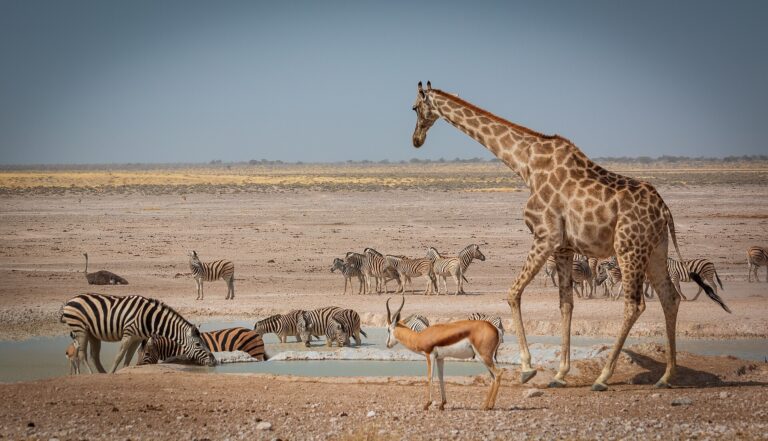
Why quiet Etosha waterhole viewing reveals more
Behaviour is easier to hear and see
Soft alarm calls, hoof movement, wingbeats and a change in breathing can precede visible action. Conversation and idling noise mask those cues. Quiet observers also notice which animal is watching while others drink.
Predictable vehicles are easier to assess
A car that stops smoothly and remains still presents less change than one that advances, reverses and rotates repeatedly. This does not make the vehicle harmless or invisible, but it removes unnecessary motion.
Other visitors share the experience
A waterhole is a communal viewing place. Low voices, muted devices and controlled positioning allow several vehicles to observe without competing through noise or space.
Shared quiet Etosha waterhole viewing depends on courtesy as much as personal patience.
Patience replaces pressure
When the group accepts waiting, there is less temptation to hoot, call, throw, bait or move closer. None of those actions is acceptable. Natural behaviour is not a performance that visitors can trigger.
Make a soft waterhole arrival
Slow down before the final approach
Reduce speed gently and scan both sides of the road. An animal may be approaching away from the visible water. Sudden braking can startle wildlife and passengers.
Choose the first acceptable position
Park where authorised, retain a safe exit and avoid blocking animal paths or another vehicle. A distant clear view is better than squeezing into a narrow gap.
Do not chase the “best” side
Light and animal orientation change. Repeated repositioning can disturb the scene and other guests. Begin by observing from the available place; move only when safe, legal and genuinely necessary.
Finish cabin tasks before arrival
Set camera mode, distribute binoculars, silence phones and open permitted windows before the final stop when safe to do so. Loose bags and bottle searches create noise at the wrong moment.
Prepared passengers make quiet Etosha waterhole viewing easier from the first minute.
Settle the vehicle and reduce repeated change
Follow the current engine instruction
Some circumstances or park directions may determine whether the engine should run or stop. Follow staff and safety guidance. If it can be switched off safely and legally, the reduction in vibration and noise benefits observation.
Keep doors closed
Remain in the vehicle except at authorised locations. Do not open a door for a lower camera angle or to retrieve gear from the rear. The frame is never worth breaching a safety rule.
Use windows and supports gently
Lower windows without a sudden slam and place beanbags or lenses carefully. Keep equipment inside the vehicle outline and do not rest it where the driver’s visibility is reduced.
Leave the road usable
Do not stop across traffic or form a barrier with other vehicles. If the position becomes crowded, yield space and maintain a route out. Quiet Etosha waterhole viewing includes spatial courtesy.
Manage voices, children and devices
Use a conversation level for the scene
Whispering is not always necessary, but excited shouting and repeated directions are. Agree on short phrases before the stop. The driver decides whether a requested move is safe.
Give children an observation task
Ask them to count animals that raise their heads, find the smallest visitor or draw the sequence quietly. Explain before arrival why hands, food and voices stay inside and controlled.
Silence electronic sounds
Turn off camera beeps, phone alerts, games and music. Use headphones only when safe and when they do not isolate a passenger from instructions. Never play animal calls.
Eat elsewhere when possible
Wrappers, smells and dropped food add noise and wildlife risk. Use authorised rest areas for meals. If a medical snack is necessary, keep it controlled and remove every trace.
Food discipline is part of quiet Etosha waterhole viewing because it removes both disturbance and wildlife reward.
The National Park Service’s ethical wildlife photography advice cautions against loud talking or shouting that can frighten animals. The same principle supports all responsible viewing.
Prepare photographs without dominating the sighting
Make the first frame wide
Photograph the animal in habitat before changing lenses or composition. A wide record protects against the sighting ending and explains the waterhole relationships.
Use continuous readiness, not continuous shooting
A short burst can capture behaviour; holding the shutter for every movement creates noise, huge files and less observation. Anticipate the moment, then look away from the viewfinder.
Avoid flash and artificial attraction
Follow park rules and do not use flash to provoke attention or illuminate nocturnal wildlife. Never bait, call, shine bright lights or ask another vehicle to move an animal.
Share the opening
Passengers should take turns when one window offers the only view. A photograph gained by blocking everyone else weakens the group experience.
Fair turns keep quiet Etosha waterhole viewing calm inside the vehicle as well as outside it.
Use silence to read the whole waterhole
Start with the perimeter
Scan shade, tracks, approach paths and the horizon before focusing on animals at water. A cautious individual can spend more time at the edge than drinking.
Watch heads and ears
A wave of raised heads can reveal a change before the cause is visible. Note direction and timing without declaring a predator that nobody saw.
Notice who is waiting
Large animals attract attention, but the most interesting behaviour may belong to a smaller herd using distance and timing. Read our guide to Etosha waterhole drinking order for the risk and competition factors behind the apparent queue.
Accept an empty waterhole
Tracks, birds, wind and changing light still provide information. Set a reasonable wait based on the route, heat and return margin. Empty does not mean the stop failed.
An empty interval is still part of quiet Etosha waterhole viewing when it is used to observe habitat.
Quiet Etosha waterhole viewing becomes a method of observation: notice what changes, identify what is visible and leave motives uncertain when evidence is missing.
Ten habits for quiet Etosha waterhole viewing
- Slow down before the waterhole comes into view.
- Scan animal approach paths before selecting a position.
- Park once in the first safe, authorised place.
- Keep doors closed and bodies inside the vehicle.
- Lower voices and silence electronic alerts.
- Prepare cameras and binoculars before the stop.
- Move lenses, windows and supports gently.
- Watch the perimeter as carefully as the water.
- Give other vehicles clear space and sightlines.
- Leave calmly when time, crowding or animal behaviour requires it.
Use a two-minute settling period
After parking, let the group look and listen before discussing species or settings. This small pause reduces fidgeting and helps everyone understand the scene.
Record behaviour after departure
At an authorised rest point, note the sequence and compare observations. This keeps conversation out of the most sensitive moment and improves memory.
A quiet-waterhole protocol for families and groups
| Role | Before arrival | During the stop |
|---|---|---|
| Driver | Choose the authorised position and explain the time margin | Keep the vehicle stable, watch escape space and decide when to leave. |
| Navigator | Check the route and final return time | Track the buffer without repeatedly announcing it. |
| Lead observer | Scan the road, bank, shade and sky | Point out animals with a clock face and calm voice. |
| Photographer | Set exposure and support before the stop | Move equipment slowly and avoid reviewing every frame. |
| Adult with children | Prepare binoculars, water and expectations | Model quiet speech and handle restlessness early. |
Explain quiet before wildlife appears
Tell children and first-time visitors what quiet means in practical terms: normal low speech, no music, no shouting across seats and no repeated window movement. Explain that the group is waiting for animals to make choices. A rule given after an elephant arrives feels like punishment; the same rule explained beforehand becomes part of the game.
Use a simple hand signal for “look”, “wait” and “we are leaving”. Passengers can then share a sighting without a chain of louder directions. Keep the system simple enough to remember under excitement.
Prepare the cabin for stillness
Place binoculars, camera support, water and one quiet activity within reach. Secure loose bottles, lens caps and bags. Turn off notification sounds, keyboard clicks and camera beeps where the equipment allows. Do this at camp or an authorised rest point rather than while approaching wildlife.
A tidy cabin reduces the need to open doors, reach under seats or move luggage. It also protects the driver’s pedals and mirrors.
Make one calm arrival
Approach slowly enough to scan the road and animals already near the water. Select the first safe legal position with a useful view and settle there. Repeated adjustments for a slightly clearer photograph create more disturbance than accepting a branch or another vehicle in the frame.
Leave approach and departure routes open. If the only available position would block wildlife or traffic, wait farther away or choose another waterhole.
Use structured observation
Scan in the same order: water, bank, near shade, distant cover and sky. Then repeat. This method gives restless viewers a task and reveals more than staring at the centre. Ask children to count species quietly or notice which direction heads turn, without turning the activity into competition.
Describe visible behaviour and avoid dramatic guesses. “The zebra stopped and looked north” is accurate; “there is definitely a lion” is not unless a predator is actually seen.
Control camera movement
Rest the camera until a composition changes. Use a secure beanbag or support, keep straps from tapping the door and limit lens changes in dust. A short burst can record action, but continuous shooting at a stationary animal adds noise and creates hundreds of duplicate frames.
Include wide habitat photographs and reflections instead of demanding a clear portrait. The best image may show how cautiously an animal approaches, which requires space and time.
Handle restlessness before it spreads
A hungry, hot or uncomfortable passenger cannot remain patient indefinitely. Offer water or a quiet snack only when safe and without exposing food to wildlife. If someone needs a toilet, active movement or a louder break, leave for an authorised place rather than asking the entire waterhole to absorb the disruption.
Set a realistic maximum wait for the group and remain willing to shorten it. Quiet Etosha waterhole viewing should be calm, not coercive.
Share the space with other visitors
Keep the road open, avoid blocking a small car with a larger vehicle and allow newly arriving guests a reasonable sightline. Do not reserve empty space with luggage or demand that another driver reposition for a photograph. Courtesy lowers tension, and lower tension keeps voices and engines calmer.
If another group behaves noisily, avoid a confrontation beside wildlife. Create distance if possible and report serious rule breaches to staff at the appropriate place.
Leave as quietly as you arrived
Check for animals behind and beside the vehicle, secure equipment and wait for a clear path. Start gently and avoid a final reposition for “one more shot”. If the departure time has arrived, remove later stops rather than trying to recover minutes with speed.
Discuss the sighting and compare photographs after reaching an authorised rest point. That preserves the final moments for wildlife and for other visitors who remain.
Review the group routine
At the end of the day, ask which preparation prevented noise and what caused unnecessary movement. Recharge devices, replace water and pack the cabin in the improved order. The protocol becomes easier each day and helps new passengers understand that quiet is a form of field skill.
Use silence to notice sound
Once the cabin settles, listen for wingbeats, alarm calls, hoof movement, splashing and changes in the surrounding birds. Sound can direct a careful scan before an animal enters the open. Do not imitate or play a recording in response; the value lies in hearing natural information.
Ask passengers to identify the direction first and the species second. This keeps the discussion brief and reduces confident guesses. A guide may explain the call after the moment without turning it into a lure.
Let an uneventful wait remain successful
No major arrival is required for a worthwhile stop. Light, reflections, insects, small birds and tracks can reveal how the waterhole functions. Leave at the planned time without creating noise to “see what moves”. Quiet Etosha waterhole viewing is measured by attention and restraint, not by whether a famous animal appears.
Carry the habit beyond one waterhole
Use the same soft arrival at roadside sightings, bird-rich clearings and camp viewing areas. Reduce speed early, prepare equipment before reaching the subject and give other visitors room. Consistent quiet prevents excitement from becoming a different rule every time the species changes.
At accommodation, keep voices, doors and lights considerate around animals and sleeping guests. Never approach wildlife on foot outside authorised conditions. Quiet behaviour supports safety and observation throughout the Etosha stay.
When sharing photographs later, describe the patience behind the sighting and avoid suggesting that noise is needed to make wildlife react. Visitor stories shape future behaviour. Celebrating stillness, distance and natural movement helps quiet Etosha waterhole viewing become the expected standard.
Invite travelling companions to choose one quiet habit for the next stop. Small commitments—silencing a phone, delaying image review or using clearer hand signals—turn the principle into repeatable behaviour.
The driver can add one route habit: slowing before the viewing area, choosing a stable position or leaving a larger animal corridor. Review the result after the drive. When people notice more wildlife and feel less rushed, quiet behaviour stops seeming like a restriction and becomes an advantage the whole group wants to protect.
Common quiet-viewing questions
Must the engine always be switched off?
Follow current park, vehicle and safety instructions. When stopping is permitted and safe, reducing engine noise and vibration can help, but a blanket rule should not override local direction.
Can we speak at a waterhole?
Yes, quietly and briefly. Match the level to the animals and other visitors. Shouting, music and repeated excited directions are avoidable disturbance.
What if another vehicle is noisy?
Do not escalate with confrontation at the sighting. Create space if possible and raise serious rule breaches with staff at an appropriate location.
How long should we wait?
There is no universal time. Consider heat, interest, route, children and the return deadline. Patience must remain comfortable and safe.