
Photographing giraffes drinking at an Etosha waterhole rewards preparation. The animal must spread or bend its forelegs, lower a very long neck and interrupt that vulnerable position to look around. The sequence may be brief, repeated or abandoned entirely if the approach feels unsafe.
Choose the frame before the giraffe reaches the edge. Leave room for legs, reflection and surrounding animals, then let the subject enter the composition. A frantic vehicle move at the last moment can disturb the animal and ruin the photograph for everyone.
Understand the giraffe drinking sequence
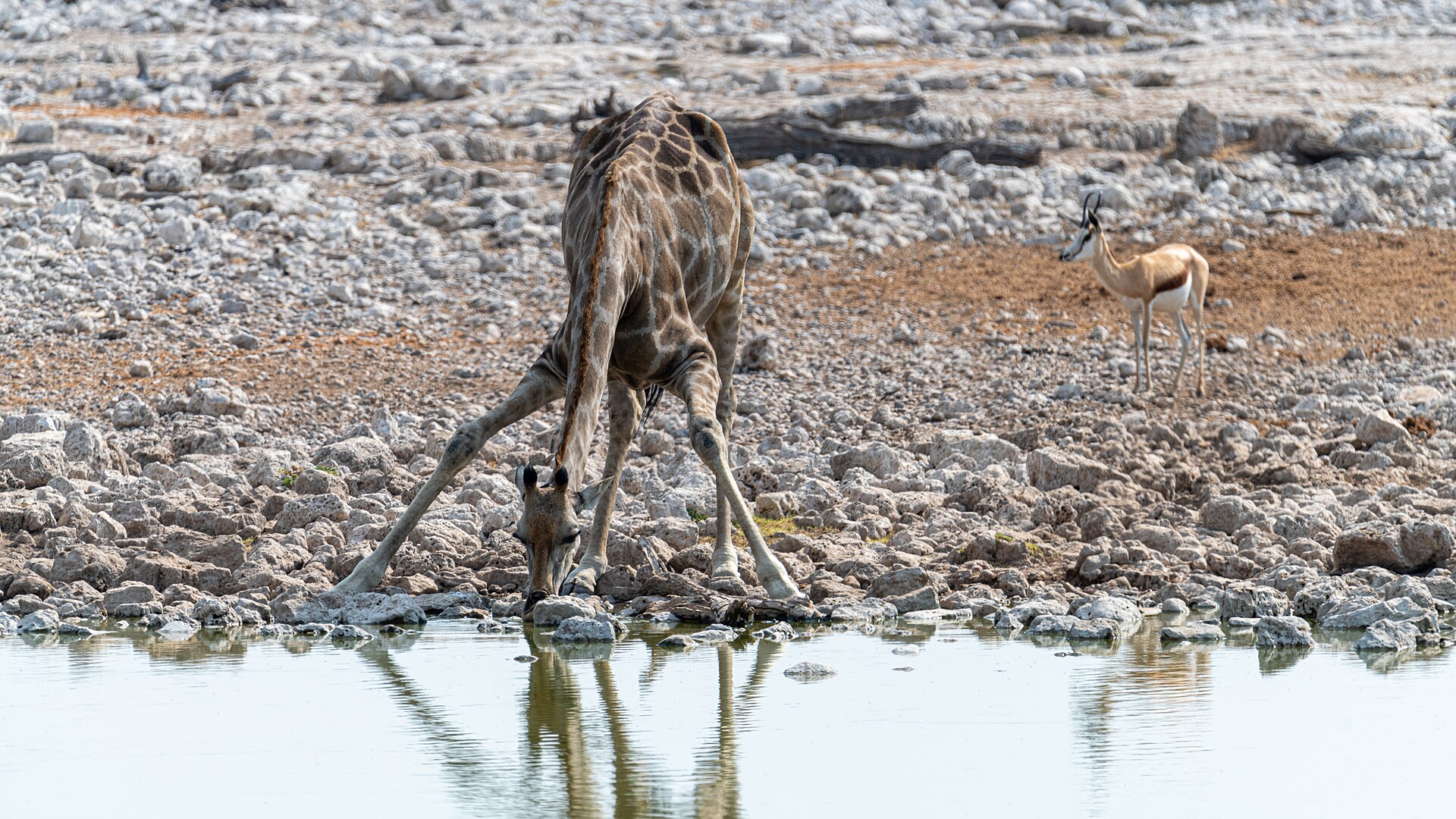
A giraffe often pauses before drinking, scans, widens its stance and lowers the head in stages. Watch the whole body. The best moment may be the cautious approach, the geometric drinking posture, water falling from the muzzle or the rapid head lift.
Do not assume every approach ends in a drink. Other animals, vehicles, sound and the giraffe’s own caution can change the decision. Photograph the behaviour that occurs rather than trying to force the expected sequence.
Position the vehicle before photographing giraffes drinking
Park in a legal place that does not block the waterhole, road or another vehicle’s exit. Keep a wide access corridor. If the giraffe is already approaching, remain still; a slightly imperfect angle is better than making the animal restart.
A lower side window can produce a clean profile. A three-quarter angle shows the spread forelegs and curve of the neck. Reflections need a low, calm water surface and enough space below the animal. Do not crowd the bank simply to obtain symmetry.
| View | Strength | Watch for |
|---|---|---|
| Side profile | Clear neck and leg geometry | Clutter behind the head |
| Three-quarter view | Depth and facial visibility | Overlapping legs |
| Wide environmental frame | Shows Etosha waterhole context | Subject becoming too small |
| Reflection | Strong symmetry when water is still | Cutting off the reflected feet or head |
Camera settings for photographing giraffes drinking
Use a shutter speed that can handle the quick head lift and dripping water. If the giraffe is still, a slower speed may be sharp, but changing posture is faster than it looks. Raise ISO when necessary rather than accepting motion blur in an important moment.
Continuous autofocus and a short burst help during the lowering and lifting sequence. Avoid holding the shutter through the entire drink. Short, intentional bursts reduce duplicate files and keep the photographer attentive to behaviour outside the viewfinder.
A practical starting check
- Focus point follows the eye or head.
- Shutter speed is high enough for a head lift.
- Highlights on pale sky or water are protected.
- The zoom leaves room for the full legs and neck.
- The engine is off when safe and appropriate.
Compose the whole giraffe, not only the head
The drinking posture is powerful because of the complete shape. Leave space beneath the muzzle and around the feet. A vertical frame can work when the full animal fits; a horizontal frame often includes the waterhole, reflection and waiting wildlife.
Watch the background for horns, branches and vehicles intersecting the giraffe’s outline. A small change in focal length may solve clutter without moving the car. If the full body cannot be framed cleanly, make an intentional detail—eye, muzzle and falling water—rather than an accidental crop at the joints.
For more vehicle technique, use the Etosha car-window photography guide and prepare a soft support before arriving at the waterhole.
Protect waterhole access while photographing giraffes drinking
Water is a necessity, not a studio. The official park rules and staff instructions come before a photograph. Remain in the vehicle where required, keep voices low, avoid sudden movement and never reposition into an approaching animal’s path.
- Do not call or whistle for eye contact.
- Never drive off-road for a cleaner background.
- Leave when congestion prevents animals reaching water.
- Do not use flash in a way that disturbs animals or guests.
- Give families and smaller animals a clear exit route.
A guided drive can help photographers anticipate behaviour while someone else manages the vehicle. Compare guided Etosha game drives and ask about vehicle capacity, photographic space and current route rules before booking.
A practical giraffe drinking shot sequence
- Make one wide frame during the approach.
- Lock focus as the stance begins to widen.
- Photograph the lowering sequence in short bursts.
- Pause during steady drinking and watch the whole scene.
- Prepare for the fast head lift and falling water.
- Finish with a wide departure image instead of following the giraffe.
Photographing giraffes drinking is successful when the image and the animal’s access are both protected. Prepare early, frame generously and accept the position available. The resulting sequence will feel more like behaviour and less like a single forced pose.
Plan the waterhole session
- Quiet waterhole viewing — reduce disturbance and see more behaviour.
- How long to wait at an Etosha waterhole — balance patience and route time.
- Etosha accommodation — stay near the sector you want to photograph.
The Giraffe Conservation Foundation explains why the drinking posture is vulnerable and why giraffes may approach water cautiously. That behaviour supports a patient photographic position rather than an attempt to provoke the moment.
Photographing giraffes drinking: quick questions
How long should a photographer wait?
Photographing giraffes drinking may require a quiet wait because a cautious animal can pause or retreat before reaching water. Set the exposure and composition early, then remain still instead of repeatedly repositioning.
Is a reflection always the best frame?
No. Photographing giraffes drinking is about behaviour first. Use a reflection only when the angle and water surface support it without blocking access or crowding another vehicle.
What if the light is harsh?
When photographing giraffes drinking in hard light, protect bright highlights, include the waterhole context and accept a wider documentary frame. Behaviour remains valuable even when conditions are not ideal.
The best approach to photographing giraffes drinking combines preparation, patience and space for the animal.
Photographing giraffes drinking summary: prepare the frame before the animal lowers its head. Practise photographing giraffes drinking with enough space for legs, reflection and other wildlife, and stop photographing giraffes drinking if vehicle movement would interfere with access to water.