
Organise an Etosha campsite so the morning requires almost no searching. The goal is not a perfect display; it is a safe, quiet departure with water, documents, cameras and warm layers accessible while food, waste and scented items remain secure.
A fixed layout reduces lost gear and avoids waking neighbours with repeated doors, crates and torch beams. Set the system in daylight on the first afternoon and repeat it every evening.
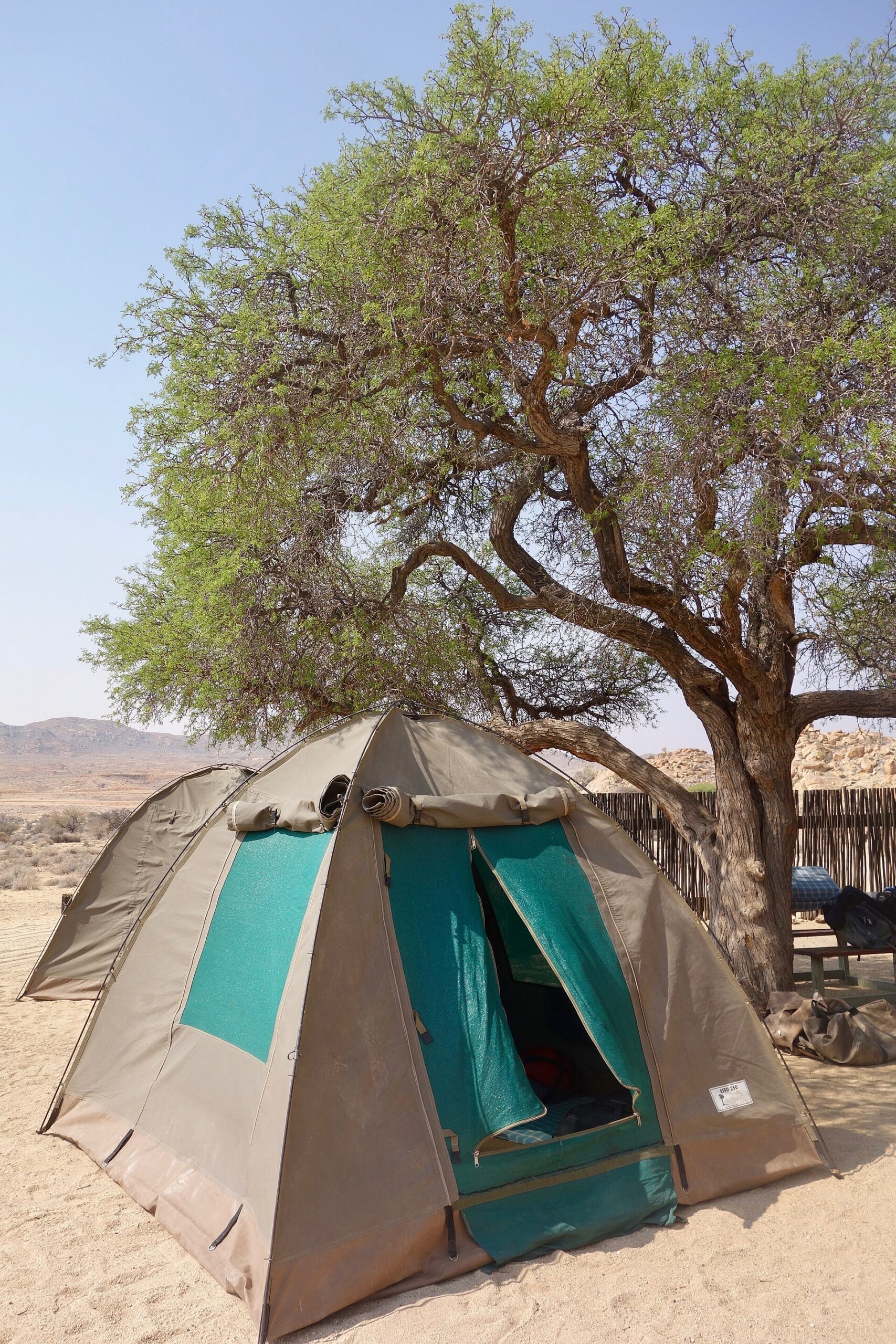
Create five zones to organise an Etosha campsite
| Zone | Contents | Rule |
|---|---|---|
| Sleep | Bedding and clothing | No food or rubbish |
| Kitchen | Stove, utensils and ingredients | Close after every use |
| Vehicle | Documents, day bags and recovery items | Driver’s area remains clear |
| Hygiene | Wash items and toiletries | Secure scented products |
| Departure | Water, binoculars, layers and route note | Nothing unrelated added |
Keep the walkway between tent, vehicle and authorised facilities clear. Guy lines, crates and chairs become hazards in the dark. Use one low, directed light rather than sweeping the site with a bright torch.
Build one early-drive departure crate
Place only the items used on every drive in one crate or bag: water, binoculars, field guide, small first-aid kit, tissues, rubbish bag and charging cable. Cameras may need separate padded storage, but their batteries and cards follow the same fixed place.
The crate should fit without unloading other luggage. If it becomes too heavy to lift safely, remove optional gear. A departure system succeeds through repetition, not capacity.
Secure food, toiletries and waste
Never leave food, scraps or scented toiletries in the tent. Close containers immediately and use the designated disposal system. Wildlife should not learn that people or campsites provide food.
Prepare breakfast components the night before without leaving perishables unsafe. Keep the cooler closed, store utensils clean and place a small rubbish container where every traveller will actually use it.
The ten-minute evening reset
- Refill drinking water.
- Return every item to its zone.
- Charge only the devices needed next morning.
- Lay out warm clothing and shoes.
- Confirm the route and current time limits.
- Secure food, waste and toiletries.
- Check the ground for dropped items.
Complete the reset before conversation or dinner extends late. Tired campers make more noise and forget more equipment. One person reads the list while another handles the vehicle.
A quiet early-game-drive sequence
Dress inside the tent, use directed light, load the departure crate and check that no animal is near or beneath the vehicle. Avoid engine idling while passengers continue packing. When everyone is seated and the campsite is secure, leave calmly under current camp rules.
The driver handles only vehicle and road tasks. Another adult manages snacks, route notes and camera requests. This protects concentration in the dark or low light.
Reset immediately after the drive
Refill water and return equipment before the group scatters. Inspect tyres and the vehicle, then air bedding where permitted and deal with damp items. A short reset after breakfast prevents the entire afternoon becoming campsite maintenance.
For load control, see what to pack for an Etosha campsite. Compare current campsite and room options at Etosha-Namibia.com.
Organise an Etosha campsite around the next safe departure. Fixed zones, secure food and one repeated reset protect sleep, wildlife and the early hours you came to enjoy.
Organise an Etosha campsite: practical questions
What should be packed the night before?
Set aside documents, water, binoculars, a warm layer, camera batteries and a simple breakfast. Keep tent pegs, footwear and vehicle keys in fixed places so an early start does not become a noisy search.
How should food and waste be handled?
National Park Service camping guidance stresses sealed storage, clean preparation and never leaving food unattended. Follow Etosha’s own rules first, secure food from wildlife and clear every scrap before departure.
What can remain outside?
Only equipment that is permitted, weather-safe and unable to attract or entangle wildlife. Chairs, cooking gear and loose packaging are easier to secure at night than to recover in wind or darkness.
How can neighbours be considered?
- Prepare quietly and avoid slamming doors.
- Use low light directed at the ground.
- Complete noisy packing before the quiet period.
- Keep shared facilities clean and brief.
- Start the engine only when departure is imminent.
What is the two-zone method?
Create a clean sleep zone and a separate cooking-and-storage zone within the campsite layout and current rules. Then create a small departure zone inside the vehicle for items needed on the first drive.
To organise an Etosha campsite well, remove morning decisions. A labelled, repeatable system protects sleep, reduces forgotten equipment and gets the group onto the road without disturbing wildlife or other guests.
Organise an Etosha campsite summary: organise an Etosha campsite with fixed zones and a repeatable evening reset. Organise an Etosha campsite quietly so early departures protect neighbours, wildlife and sleep.
To organise an Etosha campsite efficiently, review the system after each drive. Families who organise an Etosha campsite before dusk spend less time searching in the morning.