
Using Kamanjab before Etosha can turn a long western approach into a controlled arrival. The town is useful for checking fuel, food, tyres, cash, road information and the timing to Galton Gate. It should not be treated as proof that the remote western sector is suitable for every itinerary.
Galton Gate serves a very different Etosha plan from Andersson Gate in the south or Von Lindequist Gate in the east. Distances inside the park are substantial, services are less frequent and access arrangements can change. Confirm current park notices, gate times, accommodation and permitted routes before committing.
For travellers linking Damaraland or north-western Namibia with Etosha, Kamanjab before Etosha can be a logical staging point. The best plan uses daylight, carries a margin and gives the western sector enough nights to justify the approach.
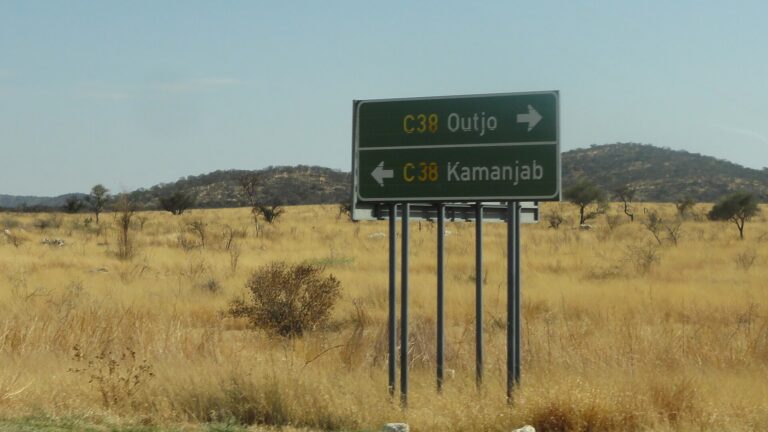
Who should use Kamanjab before Etosha?
Travellers arriving from Damaraland
A route from Twyfelfontein, Palmwag or another north-western stop may naturally reach the Kamanjab area before turning towards western Etosha. Confirm the exact road, surface and travel time for the season. A map line that looks direct may include slower gravel and wildlife or livestock near the road.
Visitors with a western Etosha booking
Kamanjab before Etosha is most convincing when the first night and permitted route inside the western sector are already secured. Do not arrive at Galton Gate expecting to improvise a distant camp after entry. The accommodation confirmation should match the access rules for the dates.
Travellers willing to give the west enough time
The remote sector suits a slower itinerary. If only one or two nights are available and the trip continues east, a southern or eastern gate may reduce transit. The value of the west comes from spending time there, not checking another entrance off a list.
Who should reconsider
A first-time visitor focused on Okaukuejo, Namutoni or a short classic waterhole circuit may be better served by Andersson or Von Lindequist Gate. Families, solo drivers and anyone uncomfortable with longer gaps between services should compare the full route before choosing Kamanjab before Etosha.
What to do in Kamanjab before Etosha
| Preparation | Action in or before Kamanjab | Why it matters |
|---|---|---|
| Fuel | Fill early and confirm the next dependable supply | Availability can change and western distances are large. |
| Food and water | Buy the required meals, drinking water and snacks | Do not rely on every camp shop carrying a full range. |
| Vehicle | Walk around tyres, spare, tools and fluid warnings | The next problem is easier to solve before a remote approach. |
| Cash and payment | Carry more than one payment method | Connectivity or card systems may be unavailable. |
| Road information | Check current official notices and local advice | Rain, maintenance and park operations can alter access. |
| Timing | Calculate the last safe departure, not the fastest arrival | Entry formalities and wildlife delays require a margin. |
Refuel even when the gauge looks comfortable
Range estimates change with gravel, load, wind and speed. Fill at a reliable station and retain the receipt. Ask the rental company whether additional approved fuel capacity is needed for the wider route; never carry fuel in an unapproved container.
Buy only what can be stored safely
Choose food that fits the refrigerator or cooler actually available. Separate raw and ready-to-eat items, keep wildlife from accessing waste and follow camp rules. A remote route is not a reason to overload the car with poorly secured supplies.
Make the vehicle check visible
Inspect tread and sidewalls, confirm spare-wheel pressure according to the rental operator, and locate the jack and wheel tools. Clean the windscreen and lights. If a warning light or tyre concern appears, contact the rental company before leaving Kamanjab.
Download information for offline use
Save confirmations, maps, contact numbers and route notes on at least two devices. Screenshot the relevant section rather than relying on a webpage to load. Tell the next property the expected arrival window.
Plan the Kamanjab-to-Galton Gate drive
Confirm the current route rather than copying an old track
Road names, surfaces, maintenance and access can change. Use a current map, ask the rental company whether the route is permitted and check the Roads Authority Namibia for official network information. Staff instructions and signed diversions on the day take priority.
Travel in daylight
Leave Kamanjab before Etosha with enough daylight for a calm drive, gate formalities and the distance to the confirmed overnight stop. Avoid building the plan around the final possible entry minute. Wildlife, livestock, dust and a tyre stop can use the entire buffer.
A night in Kamanjab before Etosha is worthwhile when it converts that margin from a hope into a dependable part of the itinerary.
Do not chase a map estimate
A navigation app cannot see every corrugation, animal, road crew or wet section. Drive to conditions and the rental agreement, not the promised arrival time. If the schedule is slipping, contact the property while communication remains possible.
Keep the cabin ready
Water, documents, camera and a simple snack should be reachable without opening the boot at the roadside. Heavy luggage must remain secured. A passenger can manage navigation so the driver keeps attention on the road.
Know what not to do after a problem
Do not attempt an unauthorised tow, leave the marked route or continue on a damaged tyre. Move to a safer position only if possible, use the rental company’s emergency process and share an accurate location. Advice for one vehicle does not automatically apply to another.
Prepare for Galton Gate, not just Kamanjab
Carry the correct booking and identity documents
Have passports or identification, vehicle details, accommodation confirmation and payment methods ready. Requirements and fees can change, so verify them close to travel. Do not rely on a screenshot from a previous year.
Preparing these documents in Kamanjab before Etosha keeps the gate stop orderly and prevents the driver from searching through packed luggage.
Check entry and internal road times
Gate hours are not the only deadline; tourist roads and camps have their own operating rhythms. Ask where the day’s drive must end and calculate backwards. A western arrival becomes unsafe when the visitor still has a long internal transfer near closing.
Follow the permitted route
Western Etosha access has historically differed from the more visited central and eastern sectors. Confirm which roads are open to the public, whether access is tied to bookings and what signs or staff direct. The official Etosha National Park overview is a starting point, but current gate instructions prevail.
Set expectations at the gate
Entry is the beginning of the day’s logistics, not the end. Use toilets where available, secure loose items, silence devices and explain to children that the vehicle stays closed except at authorised places. The next service point may be far away.
Western Etosha requires distance discipline
One sighting can change the entire afternoon
A herd on the road or an elephant at a waterhole can hold the group longer than planned. Set a firm turn-around point and keep checking the distance to the overnight camp. Kamanjab before Etosha only creates value if the buffer survives the wildlife day.
Services cannot be assumed
Fuel, food, mobile signal and workshop support may be less frequent than on a town-to-town route. Confirm what is available at the booked camp and what guests must bring. A shop shown on an old map may have limited stock or hours.
This is the practical reason to use Kamanjab before Etosha: replenish dependable supplies before the route becomes more remote.
Waterhole spacing changes the strategy
Do not attempt to visit every named waterhole. Choose a compact sequence, wait patiently at promising stops and abandon the list when distance becomes uncomfortable. The west rewards observation, not collecting pins.
Keep the following day realistic
If the itinerary continues east across Etosha, divide the park over appropriate nights. If it exits west again, avoid duplicating the same approach without a reason. Every camp change should improve access enough to justify packing.
Read the detailed Galton Gate planning guide alongside this Kamanjab stopover article, then verify all operational details for the travel dates.
Compare Kamanjab with other Etosha approaches
| Approach | Strong when | Caution |
|---|---|---|
| Kamanjab and Galton Gate | The route arrives from Damaraland and stays in western Etosha | Longer internal distances and fewer services need confirmed planning. |
| Outjo and Andersson Gate | The itinerary focuses on Okaukuejo and central-western waterholes | Busy periods can create gate and accommodation pressure. |
| Tsumeb and Von Lindequist Gate | The itinerary begins around Namutoni and the east | It is not an efficient approach to western Etosha. |
| Northern approach and King Nehale Gate | The wider route comes from north-central Namibia | Confirm how the next camp and exit connect. |
Do not use the west as a shortcut
Galton Gate is worthwhile when it serves the chosen sector. It is rarely a clever way to reach the eastern park quickly. Compare driving time, night locations and the next destination before booking.
Connect the route beyond Etosha
Kamanjab can link Etosha with Damaraland, Twyfelfontein or the north-west. The Namibia Travel Guide destinations overview helps test whether that sequence forms a coherent national itinerary rather than a collection of distant highlights.
Build a resilient western arrival plan
Protect the afternoon before the park day
Treat the final night before entry as part of the safari rather than empty transit. Arrive early enough to refuel, buy food, check the vehicle and resolve a booking question while businesses and support lines are still operating. A late arrival in Kamanjab can leave every small task for the same morning as the gate drive, which removes the margin the stop was meant to create.
If the preceding day begins in Damaraland, decide on a latest sensible departure before breakfast. Stops at viewpoints, craft markets and roadside attractions can then be enjoyed without silently consuming the Etosha arrival buffer. Anything missed can be moved to another day; a park gate or confirmed camp arrival cannot be treated as casually.
Separate essentials from conveniences
Make two lists. Essentials include the documents required for the vehicle and accommodation, sufficient drinking water, required medication, fuel, tyre equipment and reliable navigation. Conveniences include preferred snacks, extra camera accessories and optional picnic items. Secure the essentials first so a missing convenience never delays departure or tempts the group into rushed shopping.
Pack the cabin for the next stage before sleeping. Place documents together, charge the devices used for maps, and keep water where passengers can reach it without unpacking. Store food and rubbish so animals cannot access them. This quiet preparation is more valuable than attempting to save a few minutes through faster driving the next morning.
Agree on decisions before mobile coverage fades
The driver and passengers should understand the planned gate, first camp, estimated arrival window and response if progress is slower than expected. Choose a check-in point on the route and a time at which the plan will be reassessed. If a property needs an arrival update, send it while communication is available rather than assuming a signal will return later.
Share the route and booking details with a trusted contact who is not travelling in the vehicle. This is not a substitute for following the rental company or emergency procedure, but it gives someone an accurate itinerary. Avoid posting an exact live location publicly, especially when the vehicle and accommodation will be unattended.
Use a conservative time budget
Build the day from the confirmed arrival requirement backwards. Allow time for a fuel stop, gate administration, toilets, road checks and a slow section. Then add a separate margin for wildlife or an ordinary travel delay. If the calculation produces an uncomfortably early start, the route or overnight location needs changing; the answer is not to depend on perfect conditions.
A useful schedule also defines what will be dropped first. Optional waterholes, photography stops and a picnic can be shortened without affecting safety. Gate procedures, signed speed limits and the distance to the booked camp cannot. Agreeing on those priorities in advance prevents a beautiful sighting from turning into a pressured final drive.
Keep weather and road choices connected
Check the forecast together with current road information. Rain can alter gravel-road conditions and visibility, while heat may change how often people need water and rest. Do not assume that another traveller’s recent vehicle or driving time applies to yours. Follow the rental agreement, official signs and instructions from park staff even if a navigation application proposes something shorter.
After heavy rain or a warning about the chosen road, ask for an authorised alternative and recalculate the entire day. Do not improvise across an unsigned track. A longer dependable route may be the better choice, but only if it still reaches the confirmed gate and accommodation within operating times.
Plan the first western game drive modestly
On the first afternoon, choose a short circuit or a small number of waterholes close to the overnight base. The aim is to settle into the sector, learn current road conditions and finish comfortably. A long list creates pressure precisely when the group is still adjusting to the distances and services of western Etosha.
Record fuel level, remaining daylight and the distance back to camp before each optional detour. If any one of those margins becomes uncomfortable, turn back. Kamanjab before Etosha is a sound approach only when the same conservative planning continues after the vehicle passes through Galton Gate.
Nine checks when using Kamanjab before Etosha
- The western route genuinely fits the wider itinerary.
- The first Etosha night and access conditions are confirmed.
- The vehicle and rental contract suit every planned road.
- Fuel, water, food and payment options have been replenished.
- Current roads, gate hours and park notices are checked.
- Departure leaves daylight and an arrival margin.
- Maps, bookings and help contacts are available offline.
- The western game-drive plan uses compact distances.
- The onward route does not force an unrealistic park crossing.
Common Kamanjab and Galton Gate questions
Can I decide on Galton Gate when I reach Kamanjab?
That is risky. Confirm current access and suitable Etosha accommodation before the route begins. Remote western planning should not depend on same-day availability.
Is Kamanjab inside Etosha?
No. It is a separate town used as a service or overnight point on the western approach. Travel time to the gate and then to the booked camp must both be included.
Do I need a 4×4?
Vehicle suitability depends on the complete route and current conditions. Ask the rental company in writing and follow official road restrictions. A 4×4 badge does not make unsafe driving or a closed road acceptable.
Should I stay overnight in Kamanjab?
An overnight can help when the preceding road day is long or when a daylight Galton Gate arrival would otherwise be tight. If the group reaches the area early with a confirmed safe schedule, a supply stop may be enough.