
Etosha campsite packing works best as a small, repeatable system: confirm the booked facilities, cover sleep and weather, organise food and water, keep safety equipment reachable, and remove duplicated “just in case” items. The goal is not to fill every empty corner. It is to reach each item without unloading the car.
Start an Etosha campsite packing list with the exact campsite and vehicle, not a generic safari list. A ground tent, rooftop tent and camper each create different storage problems. Power points, cooking equipment, bedding, braai facilities, shade and refrigeration can also differ between camps and rental packages. Ask for a written inventory before buying or packing anything.
This Etosha campsite packing guide uses zones, limits and a one-night test to keep the vehicle balanced. It also covers food storage, dust, cold mornings, hot afternoons and wildlife-aware camp habits. Reconfirm park rules and campsite facilities before departure because services and equipment can change.
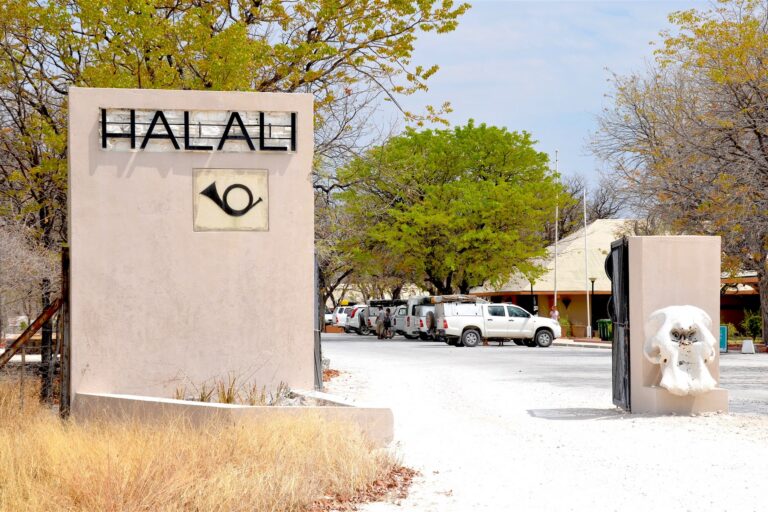
Etosha campsite packing begins with confirmation
Write to the campsite or booking agent before finalising Etosha campsite packing and request the current facilities: site size, ground surface, shade, power, plug type, shared or private ablutions, cooking area, drinking-water guidance, shop hours and any restrictions on fires. Do not assume that photographs show the exact stand or that a facility available last year remains unchanged.
The next Etosha campsite packing step is the rental-company inventory. Check the number and size of tents, mattresses, sleeping bags, pillows, chairs, table, gas equipment, cookware, utensils, water containers, refrigerator or cooler, lights, extension leads, tyre equipment and first-aid kit. “Fully equipped” is a sales description, not an itemised list.
| Question | Why it changes the load | What to record |
|---|---|---|
| Is bedding supplied? | Sleeping bags and pillows consume substantial volume | Number, temperature suitability and sizes |
| Is there a fridge or only a cooler? | Food plan and ice needs change | Capacity, power source and operating advice |
| Does the stand have power? | Cables and charging plans differ | Outlet type, amperage and permitted use |
| Can food be bought nearby? | You may not need the whole route’s groceries | Current shop hours and realistic selection |
| What is the water guidance? | Drinking and washing reserves must be separated | Potability advice and refill points |
Set a hard vehicle limit
The vehicle’s legal payload includes passengers, luggage, water, fuel, food and accessories. Ask the rental company for the specific vehicle’s payload and loading instructions. Do not estimate from the size of the luggage area. Heavy roof loads raise the centre of gravity, and loose objects become dangerous during braking.
For Etosha campsite packing, the usable limit is lower than the legal maximum when every day requires unpacking. Leave open space for groceries, rubbish and items that expand after use. If the load fits only when compressed perfectly, it will not remain practical on a dusty road trip.
Build five Etosha campsite packing zones
Use five labelled zones instead of individual loose bags. The exact containers can be soft duffels, lidded crates or the rental kit boxes. Keep their order consistent so everyone knows what moves at camp and what stays in the vehicle.
| Zone | Contents | Where it should travel |
|---|---|---|
| Arrival | Booking details, keys, headlamp, water, warm layer | Inside the cabin or at the tailgate |
| Sleep | Tent accessories, bedding, sleep clothes | Together, low and dry |
| Kitchen | Stove, cookware, utensils, dry food | One accessible crate |
| Daily safari | Binoculars, camera, sun protection, snacks | Secured in the cabin |
| Safety and vehicle | First aid, extinguisher, tyre and recovery kit | Fixed, visible and never buried |
Use containers that reveal their contents
Choose a few stackable containers that fit the measured cargo space. Label the lid and short side so the name remains visible in two orientations. Soft bags work for clothing and bedding; hard, lidded crates protect food and kitchen items from dust and crushing.
Pack in the order of use
The first arrival items should be nearest the door. A late check-in is not the time to remove food, chairs and camera bags to find a torch. The next morning, the daily safari bag should be available without dismantling the sleeping system. This single decision makes Etosha campsite packing feel lighter.
Shelter and sleep without duplicate bulk
A comfortable night matters more than a large camp kitchen. Confirm the shelter first, then add only the missing sleep layers. In the cool dry season, nights and dawns can feel surprisingly cold; in hotter months, ventilation and insect protection matter. Use a current forecast but pack for the cooler edge of the expected range.
Ground-tent essentials
- Tent, poles, pegs and repair sleeve matched to the actual model.
- Groundsheet sized so it does not collect rain beyond the tent edge.
- Mattress or sleeping pad with a tested valve and repair patch.
- Sleeping bag or bedding suited to expected night temperatures.
- Compact pillow or pillowcase filled with clean clothing.
- One headlamp per adult plus a shared lantern with warm, low light.
Do not add a second sleeping system before testing the supplied one. A thin liner or compact warm layer often solves comfort more efficiently than two bulky duvets. Keep one dry set of sleep clothing sealed away from dusty daytime clothes.
Rooftop-tent checks
Ask for a demonstration and open the tent yourself at vehicle collection. Check ladder position, latches, mattress, bedding, flysheet, wind advice and safe packing sequence. Never climb or move the vehicle while the tent is open. Keep frequently used items below so passengers are not repeatedly climbing after dark.
Shade is useful, but only if manageable
An awning can make a hot rest period comfortable, but it adds setup time and wind risk. Learn the correct supports and pack-down limit from the rental company. A small vehicle-side shade used properly is better than an elaborate shelter that the group cannot secure.
Food and water in an Etosha campsite packing plan
Plan meals by night, then add a modest delay reserve. Choose ingredients that share uses: oats, wraps, firm vegetables, eggs when stored correctly, tinned beans, rice or couscous, shelf-stable sauces and a small seasoning kit. Avoid buying full-size packages for a single recipe.
Separate drinking water from camp water
Follow current advice from the campsite and rental company about drinking water. Carry a clean drinking reserve in food-grade containers and a separate container for washing when appropriate. Distribute weight low and secure every container against movement and leaks.
Use one cold chain
A fridge or cooler is most efficient when opened briefly and packed in meal order. Keep raw food contained below ready-to-eat items, use a thermometer if available and discard food that has not stayed safely cold. Do not depend on daily ice unless supply has been confirmed.
Lock food and rubbish away
Never leave food, scraps, toiletries or rubbish available to wildlife. Store them in closed containers inside the vehicle or according to camp instructions. Clean the cooking area promptly, do not feed animals and take rubbish to designated facilities. Habituated animals can become dangerous and may ultimately be removed.
For the wider Namibia road trip, the Namibia Travel Guide self-drive hub helps place Etosha camping within a longer route. Use it for route context, then verify Etosha-specific facilities directly with the booked property.
Compact clothing for camp and safari
For Etosha campsite packing, use a small clothing capsule that can be layered. Neutral or muted colours are practical for dust and wildlife viewing, but specialised safari outfits are not required. Comfort, sun protection and a warm dawn layer matter more than a coordinated wardrobe.
- Two or three quick-drying tops.
- One long-sleeved sun layer.
- Two practical bottoms plus sleep clothing.
- A warm mid-layer and wind-resistant outer layer.
- Sun hat, sunglasses and closed walking shoes for camp.
- Sandals or shower shoes for ablutions.
- Enough underwear and socks for the laundry plan.
Use one soft bag per person
Hard suitcases undermine Etosha campsite packing because they waste irregular cargo space and are difficult to stack around camping equipment. Soft, zippered duffels compress and can be moved as a unit. Give each traveller one small packing cube for the current night so the main bag stays closed.
Keep dust outside the sleep zone
Store shoes and dusty outer layers in a washable entrance bag. Wipe camera equipment before it joins bedding. A small brush and microfibre cloth are more useful than several decorative camp mats. Keep all scented toiletries closed and packed with the food-storage discipline.
Safety and recovery gear must remain reachable
Etosha campsite packing should never bury the first-aid kit, fire extinguisher, warning triangle, tyre tools or emergency water. Ask the rental representative to show each item and demonstrate the jack points, spare-wheel mechanism and tyre-pressure guidance. Photograph the layout before loading personal bags.
The Tour and Safari Association road-safety booklet stresses sensible speed, safe driving and preparation for Namibia’s roads. Read the rental contract too: recovery equipment is useful only when used within the company’s rules and your competence.
Keep a cabin safety pocket
- Printed and offline booking details.
- Current park and camp contact information.
- Charged phone, cable and power bank.
- Personal medication and a small first-aid kit.
- Drinking water and sun protection.
- Warm layer accessible before the morning drive.
Secure everything before driving
Loose bottles, gas cylinders, tools and camera equipment can injure passengers. Use the vehicle’s tie-down points and the rental company’s storage system. Keep heavy items low and between the axles where instructed. Nothing should obstruct mirrors, airbags, seatbelts or access to an exit.
Run a one-night Etosha campsite packing test
Load the vehicle at the rental depot, then unpack and repack once before the remote part of the route. If possible, spend the first night near a service centre. The test reveals missing pegs, an unsuitable plug, a leaking water container or a box that blocks the spare wheel.
Time the two critical transitions
Time arrival-to-shelter and wake-up-to-road-ready. If either takes too long, remove optional items or change the order. A simple target is that one adult can reach the tent or rooftop mechanism, headlamps and water without unloading the kitchen.
Use a departure sweep
- Tent dry or packed separately for airing.
- Power disconnected and cable stored.
- Gas closed and equipment cool.
- Food and rubbish sealed.
- No pegs, ropes or small items left behind.
- Tyres and ground checked for hazards.
- Every door, drawer and rooftop latch secured.
Eleven things to remove from an overloaded list
- Duplicate cooking sets.
- A separate outfit for every day.
- Full-size toiletry bottles.
- Multiple coolers without a cold-chain plan.
- Glass containers where safer packaging works.
- Bulky chairs when suitable ones are supplied.
- Unverified power appliances.
- Large decorative camp lighting.
- Food for the entire route when reliable resupply is planned.
- Recovery tools you have not been trained or authorised to use.
- Any item without a secure storage position.
Removing an item is not under-preparation when its job is already covered. Good Etosha campsite packing protects sleep, hydration, food safety, vehicle safety and an easy daily routine. It does not attempt to reproduce a house beside the tent.
Common Etosha campsite packing questions
How much water should I carry?
There is no safe universal number. It depends on passengers, temperature, journey length, campsite guidance and reliable refill points. Ask the rental company and accommodation for current advice, carry an emergency margin and distribute the load within the vehicle’s limits.
Do I need a 4×4 for Etosha camping?
A campsite does not automatically require a 4×4. Match Etosha campsite packing to the vehicle chosen for the entire route, current road conditions, load and rental restrictions. Standard visitor roads in Etosha and remote routes elsewhere in Namibia are different planning questions.
Can food stay outside the vehicle overnight?
No. Follow camp instructions and keep food, rubbish and scented items secured from wildlife. A closed cooler beside a tent is still accessible or interesting to animals. Never feed wildlife or leave scraps around the stand.
Should I bring firewood and a braai grid?
Only after confirming current rules, facilities and supply. Responsible Etosha campsite packing avoids firewood and a braai grid when equipment is already supplied or available locally. Fire restrictions can change; never collect wood in the park, and extinguish any permitted fire completely.