
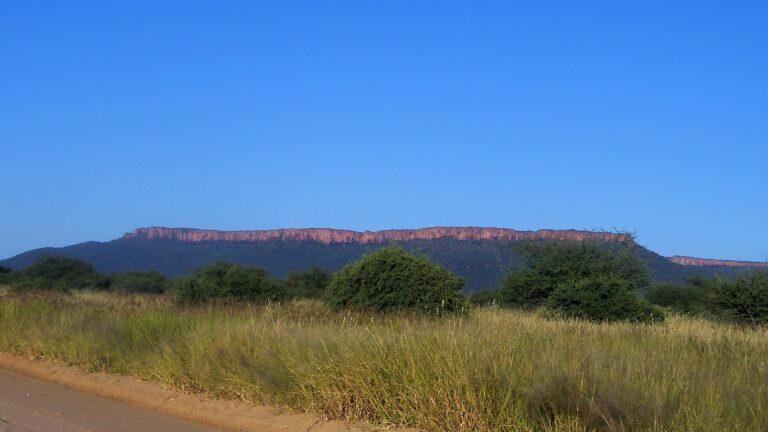
An Etosha and Waterberg circuit combines two very different northern Namibia experiences. Etosha is organised around a vast salt-pan landscape, wildlife roads and waterholes. Waterberg rises as a long sandstone plateau with walking, guided activities, wooded slopes and a history that demands respectful attention.
Five days can connect them without turning every day into a transfer, provided the traveller accepts a focused Etosha stay and one clear Waterberg activity. Add nights when wildlife photography, children, hiking or a relaxed lodge pace is central.
This route is a framework, not a booking promise. Confirm roads, park access, guided activities, meal arrangements and accommodation for the exact dates before departure.
Is a five-day Etosha and Waterberg circuit long enough?
Yes, for a focused first look
The short version works when travellers begin and end from compatible points, book accommodation that supports the route and choose only one or two priority activities at Waterberg. It is not a complete survey of either park.
No, if every sector is essential
A traveller who wants western and eastern Etosha, repeated dawn and sunset drives, a full Waterberg hike and rest time needs longer. Do not solve the mismatch by driving after fatigue or compressing park rules.
Count usable hours, not only nights
A late arrival and an early transfer can turn a two-night stay into one useful day. Mark check-in, gate and meal constraints before counting the wildlife or hiking time.
An Etosha and Waterberg circuit should be judged by those usable hours rather than a headline night count.
Children and photographers need margin
Families benefit from shorter vehicle blocks, while photographers may wait through long quiet periods. Both require more time than a transfer-focused itinerary. Add a night instead of expecting the group to become more efficient.
Why the Etosha and Waterberg circuit works
| Etosha | Waterberg Plateau | What the contrast adds |
|---|---|---|
| Open plains, pan edge and waterhole systems | Sandstone cliffs, slopes and wooded plateau habitat | A major change in landscape and viewing style |
| Self-drive and guided game-viewing roads | Short walks, guided plateau drives and booked trails | A chance to leave the vehicle where authorised |
| Wildlife often viewed from a car or camp waterhole | Scenery, birds, vegetation and selected wildlife activities | A broader northern Namibia experience |
| Conservation history shaped by changing boundaries and displacement | 1904 colonial battle and the genocide of Ovaherero and Nama peoples | A route that requires historical care, not only scenery |
Do not sell Waterberg as “another Etosha”
Waterberg is not a smaller version of a waterhole safari. Its terrain, access and activity structure are different. Choose it because the plateau and its history belong in the journey, not because the species list appears complementary.
The Etosha and Waterberg circuit works precisely because the second park changes the pace and perspective.
The Ministry’s official Waterberg Plateau Park profile describes a 405 km² park proclaimed in 1972, a 50-kilometre porous sandstone mountain, permanent springs, guided plateau drives and walking options.
A practical five-day route outline
Day 1: Arrive in the Etosha area
Use the approach day to buy supplies, refuel, confirm the next morning’s documents and settle into accommodation. Add a short drive only if legal timing, energy and check-in allow. Do not turn a late arrival into a hurried gate attempt.
Day 2: Give Etosha a complete wildlife day
Start from the booked sector and choose a loop that leaves a direct return. Spend time at a few waterholes, read habitat between them and take a proper midday break. Wildlife, not a long checklist, should set the pace.
Day 3: Use a second Etosha session
Return to a promising area or explore a complementary habitat. Keep the final drive modest so luggage, fuel and dinner are organised for the transfer. Two well-paced sessions are more useful than crossing the park and departing exhausted.
Day 4: Transfer to Waterberg and choose one activity
Leave with daylight and a fuel margin. After check-in, select a short authorised walk, viewpoint or restful afternoon according to weather and current resort information. Do not assume a guided activity is available without booking.
Day 5: Waterberg morning and onward travel
Use the cooler hours for the booked drive, walk or birding. Continue only after allowing time for breakfast, check-out and the onward road. If the next destination is distant, choose a short morning rather than beginning the drive tired.
This Etosha and Waterberg circuit deliberately avoids listing every waterhole and trail. The value comes from time inside the landscape, not a dense schedule.
Choose the direction from the wider Namibia route
Waterberg first can ease into safari pace
Travellers can use a walk, early night and plateau view before longer hours in an Etosha vehicle. This direction may also fit an approach from central Namibia, depending on the actual overnight points.
Test this version of the Etosha and Waterberg circuit against the first day’s actual starting point.
Etosha first can finish with contrast
After intensive wildlife drives, Waterberg can provide movement and a different visual rhythm. The route then continues according to the wider holiday rather than returning automatically to the same road.
Test both versions on a map
Include the real accommodation entrances, not only town names. Add fuel, meal, check-in and activity times. The better direction is the one with less backtracking and a safer final day.
The Namibia Travel Guide destination overview can place both stops inside a longer journey, while its self-drive guidance helps frame vehicle and road planning.
Plan the Waterberg stop as its own destination
Book the activity, not only the bed
Guided plateau drives and longer trails can require advance booking and may have fitness, age, equipment or timing requirements. Ask what is operating, how long it lasts and where guests meet.
One confirmed activity gives the Etosha and Waterberg circuit a clear Waterberg purpose.
Wear shoes for the terrain
Sandstone, loose rock and heat require stable footwear, water and sun protection. A short trail still deserves preparation. Follow staff advice about wildlife, route access and turning around.
Use the forested slopes for birding
Waterberg supports a different bird community from Etosha’s open plains. Move quietly, listen and let identification remain provisional when views are brief. A current field guide is more useful than a fixed target list.
Do not promise rare animals
The park has played an important conservation role for rare and valuable game, but access and sightings are not guaranteed. Choose the guided activity for the habitat and interpretation rather than a species promise.
Make room for Waterberg’s difficult history
The landscape is also a historical site
In 1904, Waterberg was the scene of a battle between Ovaherero forces and German colonial troops. The defeat and subsequent pursuit into the Omaheke formed part of the genocide of the Ovaherero and Nama peoples under German colonial rule.
Avoid turning tragedy into a quick attraction
Read authoritative interpretation, use respectful language and allow time for reflection. Do not pose carelessly at memorials or reduce the story to “a battle where many died”. The consequences extended far beyond one day.
Let local and descendant voices lead
Where interpretation is available, attend to how Namibian institutions and affected communities describe the history. A travel article can direct attention, but it should not claim to replace scholarship or memory.
A responsible Etosha and Waterberg circuit holds conservation, tourism and colonial violence in the same itinerary without treating them as equivalent experiences.
Ten checks before confirming the circuit
- Map the actual lodge and camp entrances.
- Confirm Etosha gate access and current procedures.
- Book Waterberg guided activities in advance when required.
- Allow daylight and a fuel margin for every transfer.
- Choose one priority experience per park day.
- Verify meal, shop and check-in hours with each property.
- Pack walking shoes separately from safari footwear.
- Carry sun, water and first-aid supplies for the planned activity.
- Read respectful history before visiting Waterberg memorial sites.
- Keep a shorter route for weather, fatigue or road changes.
A detailed five-day Etosha and Waterberg circuit
| Day | Core plan | Keep optional |
|---|---|---|
| 1 | Travel to Waterberg in daylight, check in and confirm the next day’s booked activity | A short signed trail or viewpoint only if arrival is early and conditions allow. |
| 2 | Use the morning for the planned Waterberg activity and the afternoon for rest, interpretation or a compact walk | Extra trails that would reduce preparation for the transfer. |
| 3 | Drive to the chosen Etosha gate with fuel and meal stops planned, then use a short first game drive | A distant waterhole that threatens gate or camp timing. |
| 4 | Explore one compact Etosha sector with a midday rest or patient waterhole wait | A cross-park chase for a reported predator. |
| 5 | Use the final legal viewing window, exit through the gate that serves the onward route and continue conservatively | An early detour that removes the transfer margin. |
Choose which park receives the extra night
A five-day circuit is compressed. If walking, plateau interpretation or a guided Waterberg activity is a priority, keep two nights there. If Etosha waterhole time is the priority, consider one Waterberg night only when arrival and the booked activity remain realistic. Do not count a late check-in and early departure as two useful park days.
When a sixth night is available, place it where it removes a long transfer or protects a second full day. The best additional night solves a logistical weakness instead of adding another distant destination.
Match the Etosha gate to the Waterberg road
Compare the exact Waterberg property, Etosha accommodation and onward route. The eastern approach may suit a first night near Namutoni, while a different booking can change the logic. Confirm current gate access and do not choose by straight-line distance alone.
Use a current road map and ask the rental company whether every planned road is permitted. Navigation estimates do not account for all stops, slower sections or wildlife near the road.
Keep activity days physically compatible
A Waterberg walk and an Etosha vehicle day use the body differently. Pack suitable footwear, sun protection and water, and disclose relevant limitations to the activity provider. Do not schedule a demanding walk immediately before a long fatigued drive if another arrangement is possible.
At Etosha, give the driver an authorised rest break and keep the first afternoon loop short. Fatigue accumulated on the plateau does not disappear when the vehicle reaches the gate.
Use the route to compare habitats
Waterberg’s elevated sandstone landscape and Etosha’s open pan margins offer different vegetation, views and wildlife experiences. Look for how terrain changes observation rather than treating both parks as interchangeable places to collect species.
Record a wide habitat photograph in each location and ask guides about geology, fire, water and management. The contrast gives the circuit coherence even when a hoped-for mammal is not seen.
Plan food, fuel and communication
Confirm meal inclusions and collection times at both properties. Carry a dependable transfer-day lunch or stop plan, refuel at a reliable opportunity and keep more than one payment method. Save bookings and important contacts offline.
Tell the next stay the expected arrival window. If progress changes, update the property while communication remains available rather than racing the final section.
Build a shorter version for disruption
Heavy rain, road work, illness, a vehicle concern or activity cancellation can change the circuit. Decide which optional walk, waterhole loop or intermediate stop will be removed first. Keep the confirmed accommodation and safe transfer as the fixed structure.
The Etosha and Waterberg circuit remains successful when it protects time in both landscapes. It fails when every delay is answered by faster driving or a later arrival.
Pack one bag for two different kinds of day
Keep walking shoes, a light layer, rain or wind protection, sun gear and a small daypack separate from the luggage used only at accommodation. At Etosha, place binoculars and camera support securely in the vehicle; at Waterberg, follow the activity provider’s equipment guidance. Do not assume safari clothing is automatically suitable for a guided hike.
Carry personal medicine and first-aid supplies as advised, but do not let an overloaded daypack create a mobility problem. Ask what water and equipment the provider supplies, then fill the gap.
Use the final evening to protect departure
Refuel or confirm the first reliable option, settle bills and pack documents before sleep. The last morning can still include a short legal activity, but it should not jeopardise the next accommodation, flight or long road stage. A calm finish is part of the Etosha and Waterberg circuit, not unused time.
Decide which memories the short circuit should create
Give each traveller one priority for Waterberg and one for Etosha, expressed as an experience rather than a guaranteed species. A plateau view, guided interpretation, patient waterhole wait or full morning in one sector is easier to protect than a long checklist of distant attractions.
Review those priorities each evening and remove an optional stop when the next day becomes crowded. The circuit feels fuller when the group has time to observe, walk or rest instead of constantly announcing the next departure.
Include one unscheduled hour in the outline. It can absorb a slow breakfast, an extended sighting, a trail briefing or ordinary fatigue. When no delay occurs, the hour becomes rest or a nearby activity rather than permission to add another long transfer.
Keep that hour visible in the shared plan. If it is quietly assigned to another booking before travel begins, it is no longer a buffer and the circuit should be recalculated.
Use a simple trip folder for both parks: confirmations, activity meeting points, gate notes, rental contacts and the next property’s location. Save it on two devices and carry the core page on paper. A short circuit leaves little time to recover from a missing address, and organised information lets the group spend the available hours on landscape and wildlife instead of searching for messages.
Common circuit questions
Can I see both parks in three days?
The roads may connect on a map, but the result would be dominated by transfers. Five days is already a focused short circuit; more time improves both wildlife viewing and Waterberg activities.
If three days is the hard limit, choose one park instead of compressing the Etosha and Waterberg circuit.
Do I need a four-wheel-drive vehicle?
That depends on the exact roads, season, rental terms and booked activities. Ask the rental company and each property; do not infer suitability from a generic route description.
Should I stay inside both parks?
Inside and outside options have different access, meals and timing. Choose the property that fits the day plan and verify current conditions rather than using a blanket rule.
Is Waterberg a guaranteed rhino stop?
No. Wildlife is never guaranteed, and access to plateau areas may be guided. Book for the landscape and activity, then treat sightings as wild outcomes.