Dry-season mornings in Etosha can feel surprisingly cold, especially in an open safari vehicle or a car that has stood outside overnight. They are also among the most productive hours for wildlife viewing, when roads are quiet, temperatures are comfortable and animals may still be active near water.
The best strategy balances an early start with warmth, visibility and a realistic route. This guide explains what to wear, how to plan the first hours and when to change tactics as the sun rises.
Why dry-season mornings in Etosha feel so cold
Etosha’s dry season overlaps with Namibia’s cooler winter period. Clear skies and dry air allow heat to escape quickly overnight, so dawn temperatures may be much lower than visitors expect from an African safari. Wind created by a moving open vehicle makes the cold feel sharper.
During dry-season mornings in Etosha, temperatures rise rapidly after sunrise. Dress in layers that can be removed without unpacking the vehicle, rather than relying on one bulky coat.
What to wear for an early drive
- A warm base layer and fleece or light insulated jacket.
- A wind-resistant outer layer for open vehicles.
- Long trousers, closed shoes and warm socks.
- A beanie or scarf that will not blow away.
- Light gloves if you plan to use binoculars or a camera.
- A sun hat and sunscreen for later in the morning.
Keep spare layers inside the passenger area. Clothing in the luggage compartment is little help when a lion appears beside the road and no one wants to get out at the next permitted stop.
Prepare the vehicle the evening before
Refuel when convenient, clean the windscreen, charge camera batteries and place binoculars where passengers can reach them. Check tyre condition and make sure windows demist properly. Download the route and save accommodation details offline.
Pack water and a simple breakfast or snack, but keep food sealed. Confirm the next morning’s gate-opening time at reception because park hours change seasonally.
A strong first two-hour wildlife strategy
Start with nearby habitat
On dry-season mornings in Etosha, avoid racing to a distant waterhole before checking the roads and plains close to camp. Predators and nocturnal species may still be moving, while herbivores often gather in open areas as the light improves.
Use the sun carefully
Low-angle sunlight can help photography when it falls across the animal, but driving directly into it reduces visibility. Choose loops that allow side lighting where possible and keep the windscreen clean.
Stop for tracks and alarm behaviour
Fresh spoor, attentive antelope and calling birds can reveal activity that is not immediately visible. Scan slowly before moving on. A cluster of stationary vehicles may indicate a sighting, but park safely and never block the road.
Let a local guide handle the cold start
A guided morning drive can help with route choice, tracks and wildlife behaviour while you concentrate on the experience. Compare Etosha game drives and accommodation near your preferred sector.
Waterholes or open plains first?
For dry-season mornings in Etosha, waterholes are important, but dawn is not always the moment to sit at one place for hours. Cooler conditions allow animals to travel and feed away from water. Begin with a short loop through mixed habitat, then settle at a productive waterhole as temperatures rise.
Wind, recent animal movement and the previous day’s sightings should influence the decision. Read our Etosha waterhole guide, but treat it as a planning aid rather than a promise.
Photography in cold early light
Condensation can form when equipment moves between a warm room and cold air. Allow cameras to adjust gradually and carry a clean lens cloth. Use a faster shutter speed from a moving or vibrating vehicle, then reduce it as light improves.
High ISO is often preferable to a blurred image. Watch backgrounds and leave space for an animal’s direction of travel. Never pressure the driver to crowd wildlife for a photograph.
When to change tactics
As the sun climbs, remove layers, drink water and begin focusing on shade, water and resting areas. By late morning, a long-distance chase can be less useful than patient observation at a waterhole or a return to camp for breakfast.
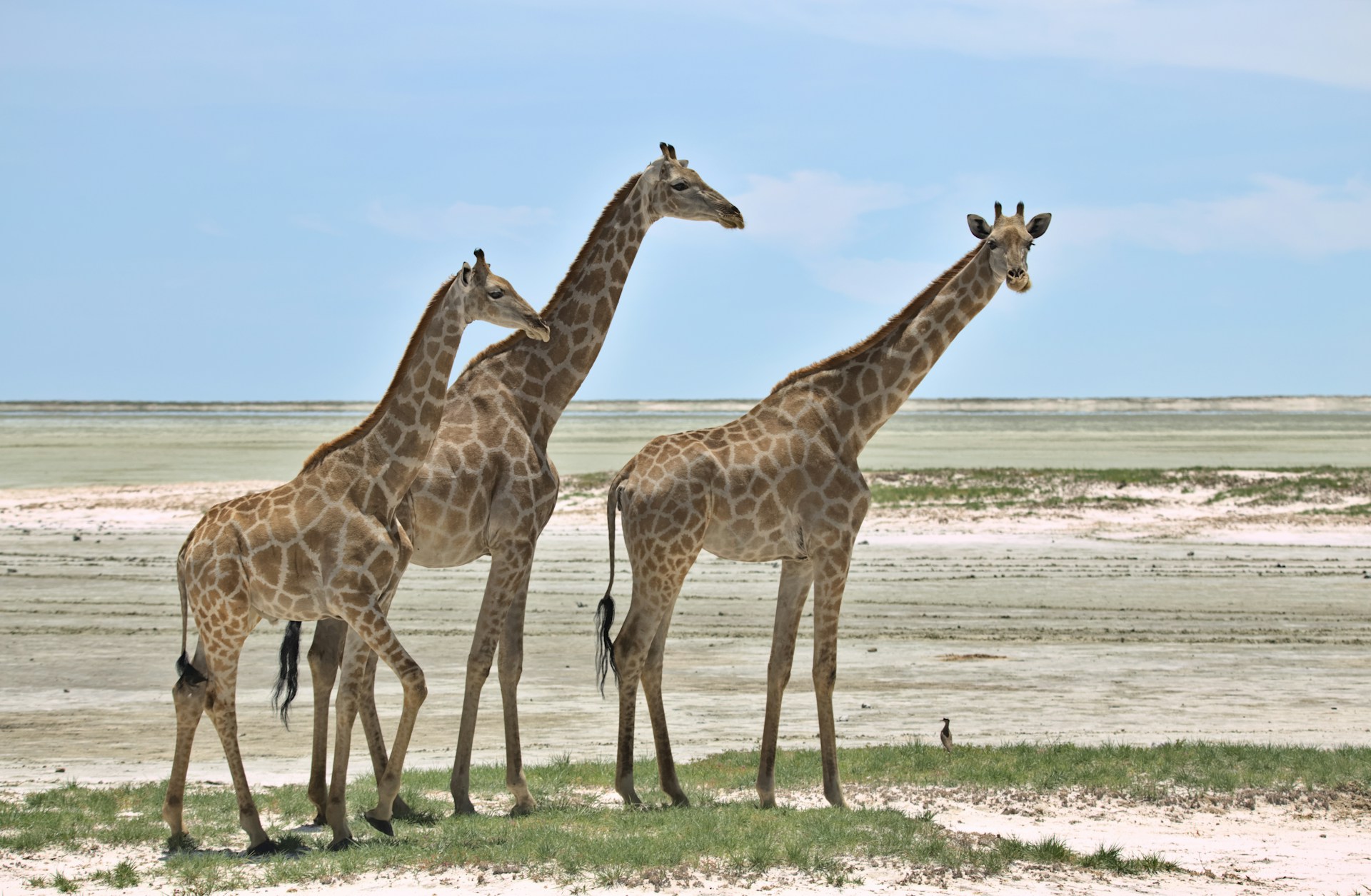
Dry-season mornings in Etosha are not successful only when predators appear. Giraffes moving in first light, zebra social behaviour and birds warming themselves can be equally memorable.
Safety and responsible viewing
Stay inside the vehicle except at designated places, obey speed limits and keep a safe distance from animals. Do not position the car between elephants or block an animal’s route to water. Use quiet voices and switch off the engine when it is safe and considerate.
The Namibian Ministry of Environment, Forestry and Tourism is the authoritative source for current park notices. Always follow instructions provided at the gate and rest camps.
A sample dry-season morning plan
- Before opening: dress in layers, load water and check the route.
- First hour: explore a nearby loop slowly and watch for tracks.
- Second hour: visit one or two waterholes without rushing.
- Mid-morning: settle at a promising location or return for breakfast.
- Late morning: rest, refill and plan the afternoon drive.
Final tips for dry-season mornings in Etosha
Prepare the night before, start close to camp and let temperature and animal behaviour guide the route. Warm layers make patience easier, while a flexible plan prevents the morning from becoming a race between famous waterholes.
For seasonal planning, see the best time to visit Etosha and our complete safari guide. Contact us for help choosing a lodge or guided drive.