
Cold mornings in Etosha can surprise travellers who packed for Namibia’s afternoon sun. The useful response is not a suitcase of heavy winter clothing. It is a small three-layer system that blocks the pre-dawn chill, adapts after sunrise and packs into one seat pocket or day bag.
For most visitors, the winning combination for cold mornings in Etosha is a comfortable base layer, a light insulating mid-layer and a wind-blocking outer layer. Add a beanie, thin gloves and a neck covering for an open vehicle. Every item should also work in camp, during transfers or elsewhere on a Namibia itinerary.
This guide avoids fixed temperature promises because conditions vary by season, weather system, vehicle and personal tolerance. Check an up-to-date forecast shortly before departure, ask the lodge or operator about its vehicle, and build enough flexibility to remove layers quickly as the day warms.
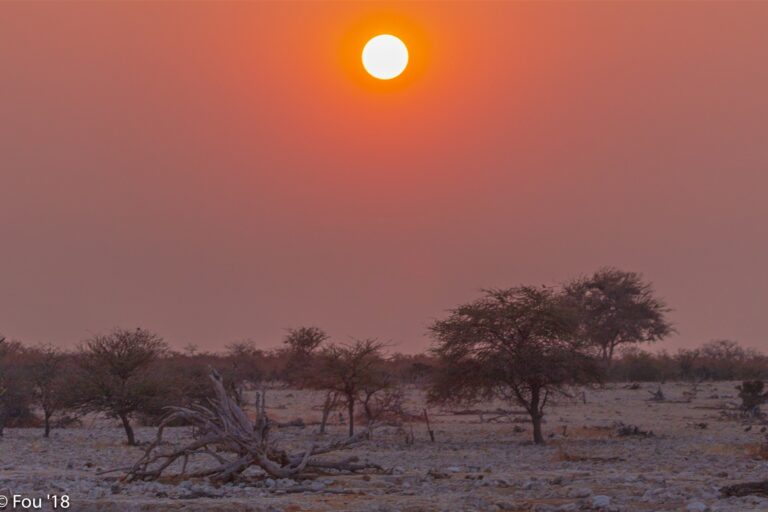
Why cold mornings in Etosha feel colder than expected
A dawn departure combines the coolest part of the day with moving air. On cold mornings in Etosha, wind reaches passengers directly in an open safari vehicle. In a self-drive car, the cabin may warm quickly, but stepping outside at a gate, viewpoint or camp waterhole can still feel abrupt. Tiredness and sitting still also make people notice the cold more.
The afternoon is a poor packing reference
A hot arrival afternoon can make warm clothing seem unnecessary. The same shirt that feels perfect at check-in may be inadequate before sunrise. Pack for the coldest activity—the first moving hour—then make every layer easy to remove when the vehicle stops or the sun rises.
Wind protection often matters more than bulk
A thick fleece can still feel cold when air passes through it. A lighter fleece under a compact wind-resistant shell is usually more adaptable. This is especially important on cold mornings in Etosha because the useful outer layer can later serve during windy viewpoints, camp walks and other road-trip stops.
Conditions change across a trip
Dry-season travel often brings clear mornings and strong day-to-night contrasts, but a cold front, cloud, wind or rain can change the feel of a particular departure. The Namibian Ministry of Works and Transport is home to the national meteorological authority. Use current official information and local operator advice rather than a monthly average alone.
A three-layer system for cold mornings in Etosha
| Layer | Useful characteristics | Avoid |
|---|---|---|
| Base | Comfortable, breathable and quick-drying | A damp cotton layer that stays cold |
| Mid | Light fleece, knit or compact insulated jacket | One bulky coat with no adjustment |
| Outer | Wind-resistant, packable and easy to close | A noisy, stiff shell that restricts movement |
| Accessories | Beanie, neck covering and thin gloves | Large items used only once |
Base layer: start dry and comfortable
Choose a long-sleeved top that feels comfortable against the skin and can remain on after the mid-layer comes off. Merino or a quick-drying synthetic fabric works well; a familiar lightweight shirt can also be enough for travellers who run warm. The goal is moisture management and comfort, not expedition-grade insulation.
Mid-layer: trap warmth without filling the bag
A light fleece, wool knit or compact insulated jacket provides the warmth needed for many cold mornings in Etosha. It should fit under the outer layer without restricting arms or camera movement. Wear it on the flight or during the transfer if luggage space is tight; the same mid-layer can cover cold mornings in Etosha and cooler stops elsewhere.
Outer layer: stop moving air
A wind-resistant jacket with a full zip makes fine adjustment easy. A hood helps when the vehicle is exposed, although it must not block the passenger behind or interfere with hearing the guide. Water resistance is useful during changeable weather, but a heavy technical rain shell is unnecessary unless the wider itinerary demands it.
Lower body: keep the solution simple
Full-length trousers are usually the practical starting point. Travellers who feel the cold can add thin thermal leggings beneath ordinary safari trousers and remove them after breakfast. One adaptable combination is better than carrying separate bulky trousers for every morning.
Match your layers to the safari vehicle
Open guided vehicles
Open vehicles create the greatest wind exposure on cold mornings in Etosha. Ask the operator whether the vehicle has a canopy, side panels, blankets or wind protection and whether outer seats feel different from the centre. Pack so you can dress fully before boarding; reorganising bags in darkness delays the whole group.
For cold mornings in Etosha on an open vehicle, a beanie, neck gaiter and thin gloves can add more comfort per gram than a second jacket. Gloves should still allow safe use of binoculars, camera controls and handrails. Keep loose scarves short or secured so they cannot flap into another passenger.
Closed self-drive vehicles
A closed car warms faster, so use layers that can be removed while safely parked. Do not drive with a bulky coat that restricts shoulder movement or seatbelt position. Put the first removable layer within reach of the passenger, then stop at a legal, safe place before changing clothes.
Camp waterholes and outdoor waiting
Sitting at a camp waterhole can feel colder than driving because the body produces little heat. A compact insulated layer and closed shoes help. Keep voices low and avoid noisy fasteners when wildlife is present. A small seat pad may add comfort if the camp layout and rules permit it.
Photography changes the comfort equation
Photographers remain still and expose their hands more often. Thin liner gloves, spare charged batteries and a neck covering are useful. Avoid breathing warm air directly onto a cold viewfinder or lens, which can create condensation. Keep equipment inside its bag until the vehicle is ready and never let warm clothing crowd a shared aisle.
Small items with high value on cold mornings in Etosha
- A close-fitting beanie that stays on in wind.
- A neck gaiter or compact buff rather than a long loose scarf.
- Thin gloves that operate binoculars and camera controls.
- Closed shoes with comfortable socks.
- Lip balm and sun protection for later in the day.
- A reusable bottle that fits the vehicle holder.
- A small dry bag or pouch for removed accessories.
- One spare layer for a child or traveller who becomes cold easily.
A blanket is a supplement, not a plan
Some guided drives provide blankets, but availability, cleanliness and warmth differ. Confirm before relying on one. A blanket can improve comfort once seated, yet it does not replace a wearable layer for boarding, bathroom stops or waiting outside.
Warm drinks require safe handling
A secure insulated cup can be pleasant on cold mornings in Etosha if the operator allows it. Open mugs, glass containers and drinks passed across rows create spill and wildlife-disturbance risks. Never delay departure or leave rubbish for the sake of a hot drink.
Sun protection belongs in the same small bag
The layers used for cold mornings in Etosha may come off quickly, exposing skin to strong daylight. Keep sunscreen, sunglasses and a brimmed hat in the same accessible pouch as gloves and beanie. The morning system should transition into the day system without returning to the main suitcase.
A simple car routine prevents a clothing mess
Prepare the night before
Lay out the complete outfit, charge devices and put accessories into one pouch. Check the meeting point, breakfast arrangement and vehicle type. If luggage will remain in a parked car, keep valuables and documents with you and follow the accommodation’s security advice.
Use one removable-layer bag
Assign a soft tote, compressible daypack or packing cube to layers that come off. This simple system keeps cold mornings in Etosha from producing loose clothing around the vehicle. Each passenger returns beanie, gloves and mid-layer to that container instead of dropping them around the vehicle. The bag must fit without blocking pedals, doors or emergency movement.
Remove layers before discomfort becomes distraction
Once the vehicle is safely stopped and the air warms, open the shell or remove the mid-layer. Waiting until everyone is overheated encourages hurried changes during a sighting. Cold mornings in Etosha are easiest when warmth is adjusted in small steps.
Restore the kit after lunch
Air out any damp layer, return accessories to their pouch and rebuild the set before evening. A compact routine reduces forgotten gloves and makes the next early start calm. If laundry is available, prioritise base layers and socks; outer layers rarely need daily washing.
Adapt the system for different travellers
Children
Children can cool faster and may not explain discomfort clearly on cold mornings in Etosha. Use soft layers that do not scratch, pack a spare base layer for spills and check hands and mood regularly. Avoid drawstrings or loose scarves around vehicle fittings. Confirm minimum ages and child-seat rules before booking an open drive.
Older travellers and guests with limited mobility
Warmth, easy fasteners and safe boarding deserve equal attention. A long coat can catch on steps; a stiff jacket can make handholds harder to use. Ask for vehicle photographs, step height and assistance, then choose layers that allow unrestricted movement.
Travellers who feel the cold strongly
Add a thin thermal base and a compact insulated vest rather than doubling every item. Chemical or rechargeable hand warmers must be used according to their safety instructions and stored securely. Tell the guide early if cold is affecting concentration or wellbeing.
Travellers combining Etosha with other regions
Choose clothing that also works on Namibia’s plateau, coast or desert rather than packing an Etosha-only wardrobe. The Namibia Travel Guide self-drive overview helps place Etosha within a longer road trip, where wind, altitude and transfer days may change what earns space in the car.
A compact packing list without duplication
| Pack per person | Usually enough | Can be shared |
|---|---|---|
| Base layers | Two long-sleeved options | Laundry plan |
| Mid-layer | One light fleece or knit | No |
| Outer layer | One packable wind-resistant jacket | No |
| Legs | Full-length trousers; optional thin thermal | No |
| Accessories | Beanie, neck gaiter, thin gloves | Small spare pouch |
| Day storage | One compact bag or shared layer tote | Yes, if vehicle space allows |
Use the one-night test
Before departure, put on the full system after sunset or in a cool room. This rehearsal reveals whether cold mornings in Etosha require one better layer rather than three redundant pieces. Sit still for a while, operate the camera, fasten the seatbelt and pack every removed item into the chosen day bag. If a piece has no clear role or cannot layer comfortably, replace it rather than adding more.
Rent or borrow strategically
A traveller from a tropical climate may prefer to borrow a jacket rather than buy specialised gear for one trip. Confirm condition and fit before travel. Do not assume a lodge or operator can supply clothing; ask specifically about blankets and vehicle protection.
What to leave behind
- A heavy coat that works for only one hour.
- Multiple fleeces serving the same purpose.
- Long scarves that flap in an open vehicle.
- Gloves too thick for safe handholds or controls.
- Noisy clothing that distracts at quiet sightings.
- A large hard case used only for spare layers.
Nine quick checks before a cold dawn drive
- Did you check the current forecast and operator message?
- Is the base layer dry and comfortable?
- Does the mid-layer fit beneath the shell?
- Will the outer layer block wind?
- Are beanie, gloves and neck covering accessible?
- Can every layer work elsewhere on the trip?
- Is there one safe bag for removed clothing?
- Can seatbelts and handholds be used freely?
- Are sun protection and water ready for later?
Common questions about cold mornings in Etosha
Do I need a heavy winter coat?
Usually, a flexible base, mid and wind-resistant outer layer is more useful than one bulky coat. Personal tolerance and weather vary, so check the forecast and ask about the vehicle before deciding.
Are shorts suitable for a dawn drive?
Full-length trousers are the safer comfort choice for the coolest hour. A traveller who runs warm can change later. Packing one pair of thin thermal leggings adds flexibility without much bulk.
Will a guided vehicle provide blankets?
Some do and some do not. Confirm directly and ask whether the vehicle is open, covered or fitted with side protection. Dress so the drive remains comfortable if the promised blanket is unavailable.
How do I avoid overpacking for children?
Use the same three-layer logic, choose washable pieces and carry one spare base layer rather than a duplicate outfit for every temperature. Test fit and comfort at home, including the car seat or seatbelt.