
Charles John Andersson is often named in European accounts of nineteenth-century travel through what is now Namibia, including the Etosha region. Charles John Andersson’s writing can help modern readers understand how distant audiences first encountered descriptions of the landscape, wildlife and travel conditions—but it should be read as one perspective, not as the beginning of Etosha’s history.
Long before any European expedition arrived, Indigenous communities knew, used and named the wider landscape. A responsible history therefore places Andersson’s observations beside that much older human story and recognises the limitations of colonial-era travel writing.
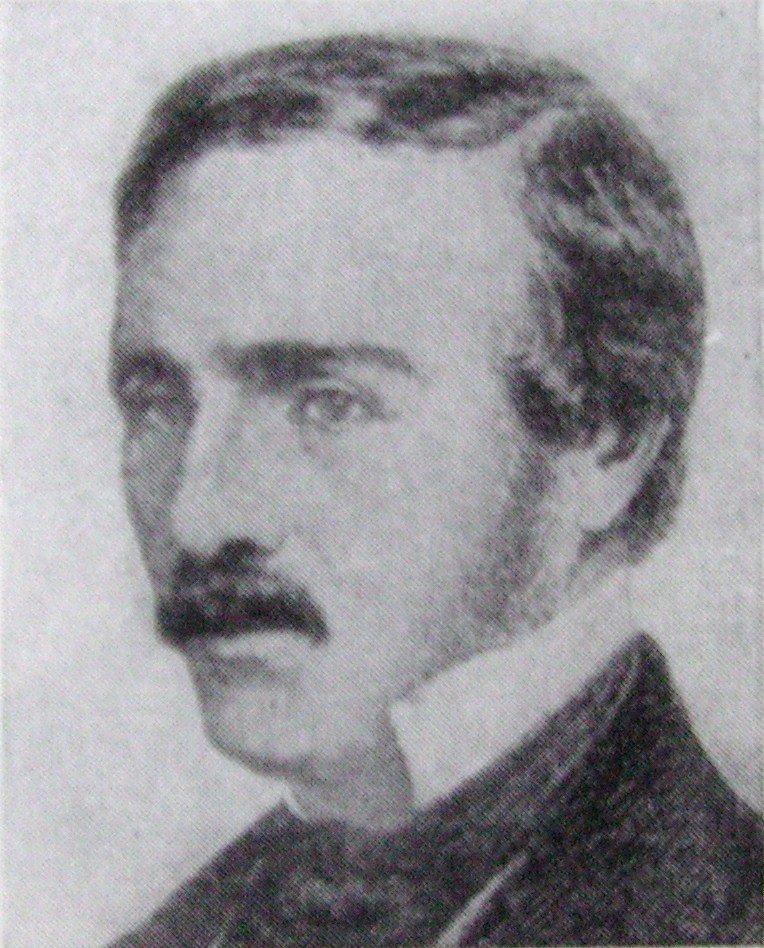
Who was Charles John Andersson?
Charles John Andersson was a Swedish-born traveller, naturalist, trader and writer who worked in southern Africa during the mid-nineteenth century. He travelled for a time with Francis Galton and later continued his own journeys. His published narratives introduced European readers to routes, wildlife and communities across a large part of southwestern Africa.
Biographical details vary slightly between catalogues, including the year attached to some editions and even the spelling of his name. That is one reason to consult digitised primary sources rather than relying on a single summary. The Biodiversity Heritage Library’s catalogue of Lake Ngami provides a scanned historical edition, while the Smithsonian Libraries copy offers another accessible version.
Charles John Andersson and early European accounts of Etosha
Accounts associated with Charles John Andersson and other European travellers are important because they preserve written descriptions from a period before Etosha became a protected area. They discuss the practical difficulties of travel, the presence and movement of animals, water scarcity and relationships between visiting expeditions and local communities.
These texts were written for nineteenth-century readers. Their vocabulary, assumptions and priorities can be uncomfortable today. Hunting occupies substantial space, and local people may be described through a European colonial lens. The material is historically useful precisely when those limits are made visible.
What the travel narratives can reveal
- Landscape: early descriptions record the striking scale, brightness and apparent emptiness of the salt-pan environment.
- Water: routes depended on springs, wells and seasonal supplies, a reminder that access to water shaped every journey.
- Wildlife observations: Andersson’s natural-history interests produced detailed notes, although the language and species names do not always match modern usage.
- Travel logistics: wagons, draught animals, guides and local knowledge were essential to movement through unfamiliar country.
- European attitudes: the narratives show how exploration, commerce, collecting and hunting were intertwined.
Etosha’s story did not begin with European visitors
It is misleading to treat any explorer as the person who “discovered” a landscape already known to people living in and around it. Communities including the Hai||om had deep knowledge of water, wildlife, seasons and movement across the region. Neighbouring communities also maintained relationships with the wider north-central landscape.
Written European sources survived in libraries and were widely circulated, which gave them unusual influence. Survival in an archive does not make one record complete. Oral histories, place names, archaeology and Namibian scholarship are equally important when building a fuller picture.
Our overview of Etosha history places the park’s development in a broader timeline, from human use of the landscape to formal conservation and contemporary tourism.
How to read Charles John Andersson critically
Separate observation from interpretation
A description of a dry water source or a large herd may be an observation. A judgement about a community, landscape or custom is an interpretation shaped by the author’s culture and purpose. Note which is which before treating the passage as evidence.
Check the date, route and edition
Travel books often combine events from different journeys. Later editions may change illustrations, pagination or wording. Before quoting a passage, confirm the edition and identify where the party was travelling. A reference to “the north” or “the lake country” should not automatically be assigned to Etosha.
Expect historical species names
Nineteenth-century writers did not always use today’s common or scientific names. Descriptions of size, horns, markings and habitat can help, but uncertain identifications should remain uncertain. Avoid turning a tentative reference into a confident modern species record.
Notice who is missing from the narration
Expeditions depended on guides, translators, hunters, labourers and communities along the route. Their knowledge may appear only indirectly, or not at all. Ask whose expertise made the journey possible and whose voice was preserved by the published account.
Add historical context to your Etosha journey
A well-placed base lets you combine game drives with time to understand the landscape. Compare Etosha accommodation by area, then build an itinerary that includes viewpoints, camp interpretation and realistic travel times.
What this history adds to a visit today
Reading Charles John Andersson alongside modern history changes how a traveller sees Etosha. The pan is not simply a dramatic white background for photographs. It is part of a living ecological and cultural landscape whose meaning has shifted across communities, seasons and political eras.
At waterholes, consider how water determined travel long before modern roads and camps. On open plains, compare today’s regulated wildlife viewing with the hunting-centred descriptions found in older narratives. At camp, read interpretation panels carefully and look for Namibian as well as European perspectives.
Practical ways to explore responsibly
- Read a short primary-source excerpt before the trip, then compare it with a modern history.
- Use present-day place names and community names respectfully.
- Do not repeat the language of old accounts without context.
- Avoid presenting historical hunting stories as entertainment detached from their consequences.
- Support guides and cultural institutions that foreground Namibian knowledge.
Useful reading before your trip
When studying Charles John Andersson, start with a modern overview, then dip into a primary source rather than trying to read an entire nineteenth-century volume at once. Search for passages on route conditions, water, natural history or the Etosha region, and keep the publication date in view.
For present-day planning, pair the historical background with our Etosha National Park safari guide and wildlife in Etosha guide. Current park rules, gate times and road conditions always take priority over anything described in an old narrative.
A simple three-step reading plan
You do not need specialist training to use an old travel narrative carefully. First, choose a narrow subject such as water, animal behaviour or route conditions. Second, read several pages before and after the passage so the event is not removed from its journey. Third, compare the observation with a modern Namibian source or field guide.
Keep a note of the book title, edition and page number. If a place name is unfamiliar, record the historical spelling and resist guessing. Rivers, settlements and communities were often labelled differently by European publishers, while some locations cannot be identified confidently today.
Questions to ask while reading
- Was the writer present, or repeating information from another person?
- What did local guides or companions contribute to the route or observation?
- Is the passage describing one event or making a broad generalisation?
- Could the season, rainfall or travel conditions explain what was seen?
- Does a modern source confirm, qualify or contradict the claim?
For Charles John Andersson’s accounts, this method turns a colourful quotation into evidence that can be evaluated. It also prevents a dramatic nineteenth-century story from overshadowing quieter but important details about water, labour, translation and local expertise.
History and conservation are connected
Charles John Andersson’s early descriptions remind us that wildlife numbers, access routes and human pressures change. They are not a fixed benchmark for a perfect past. Conservation decisions today rely on monitoring, habitat management, park rules and cooperation with people living around protected areas.
Visitors can contribute by following road and waterhole rules, giving animals space, reducing waste and choosing operators that treat cultural history with care. Reading Charles John Andersson should deepen curiosity, not encourage anyone to recreate the risks or extractive priorities of an expedition era.
Final perspective
Charles John Andersson left influential records of nineteenth-century travel and natural history. Those records are most useful when they are treated as partial documents: rich in detail, shaped by their time and unable to speak for everyone connected to the landscape.
Ready to place Etosha’s history into a practical journey? Contact Etosha Namibia for help choosing accommodation, routes and a comfortable length of stay.