
Best way to see Etosha is not a single vehicle, camp or waterhole. It is a practical combination of the right park sector, enough nights, patient wildlife viewing and a daily plan that protects daylight. This guide compares the choices so first-time visitors can build an Etosha safari around their own dates, interests and comfort.
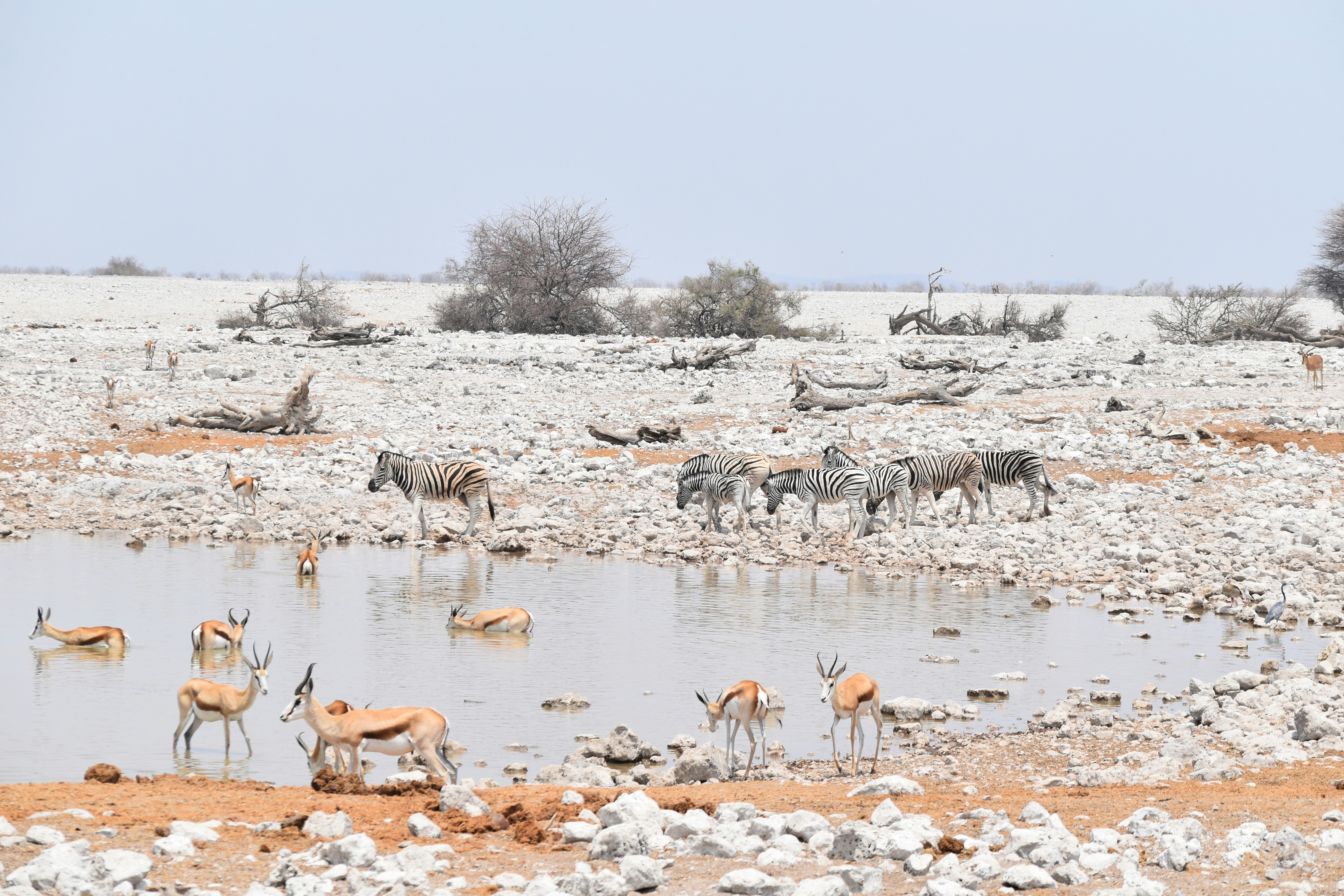
Quick answer: the best way to see Etosha
- Stay at least two nights near the gate that suits your wider Namibia route.
- Use a self-drive for flexibility, a guided drive for interpretation, or combine both.
- Explore one compact sector at a time instead of racing across the park.
- Drive during cooler hours and take a proper midday break.
- Wait quietly at waterholes and read animal behaviour.
- Confirm current roads, gate times, fees and activities before each visit.
1. Start with the purpose of the safari
A first visit may focus on broad wildlife variety and the scale of the pan. A photographer may prioritise light, patient positioning and repeated visits to one area. A family may value short loops, predictable breaks and accommodation with easy meal arrangements. Birders may prefer habitat diversity over famous mammal stops.
The best way to see Etosha depends on those priorities. Write down two priorities before booking. They will help resolve every later decision: which gate, which base, how many nights, whether to add a guide and how long each drive should be. No plan can guarantee lions, rhinos, elephants or any other species. The best way to see Etosha is to create good viewing opportunities without turning wildlife into a checklist.
2. Choose the gate and base together
Andersson Gate is useful for the southern approach and the Okaukuejo area. Von Lindequist Gate serves the eastern approach near Namutoni. Other access points and western areas suit particular routes and confirmed reservations. The shortest line from an airport is not always the best answer; consider the road travelled before the gate and the internal drive after entry formalities.
| Travel situation | Planning response |
|---|---|
| Arriving from Windhoek or central Namibia | Compare Andersson Gate with the booked base and arrival time |
| Approaching from Tsumeb or the north-east | Compare Von Lindequist Gate and an eastern base |
| Crossing the park | Use multiple nights and avoid a late external transfer first |
| One short stop | Choose one sector rather than attempting the whole park |
This gate-and-base match is central to the best way to see Etosha. Staying inside the park can reduce the distance to local routes and may provide access to camp waterholes. Staying outside can offer different room types, dining arrangements, guided activities and price points. Compare the whole safari day, including gate travel and activity pickup, not only the room rate.
3. Allow enough nights
One night is vulnerable to a delayed arrival and usually protects no complete wildlife day. Two nights preserve one full day. Three nights allow a second loop, a guided activity or time to adapt to conditions. Four or more nights can support two bases without making every day a transfer.
| Stay | Realistic use |
|---|---|
| One night | Short local drive only if arrival is early |
| Two nights | One complete game-drive day |
| Three nights | Repeated habitat or one guided activity |
| Four to five nights | Two park sectors at an unhurried pace |
If the itinerary feels expensive or crowded, remove a distant stop before cutting Etosha to a rushed overnight. Time is what lets travellers stop safely, wait at waterholes and respond to the day rather than chase a schedule.
4. Compare self-drive and guided game drives
A self-drive provides control over pace, rest stops and how long to remain at a sighting. It works well for travellers comfortable with park rules, navigation and long periods of concentration. A guided game drive adds local interpretation of tracks, alarm calls and habitat, and it gives the regular driver a break.
Combining both is often the best way to see Etosha on a first visit. Take a guided activity early, then apply the guide’s context during later independent drives. Before booking, confirm whether the vehicle is open or enclosed, departure time, pickup point, duration, age restrictions and suitable clothing. Treat sightings as possibilities, never as guarantees.
Add interpretation to one Etosha drive
A guide can help travellers read behaviour and habitat while the usual driver rests. Compare relevant Etosha guided game drives, then confirm the exact route and service directly.
5. Use a compact daily rhythm
For many travellers, the best way to see Etosha is a compact rhythm. Begin with a short route in the cooler morning hours. Stop long enough to scan rather than photographing only from a moving vehicle. Return for breakfast or a midday break before fatigue affects concentration. The afternoon drive should be shorter, with optional stops removed as the return-time margin narrows.
- Confirm current roads and times.
- Choose three priority stops in one sector.
- Keep one extension optional.
- Set a turnaround time before departure.
- Remove the extension before the safety margin disappears.
- Return without speeding.
The best way to see Etosha leaves time unused on paper. Do not use an online drive-time estimate as a promise. Wildlife, dust, road conditions and other vehicles add uncertainty. A route that looks short on a map can fill an entire game drive when observation is patient.
6. Read waterholes instead of collecting them
Waterholes are important, especially in drier conditions, but they have no fixed performance schedule. Approach slowly, park without blocking traffic or animal access, and scan the surrounding habitat before focusing on the water. Dust, tracks, bird activity and the posture of antelope may indicate movement outside immediate view.
| Observation | Responsible response |
|---|---|
| Animals staring in one direction | Stop quietly and scan without crowding |
| Elephants approaching the water | Leave a broad, open route |
| A quiet waterhole | Wait when time allows, or continue calmly |
| Growing vehicle congestion | Keep circulation open and leave if necessary |
| Animal behaviour changes because of you | Increase distance immediately |
Ten quiet minutes can reveal interactions that a fast circuit misses. Use our Etosha waterhole guide to understand the choices, but let current conditions decide where to pause.
7. Adapt the best way to see Etosha by season
Drier periods can concentrate wildlife around established water, while popular routes may also be dusty and busy. Greener periods can spread animals across fresh grazing and temporary water, with cloud, birds and changing road conditions adding interest. Neither season guarantees a species or a particular scene.
| Condition | Useful adjustment |
|---|---|
| Dry and dusty | Protect equipment and leave more space between vehicles |
| Hot afternoon | Rest, hydrate and use a shorter late drive |
| Recent rain | Scan fresh grazing and confirm road conditions |
| Cold morning | Pack warm layers, especially for open vehicles |
| Strong wind | Expect dust and use sheltered observation points |
Compare the trade-offs in our seasonal Etosha guide. Then ask accommodation or park staff about actual conditions close to travel.
8. Make wildlife welfare the viewing standard
- Stay on designated roads.
- Leave the vehicle only where this is expressly permitted.
- Never feed, call, bait or provoke wildlife.
- Do not surround an animal or block its route to water.
- Keep noise and sudden vehicle movement low.
- Do not share sensitive rhino locations in real time.
- Follow current staff instructions even when another visitor does not.
Natural behaviour, not closeness, is the measure of a good sighting. If an animal stops feeding, changes direction or shows agitation because of a vehicle, create more space. The official Namibia Wildlife Resorts Etosha page is a useful starting point for current resort and activity information.
Practical packing for a better safari day
- Drinking water plus a separate delay reserve.
- Warm layers, hat, sunscreen and light rain protection.
- Binoculars for every pair of travellers where practical.
- Offline map, booking details and current emergency contacts.
- Charged batteries, power bank and lens-cleaning materials.
- First-aid supplies and prescribed medication.
- Snacks secured so that no food or rubbish reaches wildlife.
Ask a qualified travel-health professional for advice relevant to your route, dates and personal circumstances. Vehicle choice should follow confirmed roads and rental terms; a 4WD is not permission to enter a closed or unsuitable route.
A simple three-night itinerary
| Day | Plan |
|---|---|
| Arrival | Enter in daylight, check in and use only a short local loop if time allows |
| First full day | Morning self-drive, midday rest and compact afternoon route |
| Second full day | Guided drive or repeat productive local habitat |
| Departure | Short drive only when the onward distance protects daylight |
This rhythm makes delays manageable and prevents the final drive from becoming a race. For a two-base visit, add nights rather than using one of these full days as a long transfer.
Common mistakes
| Mistake | Better choice |
|---|---|
| Trying to visit every famous waterhole | Explore one compact sector slowly |
| Booking one night after a long transfer | Protect at least one full wildlife day |
| Chasing a reported predator | Read nearby habitat and behaviour |
| Driving through the midday heat without rest | Pause before fatigue affects judgement |
| Adding one last stop near closing time | Keep a comfortable return margin |
Choose the viewing style for your group
Solo travellers should keep routes shorter because navigation, observation and driving fall to one person. Share the itinerary with someone outside the vehicle, keep communication charged and stop before concentration fades. Couples can divide navigation and wildlife scanning, but the passenger should avoid urging the driver to stop suddenly or reverse into traffic.
Families usually benefit from predictable breaks, nearby toilets and a small number of high-quality stops. Give children binoculars, a simple species notebook and permission to enjoy birds, tracks and landscapes rather than waiting only for large mammals. Pack familiar snacks and warm layers, secure every loose item and never allow food to be offered to animals.
Travellers with limited mobility should confirm room access, vehicle steps, activity boarding and viewing arrangements directly with the accommodation or operator. A camp waterhole or a well-positioned guided vehicle may add valuable observation without an exhausting all-day drive.
Photography without sacrificing the safari
Prepare the camera before a sighting develops. Use a shutter speed suitable for movement, check exposure against pale pan backgrounds and keep a wider option ready for animals in the landscape. A beanbag or stable support can help from the vehicle without taking space from other visitors.
The best way to see Etosha through a camera is still to watch first. Do not reposition the vehicle repeatedly when the change would crowd an animal, block a road or disturb another visitor. Use focal length instead of driving closer, turn off unnecessary sounds and avoid flash where it may disturb wildlife or other guests. Back up images during the midday break, not while animal behaviour is unfolding.
Decide when to leave a sighting
Leave when the vehicle is affecting behaviour, when congestion prevents safe circulation or when the return-time margin is shrinking. It is also reasonable to leave a famous but inactive waterhole and explore nearby habitat. Staying longer is not automatically more patient if the queue is growing or animals have lost a clear route.
A useful routine is to make one final scan with binoculars, check mirrors, signal calmly and move away without sudden acceleration. Record the location only after the vehicle is safely stopped elsewhere. For rhinos and other sensitive wildlife, avoid publishing real-time locations. Responsible departure is part of a good sighting, not the end of it.
Frequently asked questions
Is a self-drive or guided safari better?
Neither is universally better. Self-drive offers flexibility; guiding adds interpretation and rest for the driver. Many first visits benefit from combining them.
Can Etosha be seen in one day?
A day can introduce one sector, but it cannot represent the whole park. Choose the gate and route carefully, avoid a rushed cross-park drive and keep expectations realistic.
Which waterhole is best?
The useful waterhole is the one that fits current conditions and the day’s safe route. Famous stops can be quiet, while an unplanned pause can become memorable.
Build your own best way to see Etosha
Choose enough nights, match the base to the gate and let wildlife behaviour slow the day down. Compare Etosha lodges, camps and campsites, then add a relevant guided drive if interpretation would improve the trip.