
Wildlife dominance at waterholes is not a permanent queue with one species always first. Body size can create influence, but group numbers, thirst, calves, predators, wind, vehicle pressure and individual confidence all affect who approaches, waits or leaves.
Observe sequences rather than ranking animals from a single photograph. Note who was present first, what changed and whether access to the water or only one part of the bank was contested.
What wildlife dominance at waterholes can mean
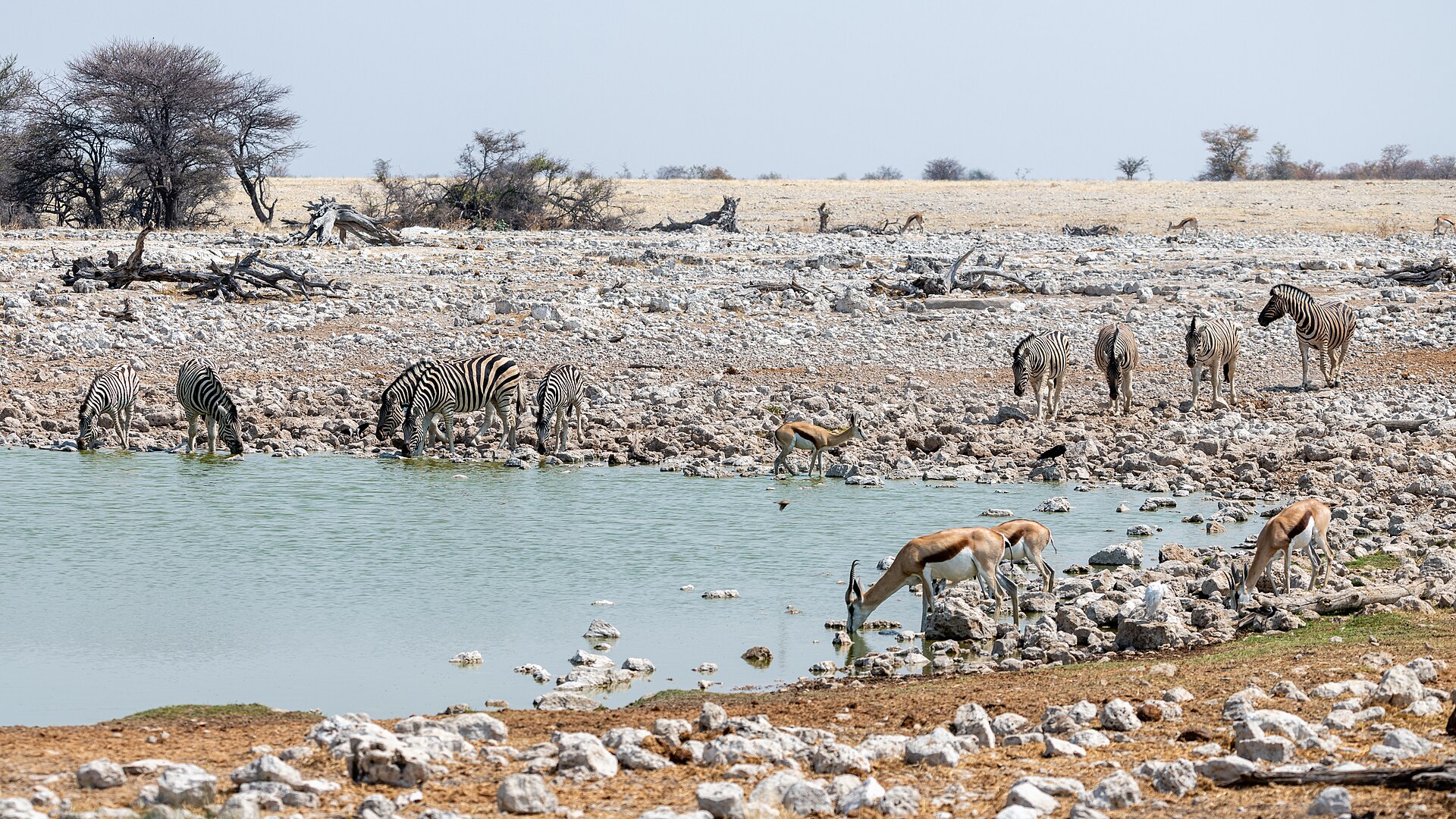
Dominance may appear as direct displacement, threat posture, occupation of a preferred drinking edge or simply another animal waiting at a distance. Avoid labelling every pause as fear; the waiting animal may be vigilant, social, undecided or responding to something outside the frame.
| Observation | Possible interpretation | What remains unknown |
|---|---|---|
| One species steps aside | Displacement or cautious spacing | Whether the larger animal caused it |
| Herd bunches | Heightened vigilance | The exact stimulus |
| Animal drinks alone | Others may be waiting | Whether access was actively defended |
| Sudden departure | Perceived risk changed | Predator, sound, vehicle or social cause |
Signals to watch before access changes
- Head, ear and eye direction
- Body orientation toward or away from another animal
- Tail position and foot stamping
- Repeated approach and retreat
- Group spacing and calf position
- Changes after a vehicle moves
Combine signals with sequence. One ear movement proves little; several animals orienting together after a new arrival is more informative. Keep interpretations provisional.
Why the hierarchy changes
A large elephant may clear space, yet another species may continue drinking at the far edge. A confident herd can approach where one individual hesitates. Dry-season dependence on a water point may increase pressure, while rain distributes animals among temporary sources.
Predator presence can override ordinary spacing. So can a newborn, injury or human disturbance. The correct conclusion is often narrow: “the group moved after the lion stood,” not “lions control this species at all waterholes.”
Record wildlife dominance at waterholes accurately
- Write arrival order.
- Describe posture before naming emotion.
- Note distance and direction of movement.
- Record the event that immediately preceded a change.
- Separate direct contact from waiting.
- Leave uncertain causes uncertain.
A short video may preserve sequence better than a still, but keep screens dim and sound muted. Do not narrate loudly at the waterhole.
How visitors can alter waterhole access
Vehicles can block approach routes, create noise or form a wall around water. If animals stop, stare or retreat after a car moves, increase space. Park where circulation and animal access remain open.
Use the quiet waterhole viewing guide and follow every current park instruction. A guided drive can add interpretation, but the guide should distinguish observation from certainty.
Questions for a longer waterhole session
- Does access differ at another edge?
- Which animals arrived together?
- Who watches while others drink?
- What happens when wind direction changes?
- Does the same interaction repeat?
- Did vehicle movement alter the sequence?
Choose accommodation close enough to allow unhurried sessions through Etosha-Namibia.com.
Wildlife dominance at waterholes is a changing negotiation, not a simple ladder. Watch sequence, space and context, and keep your claim no larger than the behaviour you actually observed.
Wildlife dominance at waterholes: interpretation questions
Does the largest species always drink first?
No. Size can influence access, but group confidence, numbers, approach direction, individuals and the shape of the waterhole also matter. Describe the sequence you see instead of imposing a permanent hierarchy.
Why do some animals drink farther from the inlet?
Water quality, crowding and interference can affect position. research on pumped African waterholes found species differences in drinking location and examined competition near the trough, showing why simple rankings can be misleading.
What behaviour suggests displacement?
Watch for a direct approach followed by another animal yielding space, interrupting a drink or changing position. Waiting alone does not prove fear; the animal may be resting, scanning or choosing another edge.
How can visitors avoid affecting the sequence?
- Leave approach routes open.
- Keep voices and movements low.
- Avoid surrounding the water’s edge with vehicles.
- Do not use calls, food or light to influence animals.
- Record uncertainty in notes and captions.
What makes a useful observation?
Note species, group size, time, approach direction and the exact interaction. Those details are more informative than a dramatic caption claiming that one species always dominates another.
Wildlife dominance at waterholes is dynamic. Patient observers see negotiation, tolerance and avoidance as well as obvious displacement, and they leave enough space for those choices to remain natural.
Wildlife dominance at waterholes summary: wildlife dominance at waterholes changes with species, numbers and context. Observe wildlife dominance at waterholes as a sequence, and describe wildlife dominance at waterholes without inventing a permanent hierarchy.