
Choosing between camping inside or outside Etosha is less about finding one winner than deciding which access, atmosphere and facility trade-offs fit the itinerary. Inside camping shortens the route to early drives and may add access to a camp waterhole; outside sites can offer more variety and a different sense of space.
Price should be compared as a total. Park fees, fuel, gate queues, restaurant use, electricity, shared facilities and the time spent driving all affect the real cost.
Confirm what a campsite actually includes. A marked pitch with power and ablutions is different from an unfenced wild-camping image, and unauthorised camping is never an option inside or around the national park.
In this guide
- Access and gate timing
- Facilities and campsite atmosphere
- Waterholes and evening options
- Cost and booking pressure
- Who benefits from each choice
- Nine trade-offs to compare
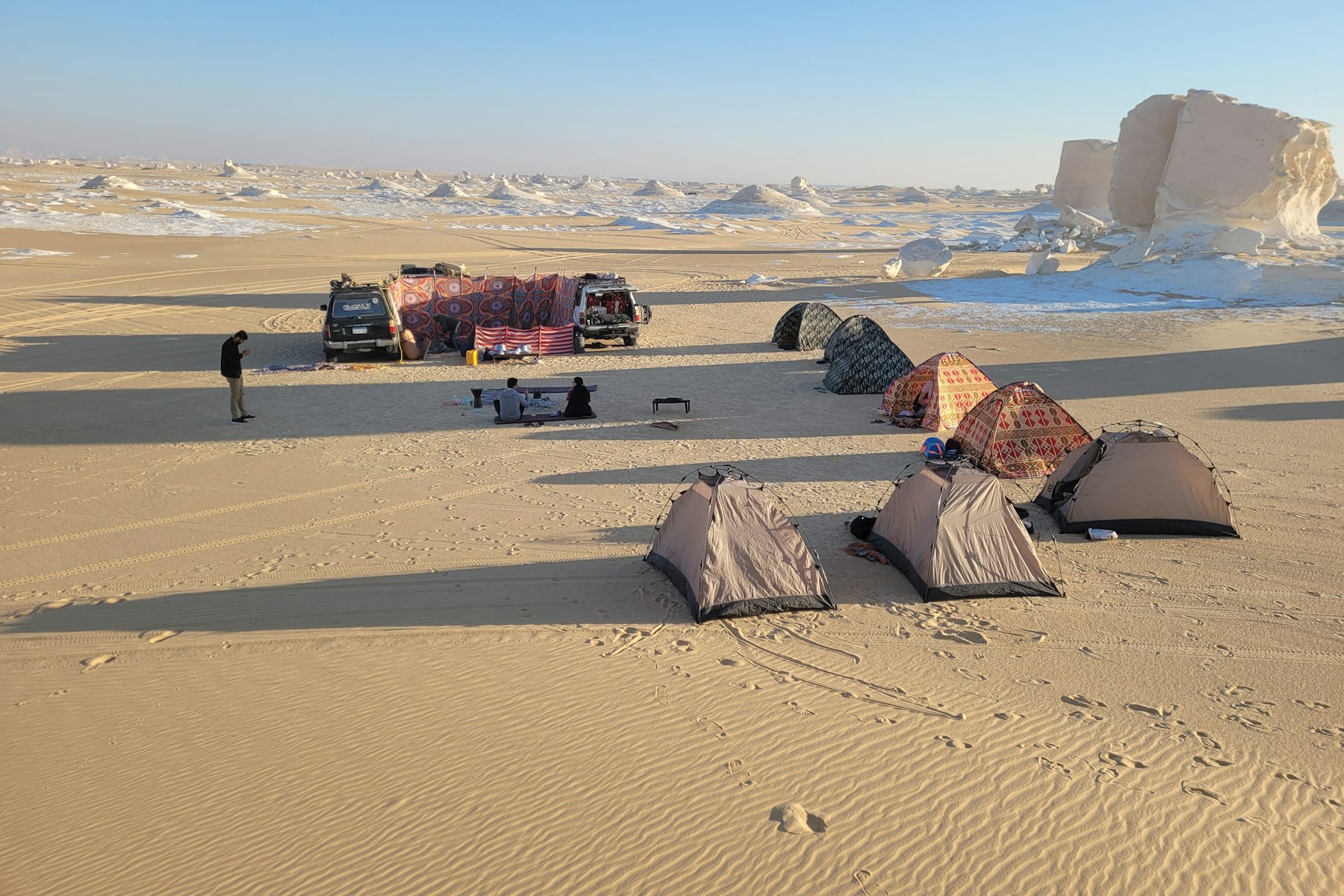
Camping inside or outside Etosha: the access difference
Inside campers begin behind the entrance gate and can organise an early drive without the external entry process. They still follow internal road-opening and camp rules. Outside campers must allow time to reach the entrance and complete current formalities.
The advantage is largest when the campsite matches the intended sector. An inside site far from the next route may create more driving than a good outside site beside the correct gate.
Facilities and atmosphere
Inside rest camps can place campers near reception, pools, shops or restaurants, but facility availability, noise and maintenance vary. Outside campsites range from simple farm pitches to lodge-linked sites with private ablutions or meal options.
Ask specific questions: shade, power type, braai provision, water quality, site size, vehicle access and quiet hours. Never assume a website photograph represents the exact pitch category.
| Priority | Inside camping may suit | Outside camping may suit |
|---|---|---|
| Early park start | Less gate transit | Strong only beside the chosen gate |
| Night waterhole | Possible at selected camps | May offer lodge activities instead |
| Choice of facilities | More standardised by camp | Wider variety by property |
| Flexible budget | Compare fees and availability | More price and style options |
| Route change | Booking can be restrictive | May offer easier alternatives |
Evenings and floodlit waterholes
Selected inside camps allow guests to use authorised viewing areas after road closure. That can be a meaningful advantage for campers who are comfortable walking back to the pitch in the dark and managing a quiet setup.
Outside properties may have their own hides, guided activities or simply a quieter campfire atmosphere. Do not assume an outside waterhole is floodlit or accessible without checking, and never spotlight independently unless an authorised activity permits it.
Compare campsites by gate and facilities
Etosha Namibia can help you find a pitch or lodge-linked campsite that fits the route, equipment and preferred level of comfort.
Cost, availability and cancellation terms
Inside sites can fill early in popular periods. Compare the pitch fee, park access, number of guests and any mandatory charges. Outside sites may be cheaper or more expensive depending on private facilities and lodge services.
Read cancellation terms before booking a route around scarce inventory. The official Namibia Wildlife Resorts Etosha page is the appropriate source for current inside-camp contacts and availability guidance.
A campsite name is not a location plan
Plot the exact site against the gate, first drive and next overnight. Ten kilometres in the right direction can be worth more than an extra facility the group will not use.
Comfort, safety and packing
Inside or outside, secure food, rubbish and cooking equipment. Follow fire restrictions, never feed wildlife and do not leave children unsupervised. Use a torch pointed down when walking at night and wear closed shoes around camp.
A ground tent needs a flat pitch and weather plan; a rooftop tent needs safe operation and enough time to fold before departure. Pack so an early start does not require slamming boxes and waking neighbours.
Nine key trade-offs
Score each factor for the actual group instead of choosing by reputation.
- Gate and road access
- Distance to the first drive
- Night waterhole access
- Pitch shade and size
- Ablution style
- Power and water
- Food and shop options
- Total price
- Cancellation flexibility
A balanced split-stay option
One outside night before entry can absorb a long transfer, followed by inside camping for early access. The reverse can work when leaving Etosha towards another destination. A split adds setup time, so it suits campers who pack efficiently.
The site’s Etosha camping budget guide helps calculate fuel, food and pitch costs rather than comparing room rates alone.
A detailed camping inside or outside Etosha planning workshop
Use this workshop to turn the broad camping inside or outside Etosha advice into a written route that another adult can follow. Work through it before the booking deadline, repeat the live-information checks near departure and keep the shorter alternative beside the primary plan.
1. Camping inside or outside Etosha: the access difference
Put camping inside or outside Etosha on the map beside “Camping inside or outside Etosha: the access difference” and the confirmed overnight location. Calculate the legal route in daylight, then add time for fuel, formalities, stops and slower wildlife traffic. A plan is not ready until the passenger can explain the same route without relying on live mobile data.
2. Facilities and atmosphere
Treat “Facilities and atmosphere” as a decision point, not a promise. Write the condition that keeps the plan in place and the condition that triggers a shorter alternative. This makes camping inside or outside Etosha resilient when rain, road work, stock, a queue or a productive sighting changes the available time.
3. Evenings and floodlit waterholes
Check the current source behind “Evenings and floodlit waterholes”. Accommodation staff can confirm their own check-in; park staff control access; a rental company controls permitted roads; a national authority manages public-road information. Keep those roles separate so one helpful opinion does not become assumed official permission.
4. Cost, availability and cancellation terms
Allocate one person to manage “Cost, availability and cancellation terms” while the driver concentrates on the road. That passenger keeps documents, offline navigation, water and the next contact accessible. On a camping inside or outside Etosha day, a calm division of responsibility prevents a small question from turning into a dangerous roadside search.
5. Comfort, safety and packing
Build a margin around “Comfort, safety and packing” that can absorb at least one ordinary delay. Do not spend the entire buffer on an optional detour before reaching the important checkpoint. If the day runs perfectly, the unused margin becomes rest or a short legal wildlife stop rather than wasted time.
6. Nine key trade-offs
Review passenger comfort when planning “Nine key trade-offs”. A route that works for two rested adults may fail with a child, limited mobility, motion sickness or a late flight. camping inside or outside Etosha should protect toilet access, meals, shade and a realistic end to the day as deliberately as it protects kilometres.
7. A balanced split-stay option
Use “A balanced split-stay option” to check the vehicle rather than only the map. Fuel range, tyre condition, luggage security and emergency contacts should fit the exact road. Bigger is not automatically better; the driver must be able to place, park and reverse the vehicle confidently without blocking wildlife or traffic.
8. Etosha campsites
Decide what will be removed first if “Etosha campsites” takes longer than expected. The correct answer is usually an optional loop, shopping stop or photograph—not the gate margin, legal speed or driver break. A written removal order stops the group negotiating safety under time pressure.
9. inside park camping
At the end of “inside park camping”, record what changed: actual driving time, fuel used, road surface, passenger energy and any instruction received. Those notes improve the next camping inside or outside Etosha stage. Avoid turning a single day’s conditions into permanent online advice for future travellers.
10. outside gate camping
Finish the “outside gate camping” check with a fallback that uses lawful roads and confirmed accommodation. Share the plan with every adult, including the point at which staff will be called. camping inside or outside Etosha becomes enjoyable when the group already knows how to respond if the first option stops working.
11. Namibia camping comparison
Link “Namibia camping comparison” to a meal and rest plan. A route can be technically possible while leaving no safe time to eat, refill water or reset driver attention. camping inside or outside Etosha should identify authorised facilities and the latest comfortable stop, with supplies carried in case an expected service is unavailable.
12. Access and gate timing
Check how “Access and gate timing” affects the following morning. A late arrival, complicated tent setup or long unpack can destroy the early start that justified the route. Good camping inside or outside Etosha protects sleep by preparing lights, clothing, breakfast and the first navigation step before the group becomes tired.
13. Facilities and campsite atmosphere
Make the cost of “Facilities and campsite atmosphere” complete. Include extra fuel, park or activity charges, food, vehicle category and the value of time lost to another checkout. camping inside or outside Etosha decisions improve when travellers compare the entire day rather than choosing the cheapest room or shortest map line in isolation.
14. Waterholes and evening options
Use “Waterholes and evening options” to confirm what requires advance reservation and what should remain flexible. Secure scarce accommodation or authorised activities, but do not pre-book every hour. camping inside or outside Etosha needs open time for weather, wildlife and rest, especially after a transfer or on the only full park day.
15. Cost and booking pressure
Share the environmental responsibility attached to “Cost and booking pressure”. Stay on authorised roads, keep rubbish contained, avoid unnecessary idling and support legitimate local services. A thoughtful camping inside or outside Etosha route reduces repeated backtracking and respects the communities and habitats through which the vehicle passes.
16. Who benefits from each choice
Run a final verbal rehearsal of “Who benefits from each choice” before departure. The driver states the first destination and stop rule; the passenger states the documents, contact and fallback. If those answers are unclear, camping inside or outside Etosha needs another five minutes of planning before the engine starts.
Write the final camping inside or outside Etosha plan on one page with current contacts, the primary route, the fallback and the conditions that trigger it. Review it at breakfast. A clear plan frees the driver to respond to the real road instead of defending an optimistic schedule. Keep the page after the trip and add actual timings, fuel stops and the reason for any change. Those notes make a later route more accurate without pretending that today’s road or operating conditions are permanent.
Score camping inside or outside Etosha
Compare camping inside or outside Etosha against the gate, first drive, facilities and total cost. Camping inside or outside Etosha is a route decision as much as a pitch decision. A split can solve camping inside or outside Etosha when one location cannot meet every need.
Camping inside or outside Etosha: questions
The best answer changes with route, season and equipment.
Is inside camping always better for wildlife?
It improves access to some early routes and camp waterholes, but wildlife remains unpredictable. A well-placed outside site can still support excellent drives.
Can travellers camp anywhere outside the park?
No. Use authorised campsites and respect private land, conservancy rules and local restrictions. Wild camping should never be assumed legal or safe.
Do inside campsites have electricity?
Facilities vary by camp and can change. Confirm the exact pitch specification and plug requirements before travel.
Which option is cheaper?
Compare the total including park fees, fuel, food and facilities. Either can be cheaper depending on season and campsite type.
Are camp waterholes open all night?
Access and rules differ. Follow posted hours and current camp instructions rather than assuming unrestricted use.
Is a rooftop tent required?
No. Ground tents and other approved camping setups can work when the pitch and weather suit them. Verify site rules and rental equipment.
Choose the access you will actually use
Plot the gate, drive and pitch, then compare comfort and cost. The best campsite is the one that simplifies the safari without compromising rest or safety.