An early game drive breakfast should make departure easier, not delay the vehicle while everyone waits for toast, searches for spoons or repacks a cooler. The plan belongs the night before.
Some travellers eat a small first breakfast before leaving and a larger meal after the drive. Others arrange a lodge breakfast pack or carry simple food for an authorised rest area. The right choice depends on current facility rules, children, medication and the length of the circuit.
Keep food secure, minimise packaging and never eat or stop where park rules do not allow it. Wildlife must not associate vehicles or people with food.
In this guide
- Choose the breakfast model
- Confirm lodge or camp arrangements
- Pack food safely and quietly
- Hydrate before coffee
- Plan around children and medication
- Nine night-before checks
Choose an early game drive breakfast model
A small pre-drive meal suits people who wake hungry or take medication with food. A post-drive breakfast protects the earliest departure but requires everyone to remain comfortable. A packed option can bridge the two when it is collected on time and stored safely.
Do not copy another traveller’s routine without considering health and age. Anyone with diabetes, pregnancy-related needs, allergies or other medical requirements should follow personalised professional advice.
| Model | Advantage | Planning risk |
|---|---|---|
| Light meal before departure | Stable energy from the start | Can delay the vehicle |
| Full breakfast after drive | Fastest early departure | Hunger on a long circuit |
| Lodge breakfast pack | Convenient and portable | Collection time and food safety |
| Simple self-catering pack | Control over ingredients | Preparation and cleaning |
Confirm accommodation arrangements
Ask the lodge or camp about breakfast times, takeaway options, refrigeration and collection the previous evening. “Early breakfast” may still begin after the desired drive start, and packed meals may require advance notice.
Check whether the room has a kettle, fridge or safe food-preparation space. Do not improvise cooking where it is prohibited. The official Namibia Wildlife Resorts Etosha page provides current resort contacts for in-park enquiries.
Pack quiet, low-mess food
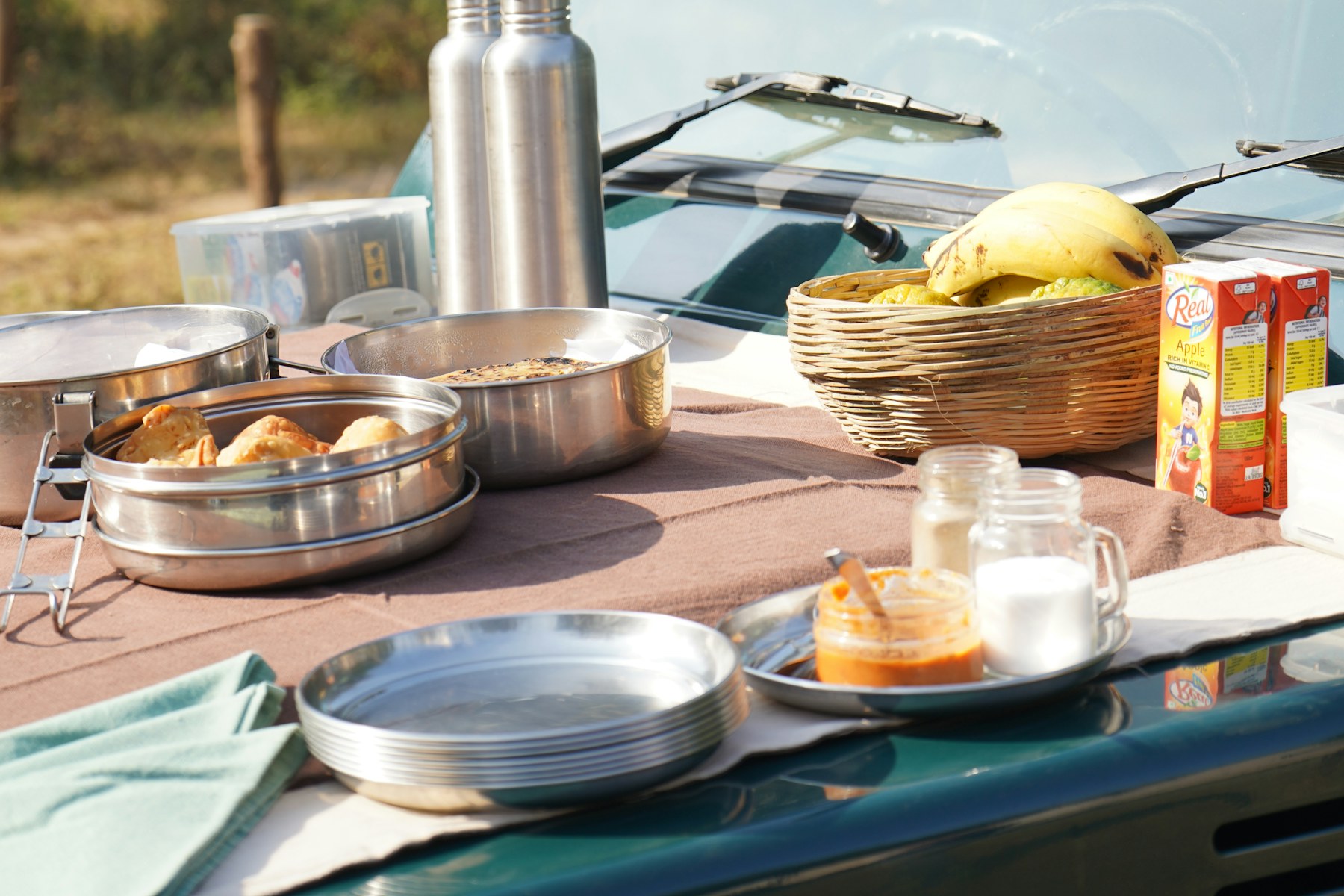
Choose items that can be opened without constant rustling and eaten without crumbs spreading through the vehicle. Secure all peels, wrappers and tissues in a closed waste bag.
Examples include a pre-made sandwich, fruit that is easy to contain, plain yoghurt kept safely cold, or a simple dry snack. Food safety depends on temperature and ingredients; use a proper cooler and discard anything that has been stored unsafely.
- Prepare portions the night before.
- Label allergy-sensitive food.
- Use reusable containers that seal well.
- Pack one waste bag.
- Place drinking water separately from the cooler.
- Keep strong-smelling food for camp.
Choose a stay that supports the morning routine
Breakfast times, in-room facilities and distance to the first route can make an early drive easy or frustrating. Compare those details before booking.
Water first, coffee second
Begin hydrating before departure and carry enough water for the circuit plus a margin. Coffee can be part of breakfast, but it does not replace regular fluids and may create an urgent toilet need for some travellers.
Use a travel mug that seals and fits the cup holder. Hot liquid should never be passed around while the vehicle is moving on rough roads.
A sunrise drive is not a fast
The goal is a practical eating schedule, not skipping necessary food. Build a plan that supports attention, medication and comfort throughout the drive.
Children, allergies and medication
Give children a familiar small meal before hunger becomes a conflict. Keep allergy information and prescribed medication accessible, and prevent food sharing when ingredients are uncertain.
The driver should not manage wrappers, drinks or children while moving. Assign another adult or wait for an authorised safe stop. If someone becomes unwell, shorten the wildlife plan.
Nine easy night-before checks
Put this list beside the keys and departure clothes.
- Confirm the planned departure time
- Order any breakfast pack
- Chill food safely
- Fill water bottles
- Prepare sealed portions
- Pack medication
- Add a waste bag
- Place food inside the cabin
- Set a quiet wake-up alarm
A departure routine that stays quiet
Dress, apply sunscreen and load most equipment before going to bed. In the morning, collect refrigerated food, check passengers and leave without repeated door slamming or a long engine idle near other guests.
A well-located stay can reduce the pressure to be first at a distant waterhole. Pair breakfast planning with the site’s safari snack guide for the rest of the day.
A group-ready early game drive breakfast briefing
This briefing turns early game drive breakfast into a shared routine that respects different ages, health needs and attention spans. Read the relevant points together, give each adult a role and keep the exit option available without presenting it as failure.
1. Choose an early game drive breakfast model
Brief the group about “Choose an early game drive breakfast model” before entering the vehicle. Explain the purpose, first time limit, safe behaviour and how anyone can request a break. early game drive breakfast works when children and adults know the plan before hunger, heat or excitement makes a calm conversation difficult.
2. Confirm accommodation arrangements
Make “Confirm accommodation arrangements” accessible without unpacking the boot. The passenger—not the driver—should reach water, medication, a quiet activity and necessary food. This simple arrangement protects attention and keeps early game drive breakfast from creating repeated roadside stops or unsafe searching while the vehicle moves.
3. Pack quiet, low-mess food
Use “Pack quiet, low-mess food” to assign one active role to each traveller. A child can watch a direction, count behaviours or hold a picture checklist; an adult can manage time or equipment. Shared roles make early game drive breakfast participatory without demanding that everyone maintain the same concentration span.
4. Water first, coffee second
Agree on a comfort check around “Water first, coffee second”: thirst, toilet need, temperature, visibility and motion sickness. Ask directly rather than waiting for irritability. early game drive breakfast must change when wellbeing changes, even if another vehicle predicts a rare animal or the planned timetable looks neat on paper.
5. Children, allergies and medication
Prepare a low-noise alternative for “Children, allergies and medication”. Drawing, a simple identification card or a quiet snack can reset attention without filling the vehicle with bright video and wrapper sounds. The alternative supports early game drive breakfast; it is not a reward withheld until a child performs adult-style patience.
6. Nine easy night-before checks
Keep medical and dietary needs separate from general advice about “Nine easy night-before checks”. Follow the traveller’s clinician, prescription and product instructions. A blog can support organisation, but early game drive breakfast must never encourage fasting, heat exposure, sunscreen use or medication changes that conflict with personalised care.
7. A departure routine that stays quiet
Let the driver remain outside management of “A departure routine that stays quiet”. Another adult handles questions, lids, binoculars and dropped items. When only one adult is travelling, the vehicle must stop in an authorised safe place before attention shifts. early game drive breakfast never justifies distracted driving.
8. safari breakfast planning
Use a visible end condition for “safari breakfast planning”. It may be a timer, facility stop, temperature, symptom or departure deadline. Honouring that condition builds trust. early game drive breakfast becomes much harder on later days when adults repeatedly move the agreed finish because they want one more photograph.
9. early Etosha departure
After “early Etosha departure”, ask each traveller for one observation and one improvement. A child may remember a bird, cloud or sound that adults missed. This short debrief turns early game drive breakfast into shared learning and reveals practical changes for seating, food, layers or the length of the next circuit.
10. game-drive snacks
End the day by repacking “game-drive snacks” before bed and confirming the next start. Rest is a safety control, not lost safari time. Good early game drive breakfast planning protects sleep, driver concentration and the family’s willingness to enjoy another early morning rather than turning the trip into endurance.
11. self-catering safari
Use “self-catering safari” to decide seating before departure. Place a shorter traveller where the window and headrests allow a view, keep required child restraints correct and avoid bags on laps. early game drive breakfast becomes calmer when everyone starts with a fair viewing position instead of negotiating at the first sighting.
12. Choose the breakfast model
Prepare the language for “Choose the breakfast model”. Replace “be quiet or we will miss the lion” with a clear reason such as listening for calls or respecting nearby viewers. Positive explanations make early game drive breakfast understandable and avoid blaming a child when wildlife simply does not appear.
13. Confirm lodge or camp arrangements
Build a weather alternative around “Confirm lodge or camp arrangements”. Wind, rain or extreme heat may shorten a drive, change clothing or cancel an activity. Good early game drive breakfast offers a lodge, camp or travel-day substitute so adults do not push the original plan merely because money or anticipation is invested in it.
14. Pack food safely and quietly
Use “Pack food safely and quietly” to protect privacy and dignity. Ask before photographing family members in vulnerable moments, avoid sharing children’s location in real time and keep health details confidential. early game drive breakfast planning includes digital safety as well as vehicle and wildlife safety.
15. Hydrate before coffee
Recognise different definitions of success around “Hydrate before coffee”. One person may value a rare bird, another a comfortable sunrise and a child a giraffe crossing the road. early game drive breakfast improves when the day includes several small wins instead of demanding unanimous excitement about an adult target species.
16. Plan around children and medication
Finish “Plan around children and medication” with a genuine choice about the next activity. Offer two safe options with clear trade-offs rather than a false choice that both lead to another long drive. Shared control makes early game drive breakfast more sustainable across several days and surfaces fatigue before it becomes a safety problem.
Choose only the parts of the early game drive breakfast briefing that suit the group. A shorter routine followed consistently is better than a perfect checklist abandoned after one morning. Protect comfort early and the family will have more patience for genuine wildlife surprises. At the evening debrief, let each person remove one step that felt unnecessary and add one that would improve tomorrow. Keep medical, dietary and restraint requirements fixed even when the optional routine changes. This makes the plan genuinely shared while protecting the non-negotiable controls that adults must maintain.
Pack the early game drive breakfast before bed
Choose the early game drive breakfast model before setting the alarm. An early game drive breakfast should support health without delaying departure. Store every early game drive breakfast item safely and keep all waste sealed.
Early game drive breakfast questions
Food-safety and medical needs should guide individual choices.
Should breakfast be eaten before sunrise?
Eat before, after or in two stages according to comfort, health and the drive length. Prepare the choice the night before.
Can food be eaten anywhere in Etosha?
No. Follow park and facility rules and use only authorised places. Keep all waste secured and never feed wildlife.
What belongs in a breakfast pack?
Simple familiar food, safe cold storage where required, water and sealed waste storage. Confirm ingredients for allergies.
Is coffee a good hydration strategy?
Coffee may be enjoyed, but it does not replace accessible drinking water. Consider toilet timing and avoid handling hot drinks while moving.
How early should a lodge pack be ordered?
Ask the property directly; many require notice the previous day. Confirm collection time and location.
What if a child refuses breakfast?
Carry a familiar backup and reassess the route if the child is hungry or unwell. Do not turn eating into a conflict at the vehicle.
Win the morning the night before
Choose the breakfast model, prepare sealed food and water, and make departure quiet. The reward is a calm first hour with everyone ready to observe.