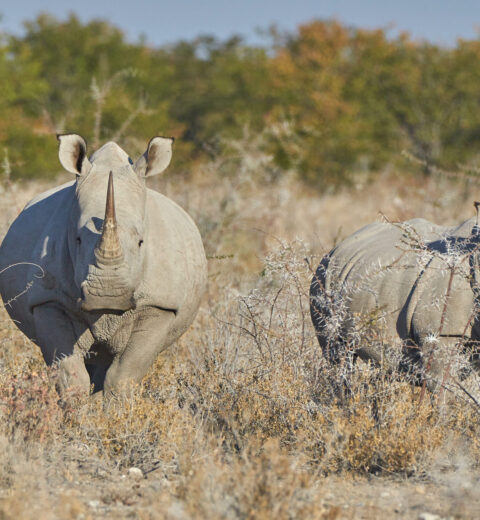
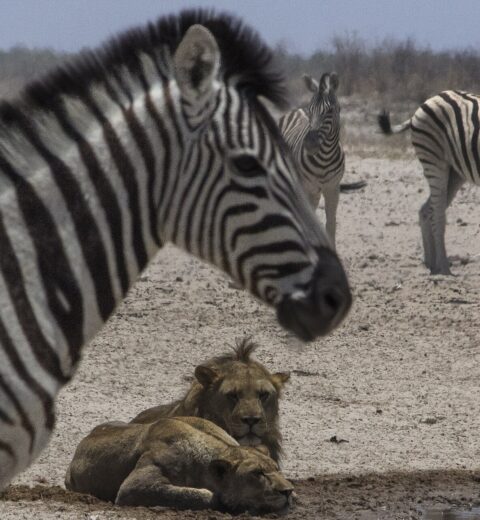
Black rhinos in Etosha are a conservation success story and a privilege to observe, but a sighting is never guaranteed and should never be pursued at the animal’s expense. Responsible viewing protects space, limits disturbance and avoids sharing information that could increase risk.
This guide covers road encounters and night-waterhole etiquette without identifying sensitive locations. Current park and accommodation rules always take priority.
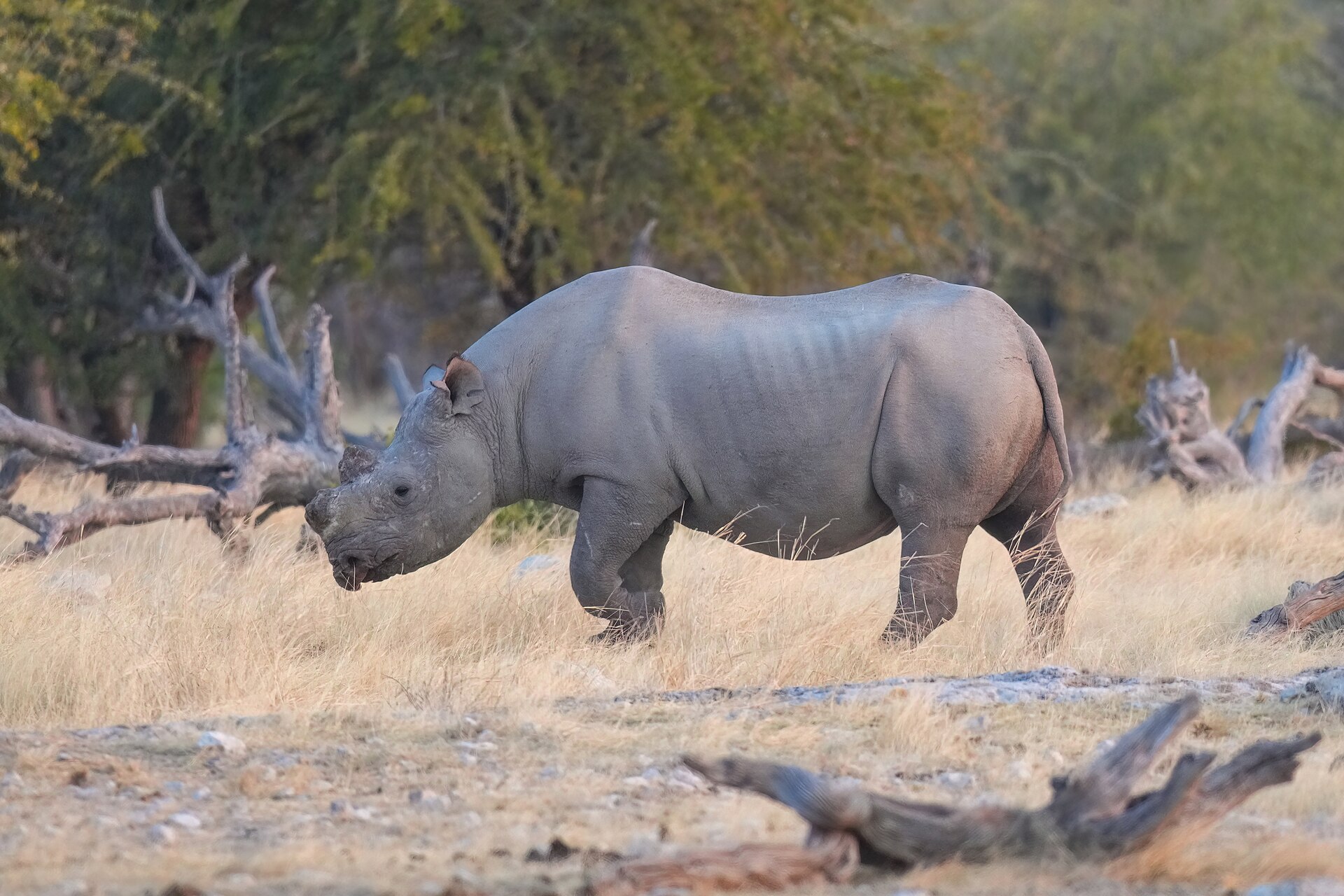
Why black rhinos in Etosha require special care
Black rhinoceroses remain threatened by poaching and habitat pressures. Their protection depends on professional conservation work, law enforcement, secure information and visitor cooperation.
The IUCN Red List assessment for the black rhinoceros provides species-level conservation context. Visitors should avoid turning that context into claims about exact numbers or locations in Etosha unless an authorised current source supplies them.
Do not expect a guaranteed encounter
A lodge, guide or waterhole cannot command a wild rhino to appear. Choose an experience for its overall quality and conservation standards, not a promise of a particular animal.
Understand black rhinos in Etosha before viewing
Despite the name, black and white rhinoceroses are not reliably separated by colour. Body shape, feeding adaptations and behaviour matter more, but identification at night can be difficult. If uncertain, describe what you saw without forcing a label.
Black rhinos often browse shrubs and may use cover differently from grazing species. This does not make them predictable. Weather, water, people and other animals all influence movement.
1. Give black rhinos in Etosha generous space
Stop at a distance that allows the animal to continue its chosen behaviour. Do not edge forward each time it looks away. If the rhino changes direction because of the vehicle, raises its head repeatedly or appears unsettled, increase space where the road and rules allow.
Never leave the vehicle in an undesignated area. A rhino can move quickly, and surrounding bush may hide other wildlife.
Do not create a wall of vehicles
Leave gaps so the rhino can cross or retreat. If several vehicles are already present, wait farther back or move on. A crowded sighting is not improved by one more bonnet.
2. Keep the road open around black rhinos in Etosha
Position the vehicle on the permitted road without blocking traffic. Avoid stopping on a blind rise or bend, and check mirrors before reversing. The driver must watch both the animal and other road users.
If a rhino approaches, remain calm, keep limbs inside and follow park guidance. Do not throw objects, rev the engine aggressively or use food to redirect it.
Learn responsible rhino viewing with a guide
An experienced guide can interpret tracks and behaviour while managing vehicle position and conservation etiquette. Explore Etosha tours and guided safaris for wildlife viewing that respects distance and avoids sensitive-location promises.
3. Night-waterhole etiquette for black rhinos in Etosha
At a floodlit or lodge waterhole, darkness is part of the setting. Walk quietly, close doors gently and use the designated viewing area. Keep voices low and children close without making the experience tense.
Dim phone and camera screens before reaching the hide. A bright display can distract other visitors and may affect nearby animals. Use only lighting and equipment permitted by the facility.
Flash and artificial light
Do not use flash if rules prohibit it, and never shine a torch or spotlight at a rhino. Even where a specific device is not mentioned, ask staff before using artificial light. A missed photograph is better than a disturbed animal.
Seats do not reserve the animal
Share limited viewing space, avoid standing in front of seated guests and make room after a reasonable period when the area is busy. Do not narrate loudly or play recorded sounds.
4. Keep food, drinks and movement controlled
Follow the viewing area’s food rules. Crinkling packets, strong smells and repeated trips can disturb people and attract other wildlife. Prepare warm clothing, binoculars and silent camera settings before settling down.
If you must leave, move slowly and wait for a calm moment. Never climb a barrier for a clearer angle.
5. Photograph black rhinos in Etosha without pressure
Use an appropriate lens and accept the available angle. Do not drive off-road, block another vehicle or make sounds to lift the rhino’s head. At night, prioritise observation if light is too low for a responsible image.
Switch off focus-assist lamps and audible camera beeps where possible. Brace the camera or use allowed support rather than increasing light on the animal.
Keep context in the frame
A wider photograph can show habitat and distance without revealing an exact map point. Avoid geotagging sensitive wildlife images, and remove embedded location metadata before public sharing when necessary.
6. Share black rhinos in Etosha carefully
Do not post real-time locations, distinctive route details or precise timestamps for black rhinos in Etosha. A delayed, general account can celebrate the sighting without creating a live trail.
Ask guides or staff about their information policy. Conservation teams may have reasons to keep even apparently ordinary details private.
Avoid accidental clues
Photographs can include signs, waterhole names, GPS screens or unique buildings. Crop or obscure those clues before posting. Do not identify a specific animal unless an authorised programme has made that information public.
7. Read behaviour, not just camera settings
Watch ear direction, head position, walking line and pauses. A rhino that repeatedly faces the vehicle, changes course or stops normal feeding may need more space. These signs are context-dependent, so respond conservatively.
Do not assume that stillness means comfort. Quietly leave if your presence appears to alter the animal’s behaviour.
8. Respect black rhinos in Etosha with calves
A female with a calf deserves exceptional distance. Never position the vehicle between them or block the direction of travel. If bushes separate the pair, do not move closer to “help” the sighting.
Keep voices and vehicle movements subdued and leave before the area becomes crowded. The welfare of the pair outweighs every photograph.
9. Follow rules around black rhinos in Etosha
Namibia’s official protected-area regulations provide the legal framework. Gate briefings, signs, road closures and direct instructions apply to the specific visit.
Do not interpret a previous trip or another visitor’s behaviour as permission. Rules can change, and staff may close an area for conservation or safety.
What to do if a rhino appears distressed
Increase distance if it is safe and permitted, keep the road open and avoid sudden noise. Note the general area and time, then report the concern to park staff without broadcasting the location to other visitors.
Do not approach an injured animal or attempt to provide food or water. Trained personnel must assess the situation.
What to do if visitors break the rules
Avoid a confrontation beside the animal. Record factual details such as vehicle description, time and behaviour, then report them privately to staff at the next safe opportunity.
Do not publish accusations or exact location details on social media. The goal is to reduce risk, not create a spectacle.
Planning to view black rhinos in Etosha at night
- Bring a warm, quiet layer and binoculars.
- Dim screens and disable flashes before arrival.
- Learn the facility’s viewing and food rules.
- Keep children close and explain whisper-level etiquette.
- Choose a seat without blocking access.
- Accept that no rhino may appear.
Accommodation with a viewing area can be compared through our Etosha accommodation pages, but confirm current facilities and access before booking.
Conservation-minded choices beyond the sighting
Choose operators that explain their standards
Ask how guides manage crowded sightings, whether they avoid real-time location sharing and how they respond when an animal changes behaviour. A responsible answer should value space and park rules more than a guaranteed checklist.
Support verified conservation work
If you want to contribute, use organisations or programmes that publish clear governance and project information. Do not hand money to an unverified person claiming access to a particular rhino or location.
Keep trip notes private when necessary
A personal journal can record behaviour, weather and the emotion of seeing black rhinos in Etosha without publishing coordinates. Store GPS tracks privately and review photographs for clues before sharing.
Let disappointment remain part of wildlife travel
Not seeing a rhino is not a failed safari. Waterhole activity, tracks, browsing signs and conversations with ethical guides can still deepen understanding. Conservation does not owe every visitor an encounter.
This mindset protects black rhinos in Etosha from the pressure created when every booking is sold as a promise.
Prepare before entering the night viewing area
Set the camera to silent mode, cover bright status lights where equipment allows, put a warm layer on and store loose objects that could fall. Explain the rules to children before an animal appears, when attention is easier to hold.
For black rhinos in Etosha, good preparation reduces last-second movement and flash mistakes. Keep binoculars accessible, but leave unnecessary tripods, lights and noisy bags in the room if the facility restricts them.
Build a useful observation log without exposing location
A field note can record habitat, weather, broad time of day and the animal’s behaviour without storing or publishing exact coordinates. Focus on what the rhino did: browsing, walking, drinking, pausing or interacting with other animals.
Keep the precise route and GPS track private. If authorised researchers or park staff request information, provide it through the channel they specify rather than a public wildlife group.
Write behaviour before interpretation
“The rhino raised its head and turned toward the vehicle twice” is more useful than “the rhino was angry”. Separating observation from interpretation helps travellers learn and prevents dramatic claims from spreading.
Use photographs as evidence, not bait
A sequence can show changes in body position and distance, but only if taking it does not change the encounter. Stop photographing when equipment noise, screen light or vehicle movement appears to affect black rhinos in Etosha.
Night-waterhole courtesy when no rhino is present
Quiet etiquette applies to elephants, jackals, antelope, birds and every other visitor to the water. Do not become noisy because the hoped-for species has not arrived. A calm viewing area is valuable throughout the night.
Avoid repeatedly asking staff for live rhino locations. Staff may not know, may be protecting sensitive information or may need to focus on other work. A respectful guest accepts the answer.
Leave the area as quietly as you entered
Collect bottles, clothing and camera accessories without bright light. Close doors gently and keep conversation low until away from the viewing area. Check that no food or litter remains.
How to talk about black rhinos in Etosha after the trip
Describe the conservation importance, the viewing etiquette and the animal’s behaviour. Avoid exact directions, real-time movement patterns and statements that imply a dependable rhino schedule.
If somebody asks where to guarantee a sighting, explain that wild encounters cannot be promised. Recommend patient, rule-following observation and ethical guides instead of a pin on a map.
Credit conservation without inventing statistics
Use current, authoritative sources for population claims and distinguish national, regional and park-level figures. A species trend cannot automatically be treated as the precise number of black rhinos in Etosha.
Responsible viewing checklist
- Distance before photographs.
- Road and retreat route left open.
- No off-road driving or artificial attraction.
- No flash or torch without explicit permission.
- No live or precise location sharing.
- Calm reporting of welfare or rule concerns.
Let the sighting remain wild
Black rhinos in Etosha do not need a closer vehicle, brighter light or instant location post. They need space to browse, drink, cross and leave on their own terms.
For a guided safari that treats conservation etiquette as part of the experience, contact Etosha Namibia.