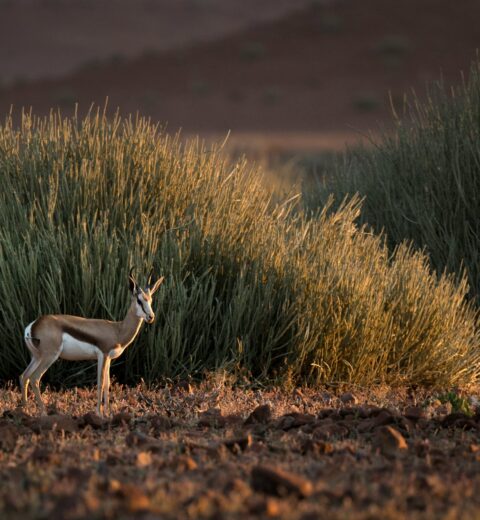
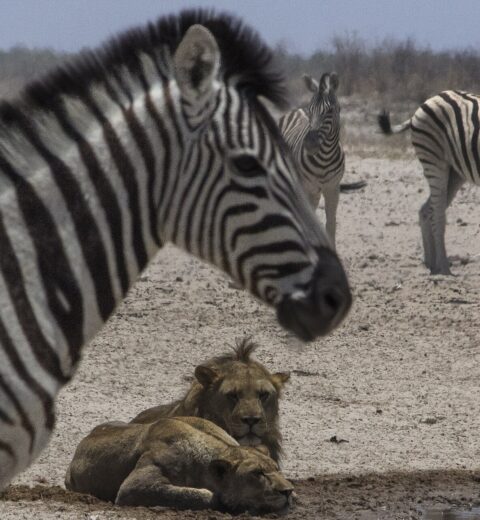
Etosha wildlife viewing in Etosha National Park Namibia rewards observation rather than speed. Part 2 of this practical guide focuses on the safari itself: reading waterholes, understanding habitat, choosing guided activities, photographing wildlife and keeping every encounter safe and ethical.

Etosha wildlife viewing Part 2: daily essentials
- Use one park sector rather than chasing distant reports.
- Stop long enough to read behaviour and habitat.
- Give animals open access to water and roads.
- Protect the afternoon return-time margin.
- Never promise a species, even in the dry season.
1. Read the Etosha National Park Namibia habitats
The Etosha Pan dominates the view, but wildlife uses open plains, saline grassland, mopane woodland, thornbush and water sources around it. Each habitat changes visibility and behaviour. Open ground helps travellers scan distant movement; woodland requires slower observation of shade and edges.
Rain, heat and grazing move animals between these habitats. A productive road in Etosha National Park Namibia is therefore a current relationship between water, food and cover, not a permanent hotspot.
2. Use waterholes for Etosha wildlife viewing patiently
Approach slowly, park legally and scan the surroundings before focusing on the water. Tracks, dust, birds and antelope posture may indicate movement outside immediate view. Ten quiet minutes can reveal more than a rapid circuit of five stops.
| Observation | What it may suggest | Response |
|---|---|---|
| Prey animals staring | Disturbance or possible predator | Wait quietly and scan |
| Elephants approaching | The herd needs road or water access | Give extra space |
| Fresh tracks | Recent movement, not a nearby guarantee | Drive slowly and stay realistic |
| Quiet waterhole | Wildlife may be elsewhere | Wait or continue without rushing |
3. Plan morning and afternoon drives differently
Begin with a compact morning loop while temperatures are cooler. Return for breakfast or a midday break before concentration drops. The afternoon route must be shorter, because every stop reduces the time available before the current return deadline.
- Confirm current roads and times.
- Choose three priority stops.
- Keep one optional extension.
- Remove the extension before the margin disappears.
- Return without speeding.
4. Add a guided drive to Etosha wildlife viewing
A guided drive can help visitors understand tracks, alarm calls and habitat while giving the self-drive driver a rest. Ask whether the vehicle is open or enclosed, what time it departs, where pickup occurs and how cold or exposed the ride may be.
Add expert context to one wildlife drive
A relevant guide can make Etosha National Park Namibia more understandable without guaranteeing sightings. Compare Etosha guided game drives and confirm the exact service directly.
5. Treat night drives and camp waterholes as different experiences
Official guided night activities may reveal behaviour beyond ordinary visitor hours. A camp waterhole can provide a quieter alternative without another vehicle journey. Both depend on current operations and access. Book early where necessary, pack warm layers and keep flash and screens unobtrusive.
No nocturnal species is guaranteed. Listen to the guide, respect barriers and avoid sharing sensitive rhino locations in real time.
6. Photograph Etosha wildlife viewing without controlling it
- Prepare exposure and focus before activity peaks.
- Use focal length instead of moving closer.
- Include habitat for scale and context.
- Protect equipment from dust and heat.
- Keep engine movement and voices low.
- Never ask a guide to pressure an animal for an image.
Pale pan backgrounds can fool automatic exposure, while woodland shade can reduce shutter speed. Check results without staring at the screen during an active sighting.
7. Look beyond the largest mammals
Birds, smaller carnivores, reptiles, insects, tracks and social behaviour can transform a quiet drive. A kori bustard crossing, raptors using thermals or antelope responding to an alarm call may teach more than a distant predator report.
The Namibia environment ministry’s Etosha overview provides authoritative biodiversity context. Species totals describe the park, not an individual day’s sightings.
8. Adapt to dry and green seasons
| Seasonal pattern | Viewing approach |
|---|---|
| Drier conditions | Use established waterholes but expect dust and crowds |
| Recent rain | Scan fresh grazing and wider habitats |
| Hot afternoons | Rest, hydrate and shorten the route |
| Cool mornings | Pack layers for open vehicles |
Flamingos, newborn animals, predator action and a filled pan are seasonal possibilities, not promises. Ask staff what conditions are actually like.
9. Follow ethical Etosha wildlife viewing rules
- Stay inside the vehicle except where leaving it is permitted.
- Remain on designated roads.
- Never feed, call or bait wildlife.
- Do not surround animals or block water access.
- Increase distance when behaviour changes because of you.
- Leave congested sightings when circulation becomes unsafe.
Natural behaviour is the standard for a good encounter in Etosha National Park Namibia. Proximity is not.
Build a two-day wildlife plan
| Day | Morning | Afternoon |
|---|---|---|
| First full day | Compact self-drive loop | Repeat local habitat |
| Second full day | Guided drive or alternative sector | Short waterhole route |
Use the midday period for rest, notes, equipment care and route review. Drivers who remain alert make safer decisions and notice more.
Common wildlife-viewing mistakes
| Mistake | Better choice |
|---|---|
| Chasing a radio or roadside report | Read nearby habitat |
| Stopping for only a minute | Wait when time and conditions allow |
| Blocking the water | Leave animal access open |
| Driving all day without rest | Use a midday break |
| Sharing live rhino locations | Keep sensitive information private |
Frequently asked questions
Which waterhole is best?
The one that fits the current sector and conditions. No famous name performs on demand.
Are guided drives necessary?
No, but one can add interpretation and rest for the driver.
Will I see predators?
Possibly, but never guaranteed. Enjoy all behaviour and habitat rather than one checklist.
Position the vehicle without trapping wildlife
Stop parallel to the road where permitted, leave circulation space and avoid creating a wall of vehicles. An animal must be able to approach water, cross the road or leave cover without being surrounded. If the sighting grows congested, move on.
Switch off unnecessary sound, keep arms and equipment inside and never reverse blindly. Responsible positioning is one of the most important skills in Etosha National Park Namibia.
Read predator sightings carefully
Lions, cheetahs, leopards and hyenas are possible, but each uses habitat and time differently. A distant report can be stale before a visitor arrives. Watch prey behaviour, shade lines and tracks without leaving the permitted road.
- Never pressure a resting animal to stand.
- Do not block a stalking route.
- Keep noise low near hunting behaviour.
- Avoid publishing sensitive details in real time.
- Leave space for guides and other vehicles to exit.
Elephants and large herds need extra space
Family groups may spread across the road or arrive silently from vegetation. Stop early, keep a clear reverse route and follow staff or guide instructions. Do not cut between adults and young animals.
If behaviour becomes directed at the vehicle, increase distance without sudden acceleration. The goal is calm passage, not the closest photograph.
Birding in Etosha National Park Namibia
Scan raptors on trees and thermals, ground birds on open plains and smaller species around vegetation and water. Seasonal migrants and wetland birds depend on conditions. Use binoculars, avoid disruptive playback and never approach a nest.
| Habitat | Birding approach |
|---|---|
| Open plain | Scan slowly for large ground birds and raptors |
| Woodland | Listen, then watch edges and flowering trees |
| Waterhole | Check shorelines before large mammals arrive |
| Pan after rain | Use distance and expect changing access |
Wildlife drives with children
Use shorter loops, explain why voices and food stay controlled and plan toilets before departure. Give children simple observation tasks such as spotting tracks or identifying habitat. Secure doors and never allow anyone to lean out.
A calm ninety-minute drive can be better than an exhausting all-day search. Return to the base before heat or boredom affects behaviour.
Keep useful wildlife notes
- Date and broad park sector.
- Weather, wind and habitat.
- Animal behaviour rather than only species.
- Road or water conditions.
- No sensitive rhino coordinates.
Notes make repeated drives in Etosha National Park Namibia more meaningful and prevent one lucky encounter from becoming a false promise.
When to end a sighting
- The animal changes behaviour because of vehicles.
- Traffic cannot pass safely.
- The driver is losing concentration.
- The return-time margin is shrinking.
- Weather or road conditions are changing.
Leaving well is part of wildlife ethics. Another sighting is never worth a late or unsafe return.
Part 2 final checklist
- Choose one sector.
- Prepare binoculars and camera settings.
- Carry water and layers.
- Keep animals’ routes open.
- Rest at midday.
- Return with time to spare.
Etosha wildlife viewing from a camp waterhole
Camp waterholes let guests observe without another drive. Visit at several times, keep screens dim after dark and avoid flash or loud conversation. Cold can build quickly, so bring a quiet layer rather than leaving repeatedly.
Repeated sessions make Etosha wildlife viewing less dependent on a single moment. They also reveal how different species take turns, wait or yield at water.
Ethical video and social media
- Do not geotag sensitive rhino sightings in real time.
- Avoid captions that imply guaranteed species.
- Do not celebrate vehicles blocking an animal.
- Record natural sound without calling wildlife.
- Ask before filming guides or other guests.
Editing should not turn a distant, responsible sighting into a false story of close approach. Context helps future visitors understand park rules.
Heat, dust and equipment care
Keep spare batteries and medication away from direct heat. Change lenses inside the vehicle where possible and use a blower or soft brush before wiping dust. Carry drinking water within reach and schedule a break before heat affects concentration.
During Etosha wildlife viewing, never place equipment outside the vehicle where it can fall, obstruct traffic or tempt someone to leave the permitted area.
A respectful waterhole sequence
- Approach below the dust-raising speed.
- Check where animals and vehicles need to move.
- Park without blocking an exit.
- Scan shade, shore and distant approaches.
- Wait before changing position.
- Leave with the same restraint.
What a quiet drive can teach
When large mammals are absent, follow tracks, insects, birds and vegetation. Notice wind direction, changing light and how prey animals group. These details build skill that improves the next active sighting.
Etosha wildlife viewing becomes more rewarding when success means understanding the ecosystem rather than collecting a photograph of each famous species.
End-of-day review
- Back up photographs without deleting uncertain frames in haste.
- Clean dust from equipment.
- Record broad behaviour and habitat notes.
- Check the next day’s roads and times.
- Choose a shorter route if the driver is tired.
Questions to ask a guide
- Which habitats will the drive cover?
- How exposed is the vehicle to cold, heat or rain?
- What equipment can be carried safely?
- How are crowded sightings handled?
- What happens if weather changes?
A responsible guide explains that Etosha wildlife viewing remains unpredictable. No ethical operator should guarantee a predator or pressure an animal to improve a photograph.
Questions after a sighting
Ask what behaviour was observed, how habitat influenced it and whether the animal changed because of vehicles. This turns excitement into understanding and helps the next encounter remain calmer.
When telling the story later, include distance, season and uncertainty. A single exceptional day does not define ordinary conditions in Etosha National Park Namibia.
Finish each drive before fatigue or a deadline removes choice. Review the route while there is still time to shorten it, and keep enough water for an unexpected delay. The discipline to leave a promising area can be as important as the patience to wait.
This balance protects wildlife, staff and travellers while giving Etosha wildlife viewing the quiet time it deserves.
Pack equipment before dawn, store it securely and make every passenger responsible for low noise and clear movement inside the vehicle. Preparation prevents an active sighting from becoming rushed or unsafe.
That calm preparation is part of ethical safari practice.
It keeps attention on animals instead of equipment.
Preparation supports patience.
Let behaviour lead Part 2
Experience Etosha National Park Namibia through patience, habitat and responsible distance. Review our waterhole guide, choose a compact sector and let the animals decide where the day slows down.