
To photograph lions in harsh light, stop fighting the sun and build the picture around it. Midday can produce deep shade, pale dust, bright grass and heat shimmer, but it can also reveal the relationship between a resting pride and the only useful cover nearby.
Remain on legal roads, keep the vehicle at a respectful distance and never call, crowd or reposition an animal. A sleeping lion does not owe the camera an open-eyed portrait.
In this guide
Expose for the lion, not the bright ground

Use the histogram and highlight warning rather than judging a rear screen in bright sun. Fur in direct light can clip quickly while the face remains dark. Expose to retain important highlights, then recover moderate shadow detail from a raw file.
| Situation | Practical response |
|---|---|
| Lion fully in shade | Expose for the face and accept a brighter background |
| Patchy light | Wait for a cleaner head position rather than forcing the frame |
| Pale ground | Check positive compensation only after histogram review |
| Backlit mane | Protect the rim light and include environmental context |
Reduce the effect of heat haze
Hot air between camera and subject can soften detail even at a perfect shutter speed. Shorten the optical path by using a closer legal viewpoint only when the road naturally permits it, avoid extreme cropping and make wider frames that do not depend on whisker-level sharpness.
Do not mistake atmospheric distortion for missed focus. A long lens over sun-heated ground may show pulsing edges in the viewfinder; no autofocus setting can remove that air movement.
Use shade and habitat as composition
A thorn tree, its shadow and the open plain explain why the lion is resting there. Include the shape of the shade, other pride members and the direction of light. The resulting picture can say more about a hot Etosha day than a tightly cropped head.
- Look for repeating paws, tails and ear angles.
- Use branches as context, not clutter across the eyes.
- Watch for a yawn, stretch or change of position.
- Make one clean frame, then lower the camera.
Set the camera for small bursts of movement
Resting lions can change from stillness to a head lift in one second. Keep a shutter speed that handles that movement, use an aperture that covers two overlapping faces when needed and raise ISO rather than accepting preventable blur.
A short controlled burst is enough. Endless high-speed shooting adds noise and editing without improving behaviour. Review only when it will not cause bright-screen distraction around other viewers.
Let the pride keep its shade
Do not park so closely that the vehicle blocks airflow, shade access or a route to water. If several vehicles are present, take a position in turn and leave space for others. Move away if an animal repeatedly changes posture or direction because of traffic.
Use the National Geographic ethical wildlife photography guidance alongside the Etosha car-window photography guide.
A practical midday lion photography sequence
Begin by watching before raising the camera. Resting lions often lie still for long periods, but small changes—a lifted head, a twitching tail or one animal moving into deeper shade—can signal the best moment to frame a photograph. Set exposure while the scene is quiet, then wait for eye contact, a yawn or a change of position instead of firing continuously at an inactive subject.
Use the vehicle as a stable platform without blocking the road. A beanbag on a fully lowered window gives steadier support than hand-holding a long lens, while a fast shutter speed helps counter heat shimmer and small vibrations. Check the histogram regularly: pale dust and sunlit grass can mislead the meter, while a lion’s face in shade may need careful recovery without blowing out the background.
Finally, decide when conditions are no longer productive. If heat haze has erased fine detail, make a wider environmental frame that shows the lion in Etosha’s dry landscape, then put the camera down and observe. Photograph lions in harsh light with patience and realistic expectations; respectful viewing and a useful travel memory matter more than forcing a close portrait from the wrong angle.
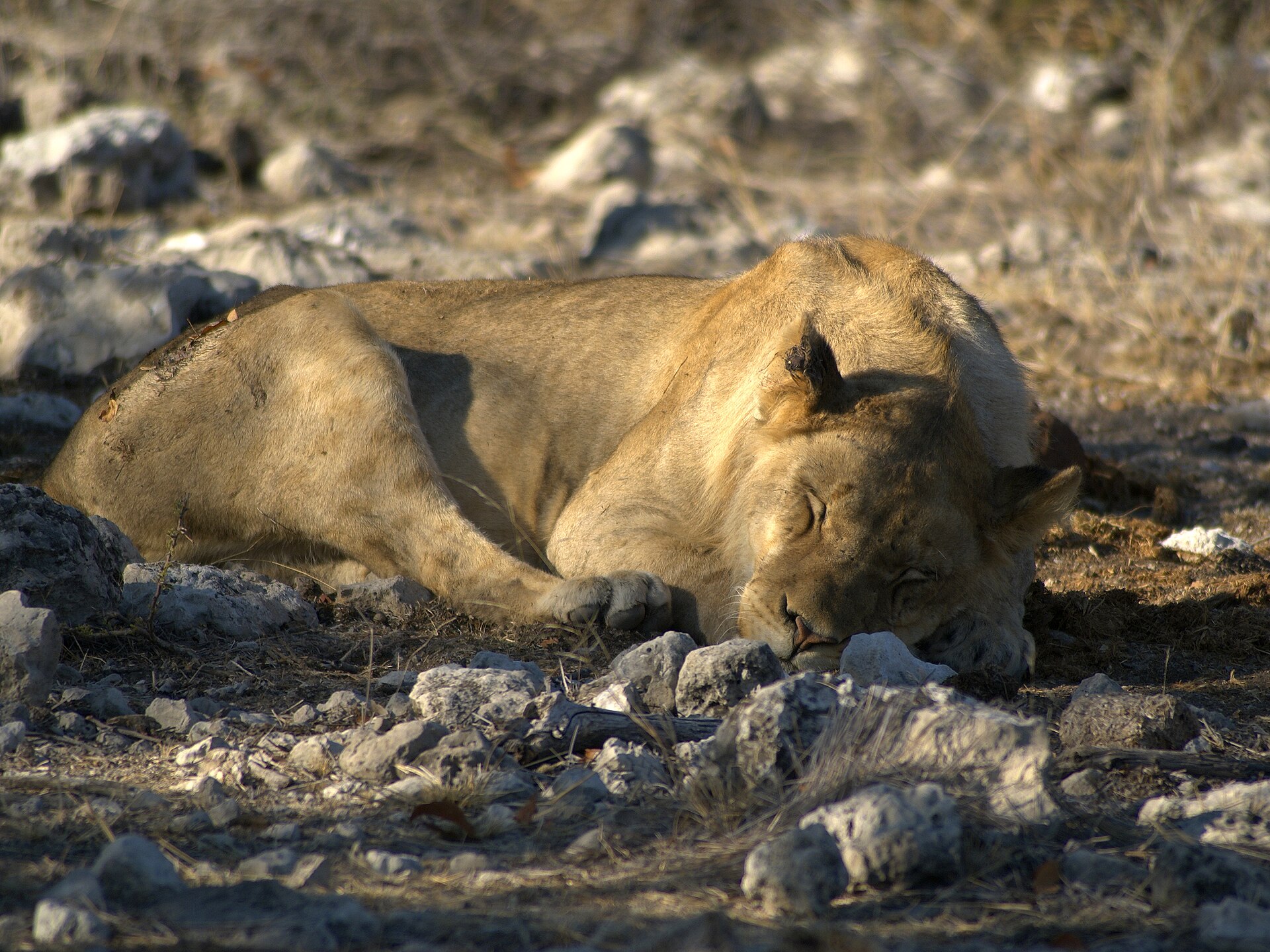
Edit midday files without removing the atmosphere
Moderate shadow recovery, careful white balance and restrained noise reduction usually preserve more truth than trying to make noon look like golden hour. Keep dust, warm colour and some contrast when they explain the conditions. Check a sequence for heat-haze variation before discarding every frame as missed focus. When sharing, describe the time and distance honestly, and avoid captions that claim a sleeping lion was “stalking” because the more dramatic word attracts attention.
photograph lions in harsh light: practical questions
Should photographers wake a sleeping lion for eye contact?
No. Never call, clap or alter wildlife behaviour for a photograph.
Why are midday images soft at long distance?
Heat haze can distort detail even when focus and shutter speed are correct.
Is shade always bad for exposure?
No. Shade can give softer light on fur; the challenge is managing the brighter surroundings.
To photograph lions in harsh light well, show the heat as part of the story. Protect highlights, shorten the path through haze and give the pride the quiet shade it chose.
photograph lions in harsh light summary: Check current local conditions, protect realistic travel time and keep wildlife behaviour natural.