
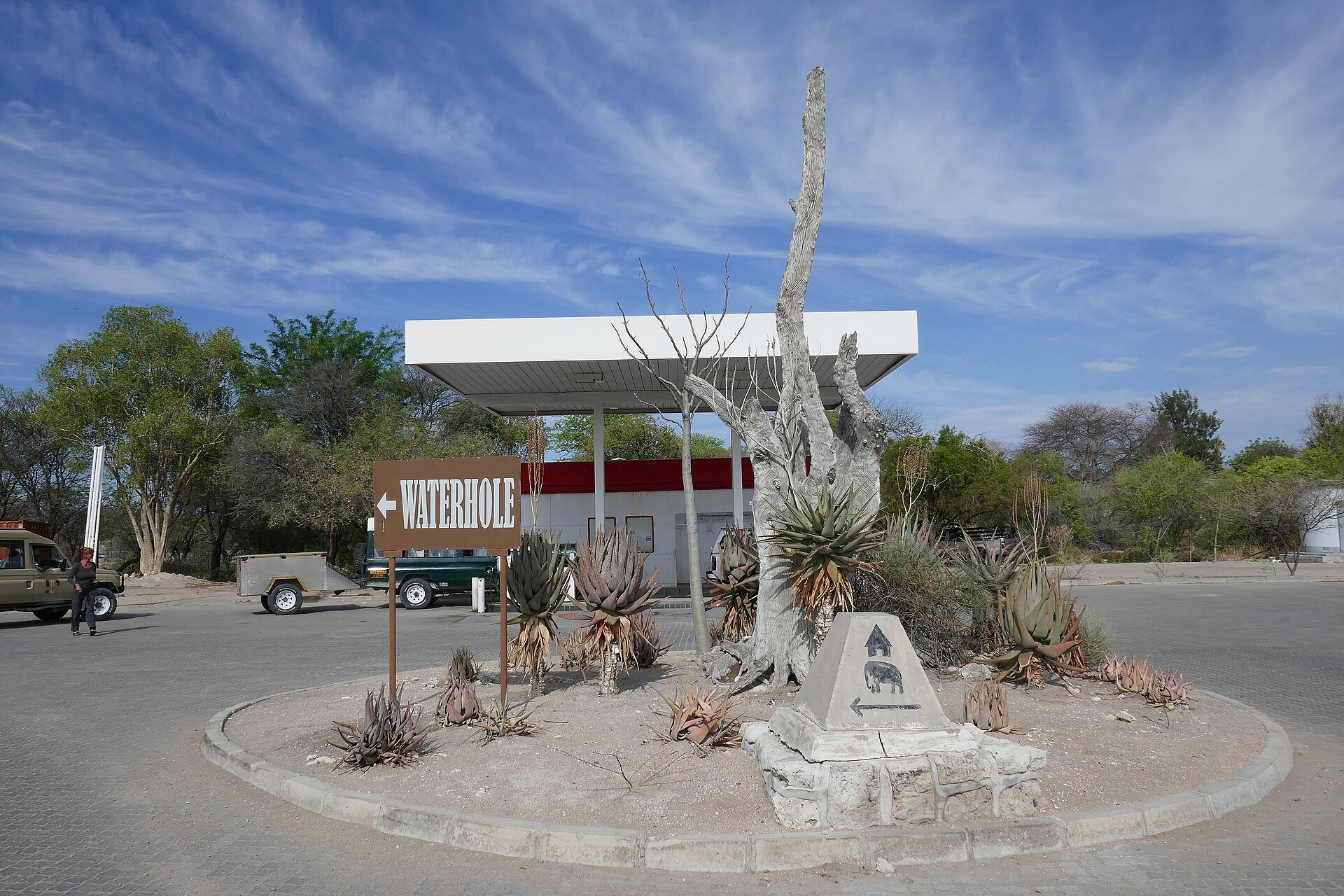
Etosha fuel stops should be planned before the vehicle reaches the park boundary. The safest habit is to refuel in a reliable gateway town, enter with a comfortable range and treat any in-park pump as useful support rather than the only plan.
Opening hours, deliveries, card systems and temporary outages can change. Confirm current availability locally and never stretch a tank because an old forum post reported fuel at the next stop.
In this guide
Know the vehicle’s real fuel range
Start with the rental company’s stated tank capacity, then use actual consumption from the first road stages. Gravel, tyre pressure, roof tents, air conditioning, headwinds and low-speed game driving can all alter the result.
Keep a reserve that covers an unexpected detour, an unavailable pump and the drive to the next confirmed town. The dashboard range estimate is a guide, not a guarantee.
Use gateway towns as primary Etosha fuel stops
Outjo is useful for southern approaches, while Tsumeb and Grootfontein support eastern and north-eastern routes. The correct stop depends on the gate and onward journey. Fill before shopping is finished rather than postponing fuel to the departure morning.
| Route stage | Fuel approach |
|---|---|
| Before entry | Fill in the last reliable gateway town |
| Inside the park | Top up when available; do not arrive nearly empty |
| After exit | Know the next confirmed town before leaving |
| Long onward route | Recalculate after any road or gate change |
Verify current availability instead of assuming
NWR’s current Etosha information is a starting point for official facilities, but same-day supply conditions are best confirmed with the resort, gate, rental company or accommodation. Ask a precise question: fuel type, operating hours and whether the pump is currently working.
A station visible on a map may be closed, temporarily out of stock or unable to process a particular card. A second payment method and some Namibia dollars reduce inconvenience without replacing range planning.
Refuel without creating a wildlife or fire risk
- Switch off the engine and follow every station instruction.
- Do not decant fuel inside a passenger area.
- Use only approved containers permitted by the rental agreement.
- Keep smoking, flames and cooking equipment far away.
- Never stop outside authorised areas to transfer fuel inside the park.
Ask the rental company before carrying spare fuel. Vehicle design, insurance and local rules matter, and an improvised container creates serious fire and vapour risks.
Put fuel checks into the itinerary
- Mark the last primary station before each gate.
- Record the next reliable station after exit.
- Recalculate after a route diversion.
- Top up before a long game-drive day.
- Keep emergency and rental numbers offline.
The Namibia self-drive guide and the network’s Namibia Travel Guide can help place Etosha within the wider road trip.
Reset the fuel plan after every route change
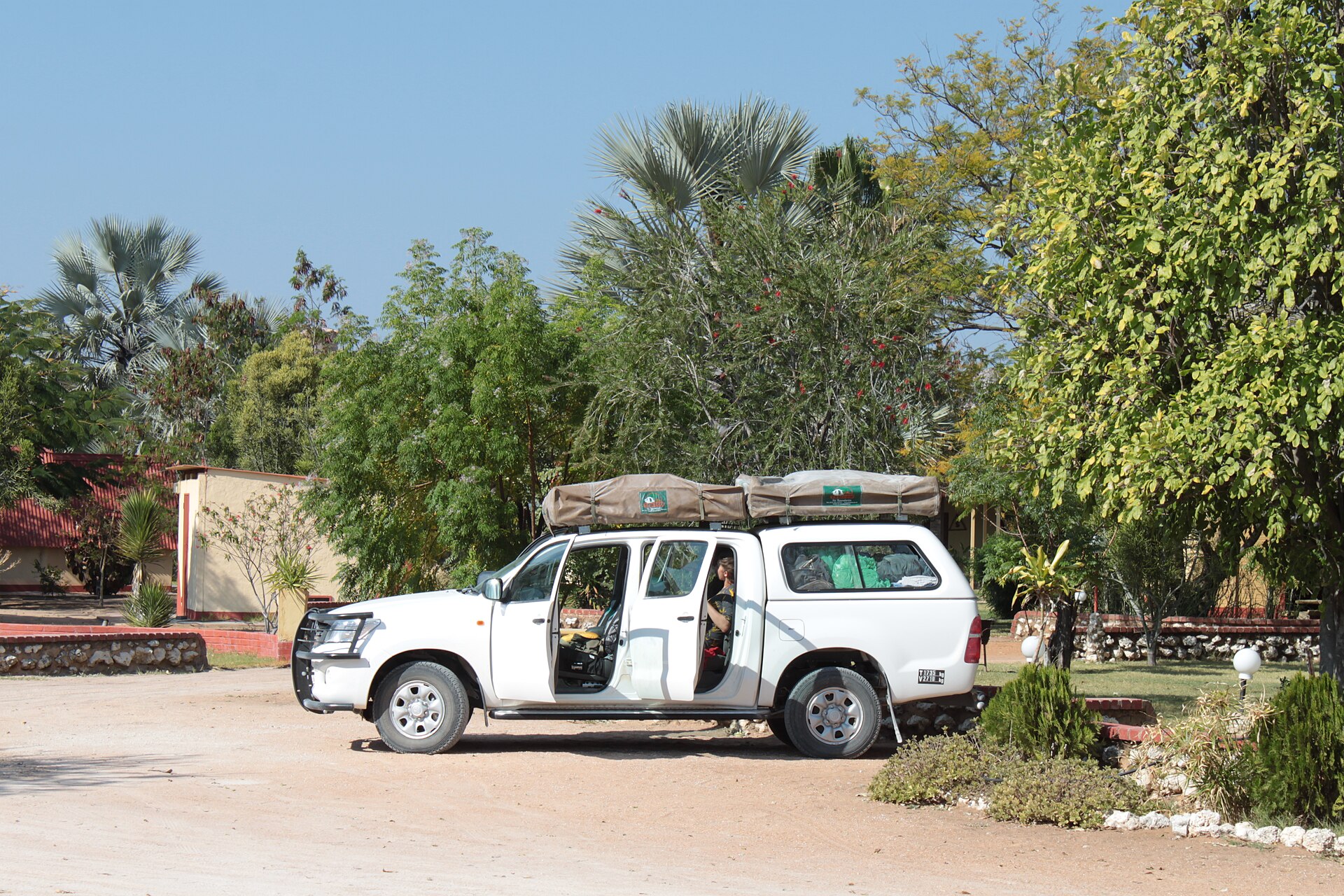
A closed road, different gate or extra night can invalidate the original range calculation. Recheck the next confirmed station whenever the itinerary changes and write the new plan somewhere accessible offline. After refuelling, confirm that the correct fuel was used, the cap is secure and the receipt matches the pump. This small routine matters before remote gravel stages, especially when the same vehicle also carries a rooftop tent or heavy luggage that increases consumption.
Etosha fuel stops: practical questions
Can visitors rely on fuel inside Etosha?
Treat in-park fuel as support, not the only plan; supply and operating conditions can change.
Should a rental vehicle carry spare fuel?
Only if the rental company permits it and an approved, safely mounted container is used.
Is a card enough at remote stations?
Carry an alternative payment method because connectivity and card systems can fail.
Etosha fuel stops become routine when travellers fill early and verify often. Keep a sensible reserve, know both sides of the park route and never let a single remote pump control the day.
Etosha fuel stops summary: Check current local conditions, protect realistic travel time and keep wildlife behaviour natural.