
Etosha wildlife shade is not just an empty patch beneath a tree. It changes size and direction through the day, concentrates animals during heat and can alter visibility, competition and predator-prey decisions.
A safari observer can learn more by watching how an animal uses shade than by merely recording that it is asleep. Keep interpretations cautious and allow for wind, insects, disturbance and individual choice.
In this guide
Treat shade as a moving resource

Morning shadow may stretch far from a trunk; midday shade contracts; afternoon cover moves to the opposite side. Animals may stand, shuffle or change body orientation without leaving the resting site.
Return to the same habitat at a different hour and the usable shade will have shifted. This helps explain why a tree that looked empty earlier can become crowded.
Different bodies use shade differently
Large, dark-bodied mammals, small antelope, birds and predators manage heat in different ways. Posture, ear movement, panting and spacing can all change, but a visitor should describe visible signs rather than diagnose stress from a photograph.
| Visible pattern | Possible context |
|---|---|
| Body aligned with shadow | Reducing direct solar exposure |
| Group spreads under several trees | Balancing space and available cover |
| Bird holds wings away from body | Thermoregulatory behaviour may be involved |
| Predator rests at a scrub edge | Shade plus concealment or vantage |
Shade can provide concealment as well as cooling
A predator may choose cover that breaks its outline and overlooks an approach route. Herbivores may hesitate before passing dense shade even when no predator is visible.
Do not use that pattern to announce a hidden lion. Record the attention direction, alarm calls and duration, then let uncertainty remain uncertainty.
Observe shade without crowding it
- Stop far enough away that the animal keeps resting.
- Do not block airflow or an exit route with the vehicle.
- Use binoculars before changing position.
- Make wider habitat photographs.
- Leave when traffic begins to surround the site.
A resting animal repeatedly lifting its head or moving away may need more space. Reduce pressure rather than waiting for it to “settle.”
Build a day around changing light and heat
Use open plains in cooler light, woodland and shade edges later, and a midday rest for travellers. This is a flexible habitat plan, not a promise that predators will be under the third tree.
The MEFT Etosha overview describes the park’s varied vegetation. Pair it with the Etosha wildlife guide.
Map moving shade across the game-drive day
Etosha wildlife shade changes position and value as the sun moves. At the start of a stop, identify the nearest trees, the shadow cast by the vehicle and the open routes between cover and water. An animal lying in deep morning shade may shift repeatedly as the protected area narrows, creating short opportunities to observe movement without approaching.
Use behaviour before temperature assumptions. Panting, posture, ear movement and group spacing can suggest how an animal is responding, but one sign should not become a diagnosis. Record time, wind and whether the subject is resting, feeding or walking. These notes are more useful than saying that every quiet animal is simply “hiding from the heat.”
For photography, expose for the animal and let the habitat explain the light. Wait for a head turn or a step into a cleaner patch rather than moving the vehicle repeatedly. Binoculars may identify field marks more comfortably than a heavily cropped image made through heat haze. Keep branches as context when they show why the location matters.
Etosha wildlife shade also shapes the route. During the hottest period, choose shorter loops with reliable return options and spend longer at a few calm viewpoints. Never use the vehicle to block access to a tree, water or travel corridor. If another visitor already has a safe position, wait or move on instead of crowding the same shadow.
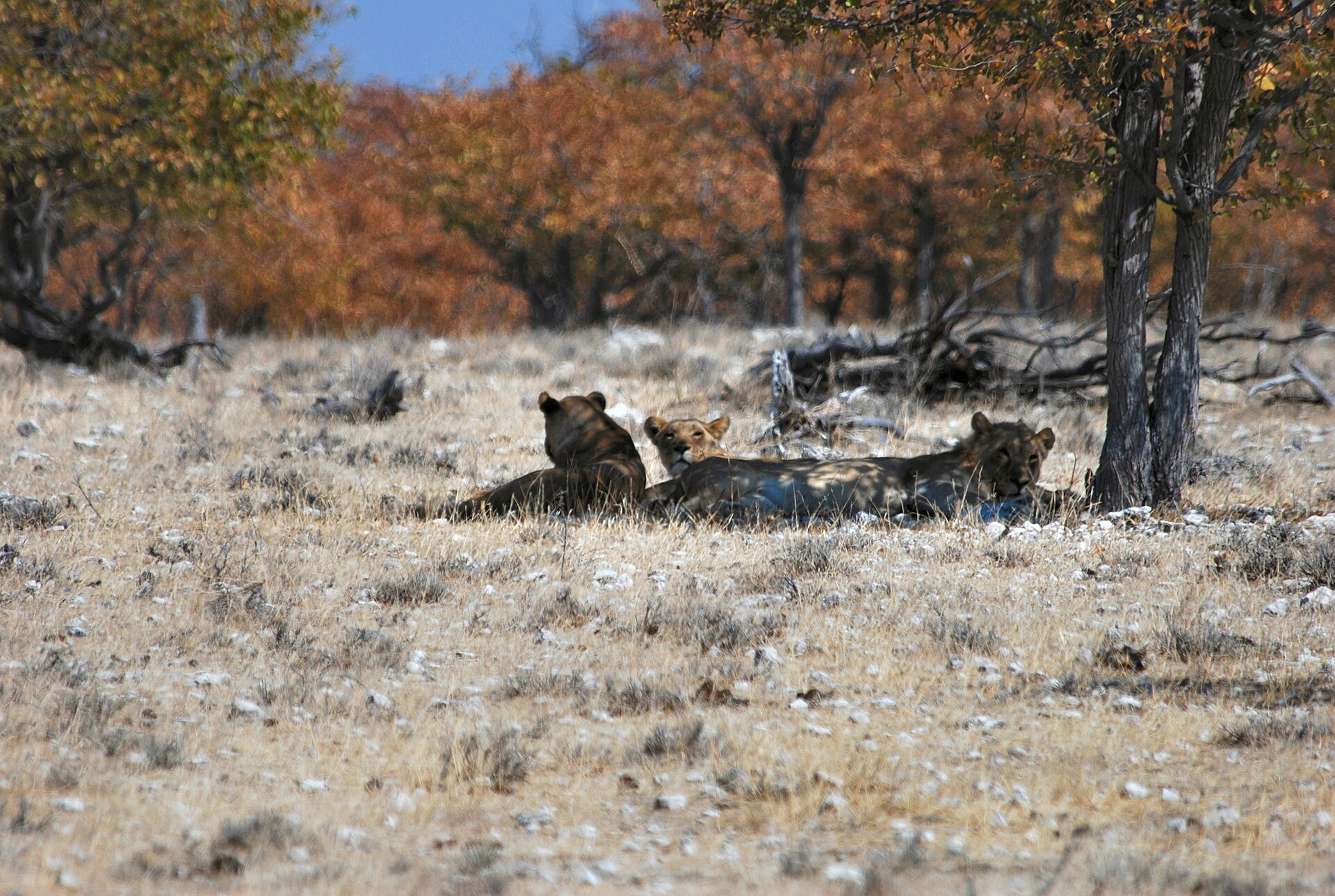
Use shade to improve species identification
Direct sun can wash out colour and hide fine markings, while deep shade can remove contrast. Wait for an animal to turn or move through a cleaner patch instead of changing vehicle position repeatedly. Note the colour of the light and avoid treating a warm reflection as a field mark. Binoculars often resolve the identification more comfortably than a heavily cropped photograph. When uncertain, record the habitat and behaviour and leave the species entry open.
Etosha wildlife shade: practical questions
Do all animals rest at midday?
No. Species, temperature, wind, food, water and disturbance all influence activity.
Does a shaded predator mean it is hunting?
Not necessarily. Shade may provide cooling, concealment, rest or several benefits at once.
Should vehicles move closer for a clearer view?
No. Use optics and wider frames rather than pressuring a resting animal.
Etosha wildlife shade is a daily map drawn by the sun. Watch it move, notice how bodies and groups respond, and leave enough distance for the behaviour to remain natural.
Etosha wildlife shade summary: Check current local conditions, protect realistic travel time and keep wildlife behaviour natural.
When comparing stops, write down the size and direction of the shaded area as well as the species present. Etosha wildlife shade is not a fixed feature: a useful patch at noon may disappear later, and the animals’ response can be more informative than the number seen during one visit.