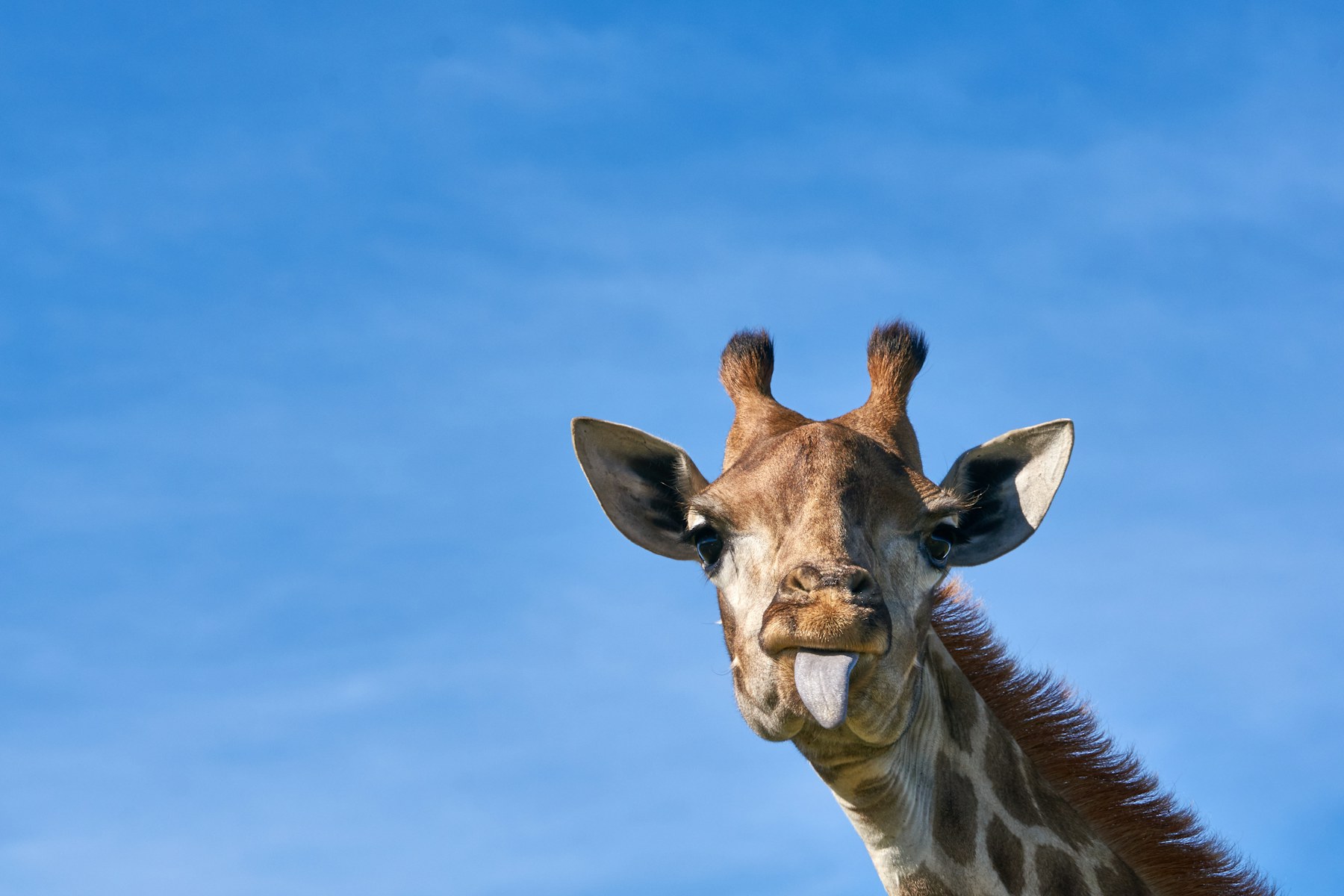
Giraffe stares can give safari travellers a direction to scan, especially when several animals hold their heads high and focus on the same patch of grass or woodland. The clue is attention, not certainty.
A giraffe may watch another giraffe, a vehicle, a sound, a person at an authorised facility or a predator. Wind, insects and normal vigilance also change posture. Treat the gaze as an invitation to observe the whole scene rather than a guaranteed lion signal.
The method is simple: watch long enough to establish a pattern, note the direction, scan from near to far and compare the response of other species.
In this guide
- What a fixed gaze can mean
- Look for group agreement
- Scan in the right order
- Combine giraffe and prey behaviour
- Avoid common interpretation mistakes
- Seven useful clues
What giraffe stares may indicate
Giraffes have height and excellent vision, allowing them to monitor a large area. A sudden orientation can reflect something noticed at distance, while routine feeding includes frequent head lifts and checks.
Duration matters. One brief look is weak evidence. Repeated attention, a rigid neck, ears directed forward and reduced feeding create a stronger reason to scan. Even then, the cause may be harmless.
Group attention is more useful than one animal
When several giraffes independently orient towards the same point, the direction becomes more informative. Compare adults and young animals, and check whether nearby zebra, springbok or wildebeest also pause.
Do not assume every member must look together. Individuals occupy different positions and may see different obstacles. Use the overlap in attention as a clue, not a verdict.
| Observed pattern | Possible meaning | Best response |
|---|---|---|
| Single brief look | Routine vigilance | Keep watching calmly. |
| Repeated same-direction gaze | Persistent stimulus | Scan that sector. |
| Several species attentive | Stronger shared cue | Look near cover and herd edges. |
| Animals resume feeding | Stimulus judged less urgent | Do not force a predator story. |
Scan from near to far
Start at the giraffes’ feet and nearby shade, then move along the line of sight through grass, shrubs and the horizon. Travellers often jump directly to a distant tree and miss a low shape much closer.
Use binoculars in overlapping strips. Look for ear tips, a tail flick, an unnatural curve, a patch of colour or birds reacting from the ground. Heat haze can make distant identification unreliable.
Learn behaviour in real time
A guided game drive helps connect giraffe posture, herd reactions and habitat while a trained driver manages the road and sighting position.
Read the whole body, not only the eyes
Ears, tail, stance and feeding rhythm provide context. A giraffe that continues browsing while looking intermittently is different from one that freezes, bunches with others or begins to move away.
Giraffe Conservation Foundation provides species and conservation context through its official website. Behaviour varies with habitat and individual circumstances, so avoid turning a useful field clue into a universal rule.
Direction is the gift
A giraffe does not need to reveal a predator to improve the sighting. Its attention can teach you how to scan habitat and notice the smaller movements that a quick drive misses.
Common safari interpretation mistakes
Do not announce a lion loudly, start the engine or reposition aggressively based on one stare. That behaviour disrupts other visitors and may alter the animals’ response before anyone understands it.
Avoid reading a human facial expression into the giraffe. Describe posture and action: “three adults have faced the same bush for two minutes” is more useful than “they look terrified.” The site’s nervous zebra guide applies the same evidence-based approach.
Seven fascinating clues to combine
No single clue proves danger; combinations make the scan more meaningful.
- Duration of the gaze
- Number of giraffes involved
- Shared direction
- Ear orientation
- Feeding pause
- Movement of nearby herbivores
- Cover or terrain in the watched sector
Practise without chasing an outcome
At every giraffe sighting, spend one minute noting who is feeding, who is watching and where. Scan the indicated areas even if no predator appears. This builds a calm observation habit.
The reward may be another giraffe, a jackal, an elephant, a person in the distance or nothing identifiable. Honest uncertainty is part of wildlife watching.
Ten field exercises for giraffe stares
These exercises make giraffe stares slower, more evidence-based and easier to share. Complete one or two at each suitable sighting rather than turning wildlife into a classroom task. The subject’s comfort and the open road always come before finishing the exercise.
1. What giraffe stares may indicate
Begin the field exercise with “What giraffe stares may indicate” and spend one full minute describing only visible facts. Note shape, direction, distance, posture, light and movement before naming a species or cause. This disciplined pause makes giraffe stares more accurate and gives other travellers time to see the scene for themselves.
2. Group attention is more useful than one animal
Use “Group attention is more useful than one animal” to practise a near-to-far scan. Check the road edge and immediate shade, then work across middle distance in overlapping strips before reaching the horizon. A large subject can disappear close to the vehicle when everyone begins with binoculars aimed at a famous distant landmark.
3. Scan from near to far
Compare at least two independent clues around “Scan from near to far”. Structure and behaviour may support one another; colour and a brief glance may not. In giraffe stares, confidence should rise only when separate observations agree, and it should remain low when heat haze, vegetation or poor light hides the key feature.
4. Read the whole body, not only the eyes
Set an observation block for “Read the whole body, not only the eyes” before changing position. Continuous creeping interrupts both wildlife and other viewers, while a stable vehicle lets patterns develop. Move only when the route is legal, the driver has checked mirrors and the new position does not close an animal’s path.
5. Common safari interpretation mistakes
Make a short note about “Common safari interpretation mistakes” using time, broad sector, weather and behaviour. Do not publish a sensitive exact location in real time. A simple evidence record makes later identification possible and keeps giraffe stares focused on learning rather than on being first with an online report.
6. Seven fascinating clues to combine
Photograph “Seven fascinating clues to combine” only after completing the initial observation. Take a short burst, keep flash and artificial calls off, and preserve the uncropped original. Digital sharpening or AI enlargement can invent edges, so the final caption should not claim detail that was invisible in the field.
7. Practise without chasing an outcome
Ask what would disprove the first interpretation of “Practise without chasing an outcome”. An animal may be watching a vehicle rather than a predator; a circling bird may be using a thermal rather than locating food. This deliberate alternative keeps giraffe stares honest and reduces excited announcements that cause traffic.
8. giraffe behaviour
Watch how “giraffe behaviour” changes over several minutes. Feeding resumed, ears relaxed, flight direction shifted or a group dispersed may be as informative as the first alert. giraffe stares benefits from sequences, because a single frozen moment often exaggerates tension or hides normal behaviour.
9. predator scanning
Share “predator scanning” quietly by giving a direction, distance and landmark rather than pointing across another person’s face. Allow children or new birders time to find it. A calm description improves the entire vehicle’s giraffe stares experience without increasing noise or pressure on the subject.
10. safari alarm cues
End the “safari alarm cues” exercise when the animal responds to the vehicle, the road becomes congested, heat or fatigue reduces attention, or the schedule requires movement. Leaving responsibly is part of giraffe stares. The strongest field note is not worth disturbing wildlife or creating a dangerous blockage.
11. Etosha observation skills
Use “Etosha observation skills” to compare naked-eye and binocular views. Begin without magnification to understand position and movement, then use optics for detail. giraffe stares becomes less disorienting when the observer can return to the wider scene and explain where the subject sits relative to road, shade and other animals.
12. What a fixed gaze can mean
Check light direction while observing “What a fixed gaze can mean”. Backlight can hide colour but strengthen silhouette; side light may reveal shape; heat can soften every edge. Instead of moving aggressively, adapt the giraffe stares description to what the light supports and wait for a lawful natural change.
13. Look for group agreement
Invite a second observer to describe “Look for group agreement” independently before comparing conclusions. Agreement on direction and structure increases confidence; disagreement exposes a feature worth rechecking. Shared giraffe stares should improve evidence, not pressure the less experienced person to repeat the loudest identification.
14. Scan in the right order
Note absence around “Scan in the right order” as carefully as presence. A quiet waterhole, empty branch or relaxed herd can still shape the next scan. giraffe stares is stronger when it records what was checked and not found, because later memory otherwise fills the scene with details suggested by photographs or conversation.
15. Combine giraffe and prey behaviour
Keep “Combine giraffe and prey behaviour” within the subject’s natural context. A tightly cropped image may remove other pride members, habitat or the vehicle pressure that explains behaviour. Good giraffe stares combines one detail view with a wider frame and a caption that states uncertainty instead of inventing a complete story.
16. Avoid common interpretation mistakes
Finish “Avoid common interpretation mistakes” by putting equipment down for one uninterrupted minute. Watch with normal vision and listen. This final giraffe stares habit reduces screen fatigue, catches behaviour outside the frame and preserves part of the experience as a memory rather than only as a file to edit.
At the end of the day, select the strongest giraffe stares note and explain which evidence made it reliable. Also keep one uncertain observation. Learning why it remained uncertain is often more valuable than attaching a confident name to every photograph. Compare the notes with a current field guide or authoritative conservation source, but do not rewrite the original observation to match the answer. Preserve what was truly visible, identify which feature resolved the question and leave the record unresolved when the evidence remains incomplete. This creates a useful learning trail and prevents hindsight from turning a distant shape into a falsely perfect sighting. Add the route, light direction and viewing duration while they are fresh. Those details often explain why another photograph from the same sequence appears sharper, darker or more confident without providing genuinely different evidence.
Interpret giraffe stares without overclaiming
Use giraffe stares to select a direction, not announce a predator. Repeated giraffe stares shared by several animals are more informative than one brief look. Giraffe stares become useful when combined with posture, feeding and the response of other species.
Giraffe stares: safari questions
These answers keep the clue useful without overstating it.
Do giraffe stares always mean a lion is nearby?
No. A giraffe can watch many stimuli. Repeated shared attention just gives travellers a direction to examine.
How long should travellers watch?
Observe for at least a minute when traffic and positioning allow. Look for repeated direction and changes in feeding or movement.
Why are giraffes useful lookouts?
Their height and vision provide a wide view, but they are not infallible sentinels and may respond to non-threatening events.
Should the vehicle move closer to the watched area?
Do not chase a speculative sighting. Stay legal and considerate, and move only as part of normal safe route travel.
What other animals provide clues?
Zebra, antelope, birds and monkeys in suitable habitats can show attention or alarm. Read several species together when possible.
Can posture be photographed for later study?
Yes, from a respectful position. Capture the whole body and surrounding animals rather than only a tight face.
Let giraffes teach you where to look
Watch duration, direction and group response, then scan patiently. The lesson is better observation—not a promise that a predator waits in every bush.